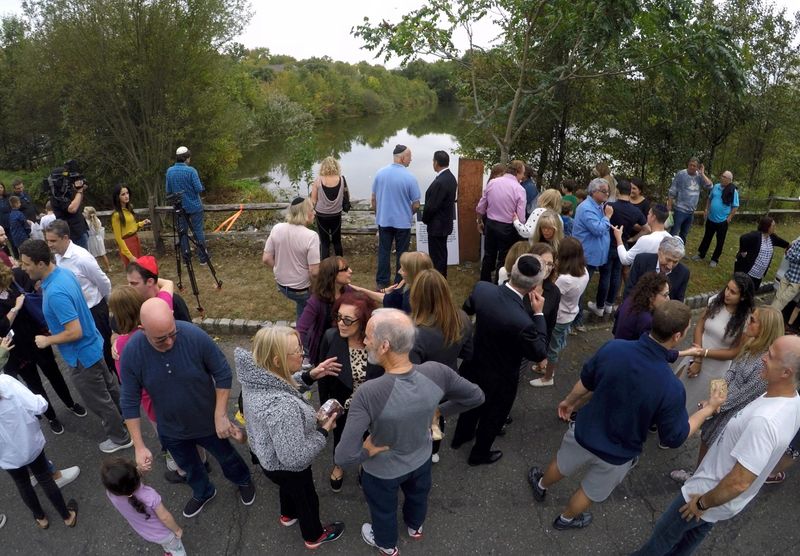
The Jewish holiday of Rosh Hashanah, celebrating the Jewish New Year, starts at sundown Monday evening.
Rosh Hashanah, the Jewish New Year, marks the beginning of the Jewish High Holy Days leading up to Yom Kippur, the Jewish day of atonement. Rosh Hashana, which translates from Hebrew to mean the “head” of the year, is commemorated with special prayers, foods, gatherings and more.

When is Rosh Hashanah 2025?
Rosh Hashanah will begin at sunset on Monday, Sept. 22 and will end at dusk on Wednesday, Sept. 24. The celebration of the new year is the only Jewish holiday that is two days long both inside and outside Israel. It’s called yoma arichta, translated as “a long day” because the 48-hour celebration may be thought of as one extended day.
The exact date varies every year since it is based on the Hebrew calendar, where Rosh Hashanah begins on the first day of the seventh month. It is typically in September or October.
Why is Rosh Hashanah celebrated?
Rosh Hashanah is often treated as a time to reflect on the previous year and focus on hopes for the coming year, according to Jordan Rosenblum, the Belzer Professor of Classical Judaism and Max and Frieda Weinstein-Bascom Professor of Jewish Studies at the University of Wisconsin-Madison.
“It’s the beginning of the Jewish calendar, and like all new years there are, it’s a time for sort of taking stock, right? What do I want to improve? You know, the equivalent of joining the gym in January,” he said.
Rosh Hashanah is also important for some Jewish people as a celebration of the creation of humanity. It may be referred to as the “birthday of the world,” marking the time when God created — or when the breath of life entered — Adam and Eve.
How is Rosh Hashanah celebrated?
Many Jewish people will attend services at synagogues and other spaces for worship on Rosh Hashanah. Jewish congregations will recite special prayers and songs to mark the new year.
Some Jewish communities will blow a Shofar, a curved ram’s horn.
While the holiday is uplifting, it also urges believers to reconcile conflict from the past year and start the new year with a clean page.
“It’s meant to kind of stir you, awaken you to the idea of thinking of new year, taking stock, preparing to atone, and in the month leading up to Rosh Hashanah it begins to be used as a kind of wake up,” Rosenblum said. “It really kind of pierces the air, and you can’t ignore it.”
Some Jews may also pray near a body of water in a Tashlich ceremony, in addition to tossing pieces of bread or other food into the water to symbolize sending off sins.
What are some traditional Rosh Hashanah foods?
Rosh Hashanah celebrations don’t just take place within the walls of a synagogue. Many Jews will gather with friends and family to eat special foods and hold commemorations.
Is it OK to say ‘Happy Rosh Hashanah’?
Yes, happy Rosh Hashanah or happy new year are both appropriate greetings if you are talking to Jewish friends, family, co-workers, or classmates around the holiday. You can also say “Shanah tovah,” which means good year in Hebrew.
Looking ahead: When is Yom Kippur?
Yom Kippur, the Jewish day of atonement runs from dusk on Wednesday, Oct. 1 to after nightfall on Thursday, Oct. 2.
Includes reporting by USA Today network.
This article originally appeared on Rockland/Westchester Journal News: When is Rosh Hashanah 2025? Dates, meaning, and how it’s celebrated
Reporting by Victoria E. Freile, New York Connect Team / Rockland/Westchester Journal News
USA TODAY Network via Reuters Connect