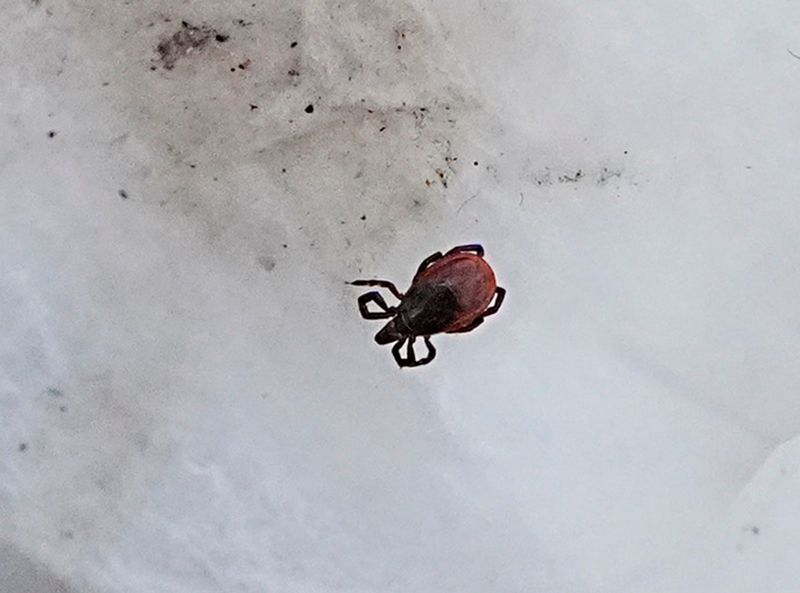
Warm temperatures returned to the Rochester area in early April, bringing hope for some sustained spring weather — and a renewed risk of more active ticks.
That’s because most ticks live for around two years, overwintering in the top layer of soil and re-emerging in the spring. Even after a cold, snowy winter like we just had, ticks can survive in decomposing leaf matter and wait out those warmer temperatures in a near-hibernation state.

When ticks become active in spring
A black-legged tick only feeds three times during its lifetime, attaching to a host for only a few days each time, said Brian Leydet, associate professor in SUNY ESF’s Department of Environmental Biology and founding member of the Central New York Lyme and Tick-Borne Disease Alliance. So a consistently cold, snowy winter can actually keep tick populations alive longer than a more variable winter with intermittent warmups.
When a random week in January sees 70-degree temperatures, ticks will come out of hibernation and try to find a blood meal, depleting their energy and staggering the active population.
“I tell people, even in the winter, when you see the ground and it’s above freezing, ticks can be active,” Leydet said.
With a more traditional warmup, there can be more ticks active at once on a warm day.
“There’s ticks that have been dormant all winter [that] are out and aggressively trying to find that blood meal,” Leydet said.
Ticks typically emerge in waves, with adults coming out first followed by nymphs. Nymphs are much smaller but tend to be aggressive in the spring. They’re less affected by warmer winters as they’re developing in the winter rather than just hibernating.
Which tick diseases are increasing in upstate New York
Due to their ability to transmit disease to humans, Leydet reminds people to take ticks seriously. It’s not just Lyme disease, but pathogens like anaplasmosis and babesiosis which can make people sick. Among adult ticks, about one in two can be infected with some type of pathogen.
“The next five years, I expect to see more cases of babesiosis and anaplasmosis because those infection numbers are starting to increase in ticks,” Leydet said.
How to protect yourself from ticks this spring
So how do you protect yourself from ticks and the pathogens they carry? If you’re outside, you could be exposed to ticks right now, Leydet said. They survive in different environments but prefer moist weather, tree cover, and bushes. But they can still show up in the middle of your mowed yard.
Ticks don’t fly or drop out of trees — they must climb from the ground to reach their hosts. So the best way to create a barrier to the pests is to cover exposed skin and tuck in your layers — pants into socks, shirt into pants, etc. This makes it harder for the pests to find exposed skin and more time to see and remove them before they can bite. The physical barrier can be paired with repellents or insecticides.
Treating your clothes with permethrin can kill ticks that try to hitch a ride. This can also be used on shoes when parents may not want to expose their children to chemicals, leaving the socks as a barrier.
The most effective method Leydet has found to reduce the likelihood of tick-borne illness is a tick check. He does it with his family — take off your outdoor clothes, toss them in the dryer or leave them to sit in the sun, and visually inspect yourself or others for any sign of ticks.
“Even if you’re protecting yourself out in the field … with your tick shield of clothing, when you get in, you need to look for ticks because they’re sneaky,” Leydet said. “They can get into places that you didn’t even know.”
What to do if you find a tick bite
Adult ticks are only about half the size of a pencil eraser and nymphs are even smaller – about the size of an ink dot from a ballpoint pen.
If you get bit by a tick, Leydet suggests removing it with a pair of fine tweezers. Then, save it in a resealable plastic bag in your freezer. If you do get sick, you can bring the tick with you to your healthcare provider to help with your diagnosis or treatment plan. You can dispose of the tick after a couple weeks if you don’t experience any symptoms.
— Steve Howe reports on suburban growth, development and environment for the Democrat and Chronicle. An RIT graduate, he has covered myriad topics over the years, including public safety, local government, national politics and economic development in New York and Utah.
This article originally appeared on Rochester Democrat and Chronicle: Warmer spring weather brings higher tick risk in Rochester
Reporting by Steve Howe, Rochester Democrat and Chronicle / Rochester Democrat and Chronicle
USA TODAY Network via Reuters Connect