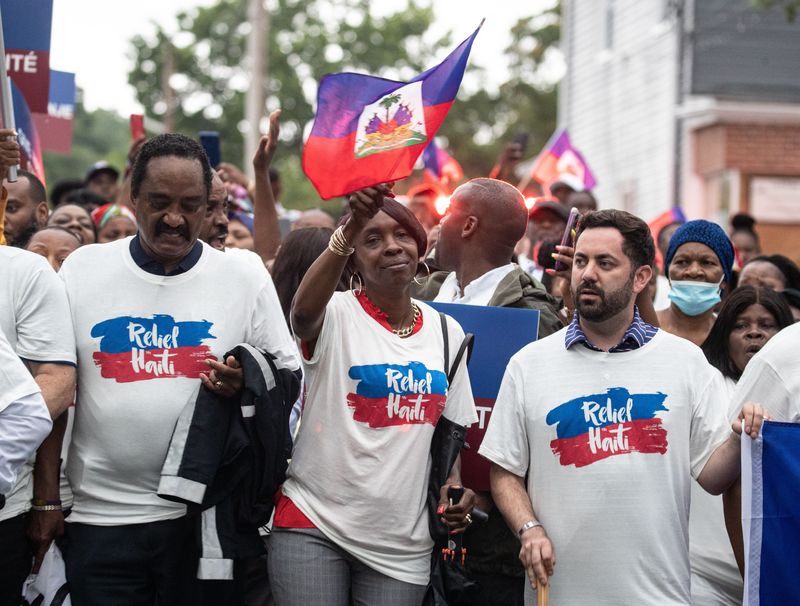
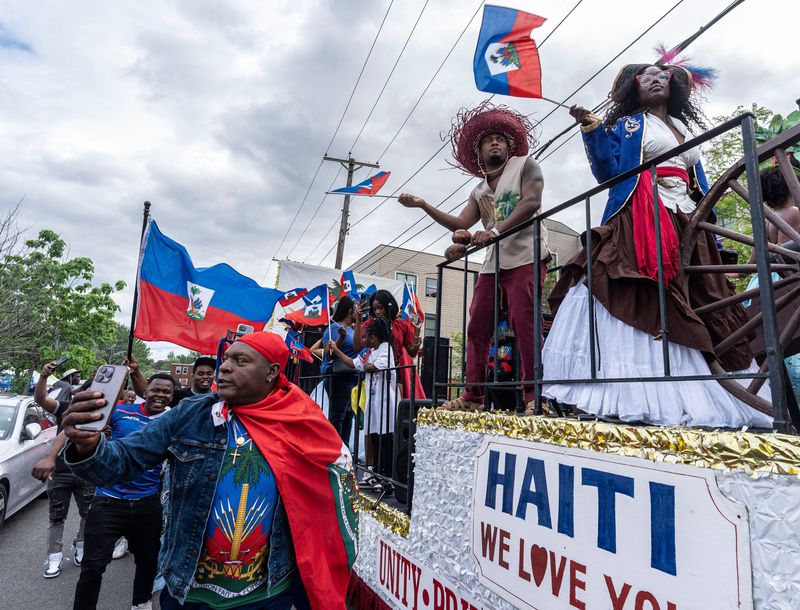
President Trump’s total travel ban for Haiti drew rebuke among Haitian-Americans across the Lower Hudson Valley region.
U.S. Rep. Mike Lawler, a fellow Republican, urged the Trump administration to reverse its decision. Lawler’s 17th District includes Spring Valley, home to the second-largest Haitian diaspora, per capita, in the U.S.

Shock and anger over the decision, Haitian-Americans said, shouldn’t be confused with surprise.
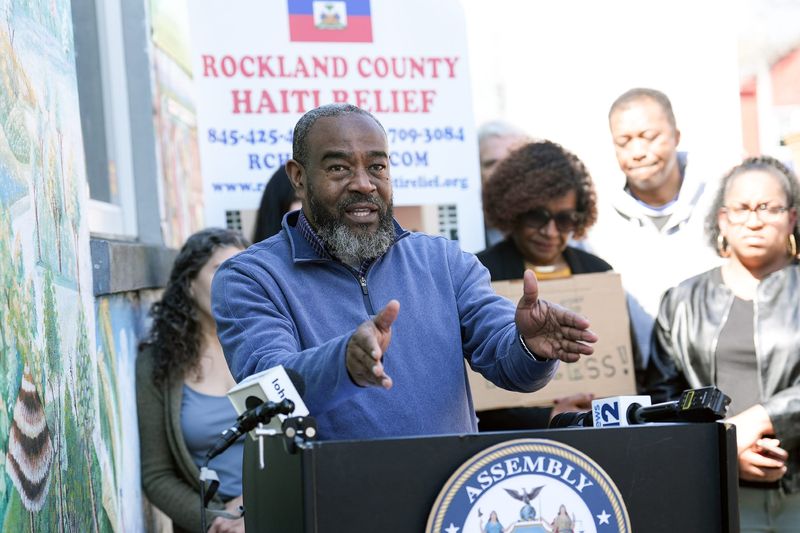
Renold Julien, CEO of the immigration support organization Konbit Neg Lakay, said Thursday, June 5, that the latest action targeting Haitians fits Trump’s pattern.
“It just makes it clear: What’s going on has nothing to do with immigration. It’s a black and white issue,” Julien said, citing a series of recent actions against Haitian immigration and then-candidate Trump’s 2024 comments repeating rumors that Haitian immigrants were eating people’s pets.
Julien also noted that the majority of the 12 countries hit with a total travel ban and seven more facing partial travel bans are countries inhabited predominantly by people of color.
Julien observed: “If you are Black you are not welcome in this country, period. What do we not understand?”
Lawler: Ban will ‘deepen the suffering of Haitians’
U.S. Rep. Mike Lawler, a Republican whose 17th District includes Rockland, Putnam and parts of Westchester and Duchess counties, called for an immediate reversal of the travel ban decision.
Lawler cited Haiti’s proximity to the U.S. and shared history, including failed interventions by the U.S. in decades past.
“This travel ban will only deepen the suffering of Haitians, many of whom have strong ties to the U.S.,” Lawler said in a statement. A travel ban, he said, “risks isolating Haiti further at a time when they need our support most.”
Rockland County Executive Ed Day, a Republican, said travel permission should be based on an individual’s background check, including vaccination status.
“Haitians along with other immigrants contribute deeply to the cultural, economic and social fabric of not only this county but our entire nation,” Day said, “as their resilience, values and hard work reflect the very ideals that make America strong.”
Travel from Haiti already restricted
The full travel ban for Haiti goes into effect at 12:01 a.m. June 9.
But Lower Hudson Valley residents with ties to Haiti say a de facto ban is already in effect because there are no commercial flights out of Haiti.
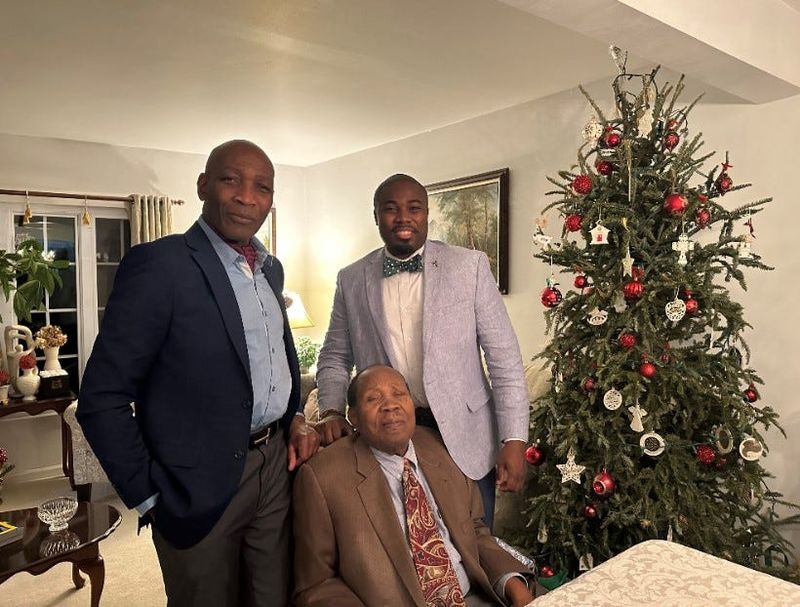
Paul Presendieu of New Rochelle is a third-generation American. His grandfather, Andre Presendieu, came to the U.S. in 1978 and later became a U.S. citizen.
Now 93, Andre Presendieu’s health is declining. Paul Presendieu said family members in Haiti would like to come spend time with him, “in what may be his last year on this planet.”
But Presendieu said, they have been unable to arrange a flight here.
Julien said his niece, an architect from Florida, got married two weeks ago and despite extensive efforts, her parents who live in Haiti couldn’t get a flight to attend their daughter’s nuptials. “On her one of her most important days, she wasn’t able to have her parents here?”
Haitian links to American Revolution
Julien said he came to the U.S. decades ago as a young man after reading books and watching movies that “made me believe this is where you come for freedom.”
“Most people like me were lied to,” he added.
Presendieu, too, saw a betrayal in the travel ban from a country that is so inexorably linked to U.S. history.
Haiti was the second Republic in the Western Hemisphere, and the U.S. the first.
Free men of color from the French colony of Saint-Domingue — what is now Haiti — fought in the American Revolution.
And, as Presendieu noted, the U.S. was able to more than double its size in 1803 with the Louisiana Purchase, with France selling off land to finance its fight against rebellion in Haiti.
Flurry of changes restrict Haitian presence in U.S.
The travel ban is just one of several actions in recent weeks that target Haitian nationals’ presence in the U.S.
The U.S. Supreme Court last week granted an emergency application to allow the Trump administration to rescind a Biden program, known as CHNV, that gave 532,000 people from Cuba, Haiti, Nicaragua and Venezuela permission to temporarily live and work in the United States.
At least 3,000 Haitians in the Spring Valley area have been sponsored through CHNV in the last couple years; most are employed in local businesses and nonprofits.
“They were invited to come to this country,” Julien said of CHNV parole recipients. “Now the U.S. is treating them like trash? Like they are nothing? Where is humanity in this country?”
The Trump administration has yanked Temporary Protected Status for Haitians, some of whom have been in the U.S. under TPS for decades.
Deportations of TPS holders are slated to begin in August, but a lawsuit to halt the changes is expected to be heard this week in the U.S. District Court Eastern District of New York.
Inside Trump’s travel ban: Who is affected?
The Trump order justifies the total ban on Haitians’ visits by citing visa overstay rates of over 31% for Haitians with B‑1 business/B-2 tourism visas, and overstay rates of about 25% for different kinds of academic and cultural exchange visas.
“Additionally, hundreds of thousands of illegal Haitian aliens flooded into the United States during the Biden Administration,” the proclamation states.
Although Trump has repeatedly called Haitians on the CHNV program “illegal,” such recipients had to provide vetted sponsorship from U.S. residents and could be provided working papers for employment.
Beyond Haiti, those countries with full restrictions on entering the U.S. include: Afghanistan, Burma, Chad, Republic of the Congo, Equatorial Guinea, Eritrea, Iran, Libya, Somalia, Sudan, and Yemen. Countries with partially restricted entry to the U.S.: Burundi, Cuba, Laos, Sierra Leone, Togo, Turkmenistan, and Venezuela.
“As a Black immigrant, it is clear to me,” Julien said of what Trump is doing. “If you are not white, you don’t exist for him.”
This article originally appeared on Rockland/Westchester Journal News: Trump travel ban on Haiti stirs anger, pushback in NY: What Hudson Valley Haitians said
Reporting by Nancy Cutler, Rockland/Westchester Journal News / Rockland/Westchester Journal News
USA TODAY Network via Reuters Connect