When Regional Transit Service introduced RTS On Demand in 2021, Rochester senior resident Bernice Bird was thrilled. On Demand would give her, a person with disabilities, a way to have more “spontaneous independence,” she said at a public hearing.
But RTS has proposed several updates to On Demand, including shortening the pre-booking window to 12 hours, temporary account suspensions for frequent no-shows, virtual pick-up stops in place of door-to-door service, and a fare increase to $3 starting in September, with annual $1 hikes through 2027.

RTS On Demand, introduced in 2021 to replace fixed-route service in areas with low ridership, has reached the end of its four-year, $1.7 million annual grant. According to RTS, the proposed changes aim to make the service more financially sustainable and reliable for riders.
Problems with RTS On Demand service?
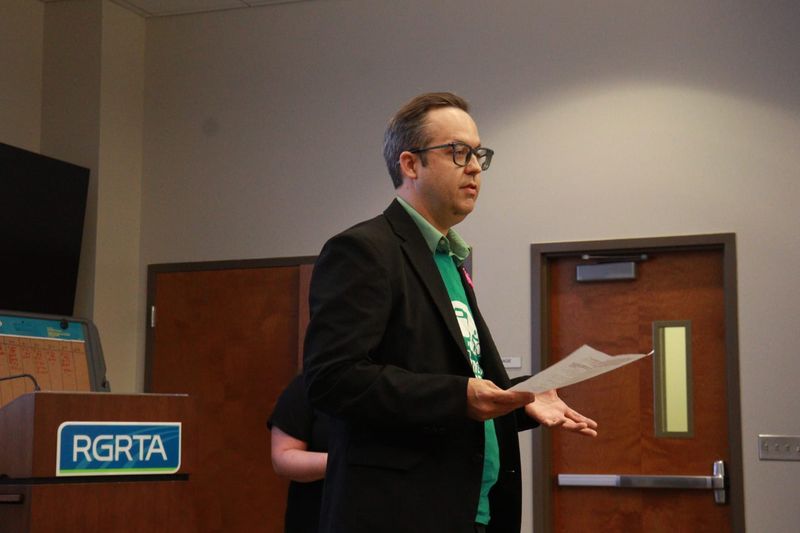
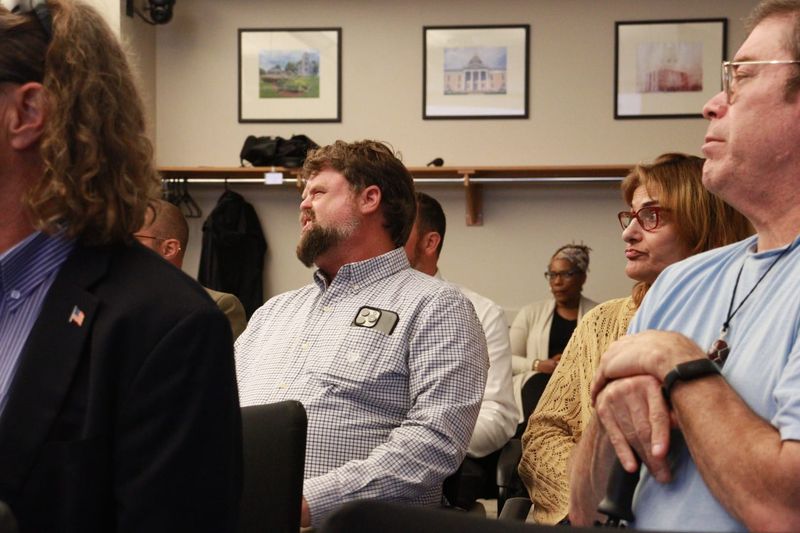
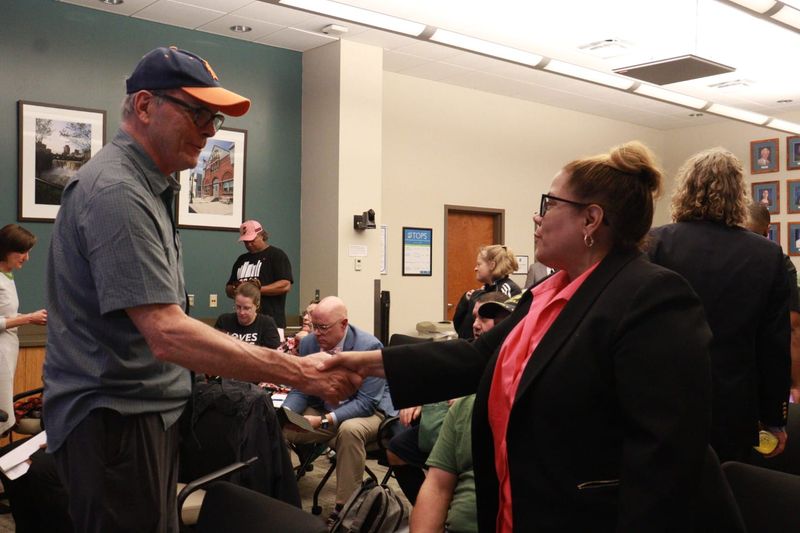
The proposed changes have prompted criticism from riders and advocacy groups. Several individuals, including Bird and members of groups like Reconnect Rochester and the Latino Military Coalition, voiced their concerns at the hearing at the RTS office on June 18.
Bird said the changes are distressing and would prevent her from continuing to use On Demand.
She’s especially concerned about virtual stops, which would require residents to walk up a quarter-mile to designated pick-up points, replacing the current door-to-door service. “If I don’t know where the corner stop is going to be, I will have to walk across the parking lot … several people get hurt across a parking lot,” Bird said. “The chance of getting hit by a car is so dangerous, it’s really distressful.”
Bird added that wintertime will only exacerbate these problems as snow-covered sidewalks will make distances to stops unwalkable.
Several residents also spoke against the proposed cancellation penalties, citing broader issues with the On Demand system.
RTS Public Information Officer Tom Brede said last-minute cancellations put other people seeking rides at disadvantage.
“I understand doing that — scheduling that ride and if they’d end up not needing that ride, I understand that too,” Brede said. “The hard part about that is there are so many people who are trying to schedule a ride who don’t get one because it’s first come, first served taking rides … and obviously, as a public entity, we’re not sitting on piles of money and unlimited access.”
Reconnect Rochester weighs in on RTS service
Mary Staropoli, co-executive director of Reconnect Rochester, a nonprofit that aims to foster equitable and sustainable transportation in Monroe County, said RTS should assess “who or what is really to blame” for the 30,000 cancellations.
Staropoli said that Reconnect Rochester has heard of several issues, such as application glitches, drivers failing to locate riders, and people having to chase the buses. She added that the penalties are an “unfair punishment to riders” when the system itself is not functioning well.
She further echoed Bird’s concerns about the virtual stops, contending that Reconnect Rochester has repeatedly heard from riders of a preference for fixed routes, designated stops and a set timetable.
In an interview with the Democrat & Chronicle, Cody Donahue, who also serves as co-executive director of Reconnect Rochester, said the RTS should use the data it has collected about riders to inform its decisions.
“We are recommending that RTS use the data it has access to about destinations that people use, look at the zones they have and explore returning to a fixed schedule with fixed stops so that we’re serving the destinations people want to go to in the suburbs, and that’s going to help increase ridership,” Donahue said.
A missing stop for the VA clinic
A group petitioning to reinstate the bus stop outside the Rochester Calkins VA Clinic also spoke at the hearing. The petition, launched by the Latino Military Coalition, has gathered over 730 signatures.
Mercedes Vazquez Simmons, vice president of the coalition and of the Monroe County Legislature, is one of the people spearheading the effort. In an interview with the Democrat & Chronicle, Simmons said many veterans in the area are not seeking medical attention anymore, as the closest stop to the clinic is over a mile away.
Simmons added that alternative options like On Demand and Vets Driving Vets don’t always have enough drivers and volunteers to meet demand.
“We want (veterans) them to have all possible options,” Simmons said. “If you want to take a bus, take a bus, if you want to take a rideshare, take a rideshare, if you want to take an Uber, take an Uber.”
Residents like Mary Ozel criticized both the current On Demand system and the proposed changes at the hearing. Ozel emphasized the lack of communication and timeliness of drivers at times, citing an incident where she waited more than half an hour for a driver to no avail.
Ian Scheil, an independent patient advocate, also expressed frustration over the limited accessibility created by On Demand.
“On Demand left huge transit deserts in our suburbs — It did not fix the issue that already existed, and this (proposed changes) just seems to further restrict and further increase the transit deserts that already exist around our suburbs,” Scheil said.
— Misha Manjuran Oberoi is a summer intern at the Democrat & Chronicle covering transportation and mobility, and a rising junior at Northwestern University’s Medill School of Journalism. You can reach her with any tips or concerns at moberoi@gannett.com. If you have a disability or mobility challenge, have you faced any difficulties accessing or using RTS buses or other local transit services? I’d love to hear your stories!
This article originally appeared on Rochester Democrat and Chronicle: Residents push back on proposed changes to RTS On Demand at public hearing
Reporting by Misha Manjuran Oberoi, Rochester Democrat and Chronicle / Rochester Democrat and Chronicle
USA TODAY Network via Reuters Connect