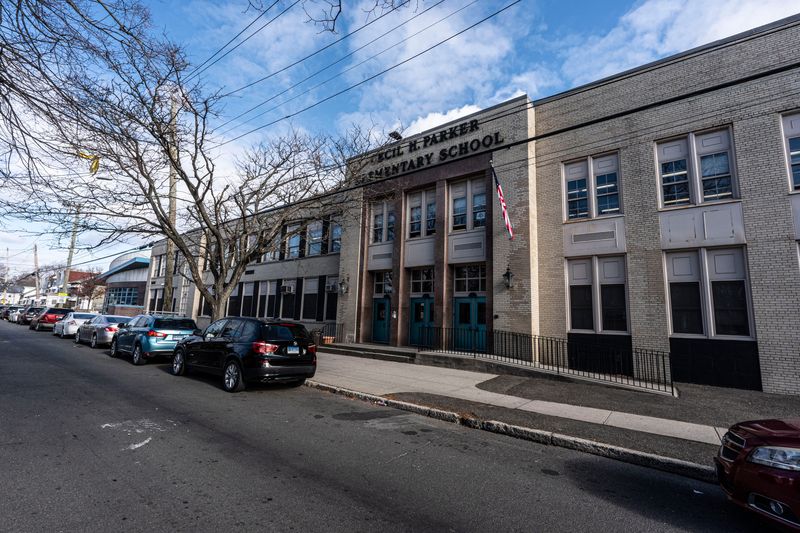
MOUNT VERNON − The school district’s state-appointed monitor arrives as Mount Vernon gains a new superintendent on the heels of scandal; in the wake of three incumbent school board members losing re-election in May; and as the district weathers steep funding shortfalls, staff cuts and building closures.
Kimberly Young Wilkins held her first public hearing as monitor on July 22. The longtime educator, appointed by state Education Commissioner Betty Rosa as Mount Vernon’s monitor, is a retired official of the state Education Department, having worked as assistant commissioner for innovation and school reform and as deputy commissioner for the Office of P-12 Instructional Support.

Wilkins had served as a teacher and interim superintendent in Albany City School District before moving to the state.
“I’m very familiar with the academic and fiscal challenges facing districts such as Mount Vernon,” Wilkins said during the public hearing, the first of three mandated hearings slated for this summer. Other districts in New York with monitors include Hempstead, Wyandanch, Rochester and East Ramapo.
“Aren’t you like a dollar late and a dollar short,” asked Cynthia Crenshaw, noting a decision last year to close three schools and move around some 1,000 kids. “Why are you here now? This board was in chaos, chaos.”
What cash-strapped Mount Vernon school district gets in return
Mount Vernon had been eyed for state monitor oversight for a while. Watkins said the process can take a couple years, because it needs state legislative approval.
Legislation approving a state monitor for Mount Vernon was folded into the 2025-26 state budget that passed in May. A standalone bill seeking a monitor for the city schools, sponsored by Assemblyman Gary Pretlow, D-Mount Vernon, didn’t get out of committee.
The monitor’s legislation also comes with a financial boost for Mount Vernon schools.
In the bill, the district received what’s commonly called a “spin up” of state aid. Mount Vernon received an $8 million advance on its 2025-26 state aid in 2024-2025. The $8 million advance will be paid back by slightly diminished state aid to Mount Vernon over the next 30 years.
Such spin-up aid is used to help boost fiscally stressed districts. Spin ups come with extra requirements to report data to the state, which in Mount Vernon’s case are part of the new monitor’s duties.
What will the Mount Vernon schools monitor do?
Wilkins summed up her role by saying she would help the school board: write a revised conflict of interest policy; develop fiscal and academic plans, including reviewing budgets starting next year and reporting to the commissioner about them; and assist in resolving disputes among the board and between the board and superintendent.
She said she would be in the district at least three days a week to meet with residents and visit schools and attend board meetings.
“Everything we do has to be transparent,” Watkins said. “Otherwise we work in a vacuum and that won’t work.”
The monitor was encouraged by some to get to know the stakeholders in the city. Kathie Brewington, Mount Vernon NAACP president, invited Watkins to NAACP meetings to get to chat with city residents.
The Mount Vernon monitor doesn’t have direct veto power over decisions. When asked if she would be able to speak at board meetings, Watkins made clear that she will.
Mount Vernon’s hurdles
According to New York State Education Department data, about 6,450 K-12 students were enrolled in Mount Vernon public schools in the 2023-2024 academic year. About 62% of students identified as Black/African American, 30% were Latino/Hispanic, and 5% white. About 73% of students came from families considered economically disadvantaged, and 12% were considered homeless.
As of August 2024, the district had a 76% four-year graduation rate, compared to 86% for the state.
A new superintendent, Demario A. Strickland, joined Mount Vernon on July 1. The 40-year-old most recently was interim superintendent of the Rochester City School District. That district also operates with a New York State-appointed monitor.
The district’s past superintendent, Waveline Bennett-Conroy, was fired this spring, around two years after she was reassigned amid questions about the handling of millions of dollars in federal grants and other matters. For much of that time, Bennett-Conroy had continued to collect her annual salary of $285,681.
The district’s fiscal health has been in decline for years. Over the summer, 84 teachers, teaching assistants and administrators are being laid off, along with 40 civil-service employees.
Mount Vernon also is closing three schools. A recent study predicts a further 20% decline in enrollment over the next decade.
Mount Vernon in 2024 was labeled a district in “significant financial stress” by the state Comptroller’s Office.
The July 22 meeting was the first of three mandatory public hearings with the monitor. A public hearing focusing on academics in the district is slated for 5:30 p.m. July 29. A meeting on the physical status of the district is slated for 5:30 p.m. Aug. 4. Meetings take place at Mount Vernon City School District Education Center located at 165 N. Columbus Ave.
This article originally appeared on Rockland/Westchester Journal News: Mount Vernon schools’ new state monitor explains role in boosting finances, education
Reporting by Nancy Cutler, Rockland/Westchester Journal News / Rockland/Westchester Journal News
USA TODAY Network via Reuters Connect