The family of Lucien Morin learned firsthand about public service in the 1960s. It resided right inside their Henrietta home, with a makeshift town courthouse where Mr. Morin served as a town justice.

Mr. Morin conducted weddings there, with his wife as a witness. On weekends, the State Police would bring individuals facing driving-related charges and minor offenses to the home.
“What he ended up doing was putting an addition on back of the kitchen to handle that,” Lucien Morin II said of his father. “He put a little addition on so he could hold court.”
As Henrietta grew into a thriving Rochester suburb, it of course built its own courthouse. And, during those subsequent decades, Mr. Morin would go from the town’s council and its court to the Monroe County Legislature and ultimately to serving as Monroe County’s first elected county executive.
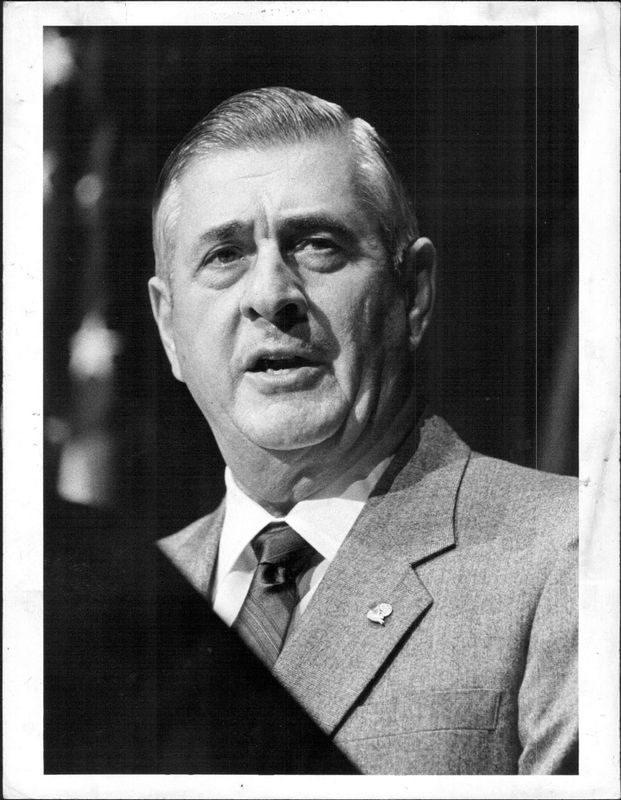
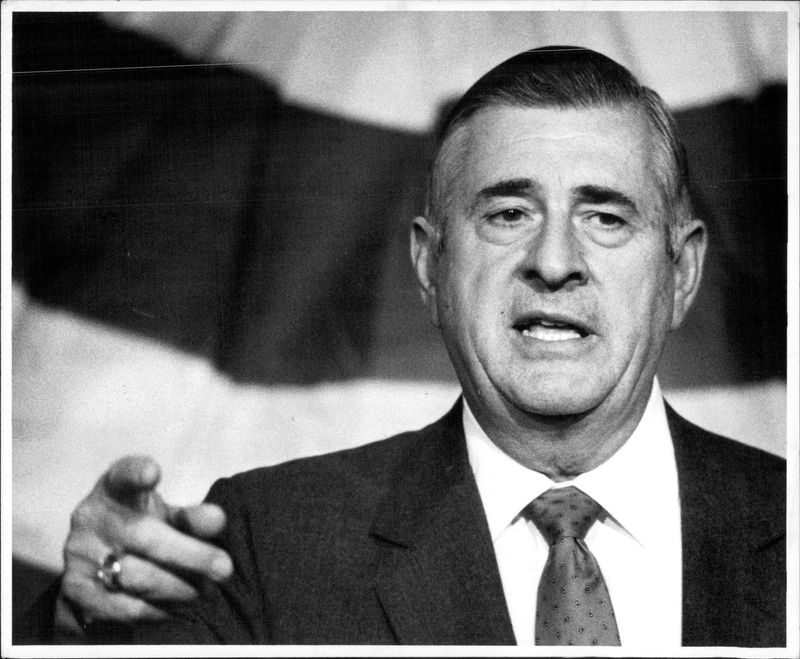
Mr. Morin, who died Sept. 5 at the age of 104, would leave a legacy of public service and political and governmental collaboration that in this era seems much a thing of the past. As well, because of his ability to build alliances regardless of politics, he still stands as one of the county’s most consequential political figures, almost four decades after leaving office.
“Clearly he was one of the last of the non-politicians,” said his son. “He basically was concerned about the community and not about himself.”
Lucien Morin recalled for integrity, humility
Once Mr. Morin’s death became publicly known — he had encouraged his family not to make it public, but, inevitably, word leaked out — similar sentiments about Morin were the norm among those who worked with him.
Democrats and Republicans alike remembered the Republican as a man of integrity with a deep concern for the entire community, county and city alike.
“He was humble; he was kind; he was caring,” said Bob Bonn, a former county official under a Democratic administration who knew Mr. Morin for years. “… His approach was as a public servant. He was not a politician.”
A seminal moment: The Morin-Ryan tax pact
Mr. Morin may be best known for his role, along with the late Rochester Mayor Thomas P. Ryan Jr., in crafting what became known as the Morin-Ryan tax agreement. That pact set a sales tax sharing agreement at a time when the city of Rochester was struggling to navigate difficult financial straits with a shrinking property tax base and growing demands.
But, more so, that agreement with a Democratic mayor, and with the city government and its residents, showed a willingness to ignore political and ideological lines and form partnerships.
Mr. Morin considered Monroe County and the city to be linked as a single community, and not islands unto themselves. To this day, local budgets mention the distribution plan, which is still in effect despite occasional threats by some of Mr. Morin’s successors to make changes.
“He felt it shouldn’t be them versus us, city versus county,” said former Center for Governmental Research President Patricia Malgieri. “He believed the city was the most important part, that it was the cog in the wheel.”
CGR, a Rochester-based think tank, worked with Mr. Morin and Ryan on the tax plan.
Though they had their disagreements, Mr. Morin and Ryan, who died in 2003, were friends who were known to reconcile conflicting issues over a dinner or a civil meeting.
“He and I use to solve more problems walking up and down Main Street than we ever did in our offices,” Mr. Morin once said of his collaborations with Ryan,
There was a symmetry in their careers: Ryan was an appointed mayor who became the choice when the city went to an elected mayoral system.
Morin was the county manager when the county switched to an elected county executive system in 1983. In fact, Morin at first declined to run, but the support for him in GOP circles was so strong — and there also was a fear of a Republican party divided by multiple candidates — that Morin reversed that stance and opted to be the Republican candidate.
Neither Mr. Morin nor Ryan intensely sought their jobs as elected executive and elected mayor. Instead, many others saw them as the best choices and convinced them to run.
Ryan was known for his aversion to public speaking and crowds; he was rarely comfortable with the politics of his job. But Morin was one of the few people able to crack through the shell.
Former Mayor Bill Johnson recalled traveling with them in the 1980s when Johnson headed Rochester’s Urban League. They were part of a municipal contingent researching above-ground tubular downtown pathways.
Once, in a hotel lobby, Morin found a public piano and produced a melodic tune.
“He sat down at this piano and started to play and got Tom Ryan to sing,” said Johnson, who later became a friend of Morin. “From that point on, I began to see Morin in a different light.”
At his county executive nominating convention, the support for Mr. Morin was so overwhelming that he was greeted with a 90-second standing ovation. Weeks later, Republican Rep. Jack Kemp, a former Buffalo Bills quarterback and a future vice presidential candidate, was the keynote speaker at Morin’s first serious fundraiser.
Lucien Morin served in Pacific Theater during World War II
A native of New Hampshire whose family moved to Somerville, Massachusetts, when he was young, Mr. Morin enlisted in the Army in 1939, partly to help support his family in the last years of the Great Depression. He joined the Boston-based 26th Infantry Division of the U.S. Army and served in the Pacific Theater.
While in the Army he rose from the rank of private to major, his rank when he retired.
With his employer, Mr. Morin’s work ethic and reliability led to similar ascensions, just as would his political career later. In Massachusetts, he worked as an office manager with the company, Kee Lox Manufacturing, and later, with a transfer to Rochester, landed a promotion to director of administration.
It was in Monroe County and the Town of Henrietta where he stepped into public service. He and his family moved to Henrietta in 1956. His first wife, Mary, would later tell the Democrat and Chronicle, “That was the year Lou got into politics.
“He joined a committee to work on town improvements and one thing led to another,” she said. “He was a town councilman, justice of the peace, fire commissioner and county legislator.”
As a justice, Mr. Morin was known for an occasional soft heart coupled with a firm intent for offenders to learn. He once sentenced two teenagers convicted of drag racing to writing essays about the dangers of drag racing.
Morin served as first Monroe County Executive
Mr. Morin’s political career truly began when he was elected as a GOP committee member in 1958. He was elected to the Monroe County Legislature in 1966.
In 1972, Mr. Morin was appointed county manager with a bipartisan vote and a coalition of nine Democrats and six Republicans. Other Republicans were vying for the job at a time when there was a schism within the party’s legislature ranks.
In that role, he galvanized support from his fellow Republican legislators, and from many in the Monroe County community, and became the natural choice as a candidate for county executive after the switch to an elected model.
In 1983 he handily won an election over Democrat Nan Johnson, with Mr. Morin scoring about 61% of the vote. Monroe County Republican Chairman Ronald Starkweather called the victory “an overwhelming mandate.”
In that same election a proposal for a consolidated metropolitan police force was defeated by a significant 3 to 1 ratio.
While manager and county executive, Mr. Morin worked to consolidate city and county services, saving costs for both, and to boost local economic development. Steady and typically unruffled and calm, Mr. Morin was viewed as a positive force within the local business community.
In today’s hyper-paced world in which political vitriol is more the norm, Mr. Morin and his approach to governance can seem like a distant memory.
“To me, personally, it seems that the sense of community and making sure we proceed positively and cooperatively has gone by the bye,” his son said.
Rochester Mayor Malik Evans said Mr. Morin’s collaborative spirit made him “a transformational leader of Rochester.”
“His partnership with then-Mayor Tom Ryan, and their development of the Morin-Ryan plan, reflected a historic intergovernmental relationship, and you can see the impacts of his work today,” Evans said. “I worked with Lou on a board after his retirement from government, and he gave me excellent advice on my first campaign for the Rochester City School Board. I am saddened to hear about his passing. He was an influential man and a wonderful role model.”
Monroe County Executive Adam Bello also highlighted Morin’s “ability to work across the aisle for the good of the community” in a Facebook post.
“He always put the people of Monroe County first, most notably with the Morin-Ryan sales tax distribution act, which balanced the financial needs of the City of Rochester while protecting suburban taxpayers,” Bello said.
Morin: A ‘belief in the community of Monroe’
The Morin administration was not without its controversies. A costly recovery recycling facility was mothballed after operational struggles, and the county’s pure waters program was beset with construction and engineering lapses.
Democrat Tom Frey highlighted those issues when he defeated Morin in the 1987 upset election for county executive. Mr. Morin, whose elections had typically been successful, left as a one-term executive.
As a county government and political reporter for the Times-Union, Patrice Mitchell covered Mr. Morin when he was county manager and county executive.
“Sometimes I feel like I tortured Mr. Morin when I zealously sought news exclusives about county government, some of which uncovered administrative problems large and small,” she said in an email. “Only much later, when relations between the Republican-controlled county and the Democratic-controlled city of Rochester had seriously deteriorated, did I realize how forward-thinking Mr. Morin was when he championed the community of Monroe in the 1980s.
“He believed the county and city could work together to help the financially strapped city,” Mitchell said. “Thus, he and city Mayor Thomas P. Ryan Jr. worked together on a plan providing the most extensive sharing of local tax revenue in the state. Through their unprecedented cooperation, the landmark Morin-Ryan Plan was born in 1985 and the city was saved.”
Mitchell added, “Years later I saw Mr. Morin and had the opportunity to say that I came to realize that his belief in the community of Monroe and his willingness to help the city were huge accomplishments, overshadowing any issues within the county administration. Ever gracious, he accepted my near-apology with a smile and thanks.”
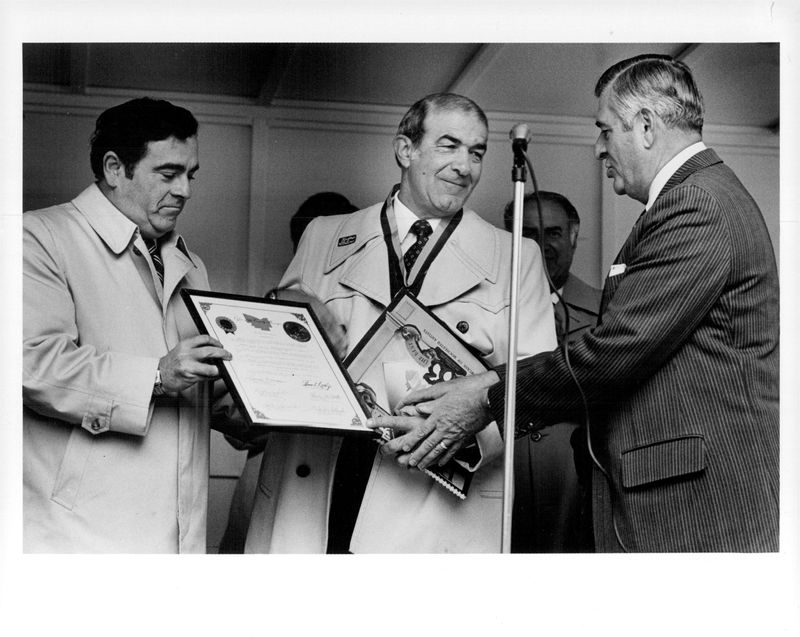
After leaving office, Mr. Morin kept a relatively low profile. He spoke at occasional public events and he and Ryan were jointly awarded CGR’s first “Profiles in Courage” award.
A county park on Empire Boulevard bears the name of Mr. Morin, who also made the growth of green space and park space a central issue during his political tenure.
In 2013, Mr. Morin helped raise funds for the renovations of the Veterans Memorial at Potter Park in Fairport. In a video interview, donning his veterans cap, he spoke of his military service and “those who didn’t come back, who gave their lives, who served their country.”:
It was typical of Mr. Morin to drift from the political limelight after he left office, Bonn said. Mr. Morin was never one to seek publicity in the first place.
“He had regard for the common man and wouldn’t want to be singled out,” Bonn said.
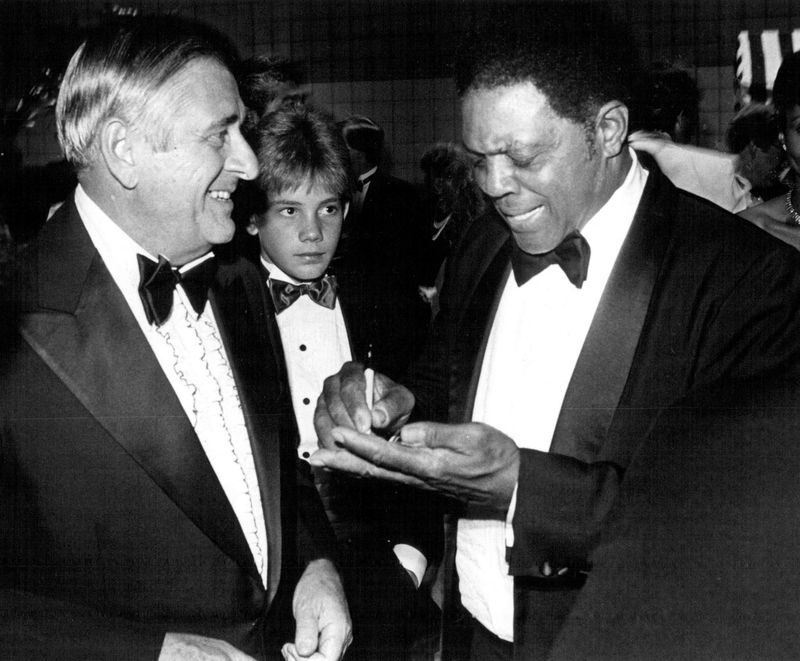
Former Mayor Johnson, a Democrat, said Morin became “an informal adviser to me.” The two would often discuss policy and, mostly, their mutual love of baseball.
“We’d talk politics and he’d bemoan how things are,” Johnson said.“I said, ‘Lou, it’s too bad there aren’t more people like you.’ ’’
Mr. Morin was predeceased by his wife, Elizabeth; his daughter, Marie J. Fetzner; and his stepdaughter, Linda L. Nissen.
He is survived by two children, Lucien A. Morin II (Teresa) and Linda A. Kozelsky (Joseph); a son-in-law, Charles Fetzner; three stepchildren, Larry G. Nissen (Elaine), Sherry Bushnell (Timothy) and Tammy Lopez (Luis); as well as grandchildren and great-grandchildren.
This article originally appeared on Rochester Democrat and Chronicle: Lucien Morin, first elected Monroe County executive, dead at 104
Reporting by Gary Craig / Rochester Democrat and Chronicle
USA TODAY Network via Reuters Connect