Each year the National Garden Bureau (NGB) announces their “Year of” plants.
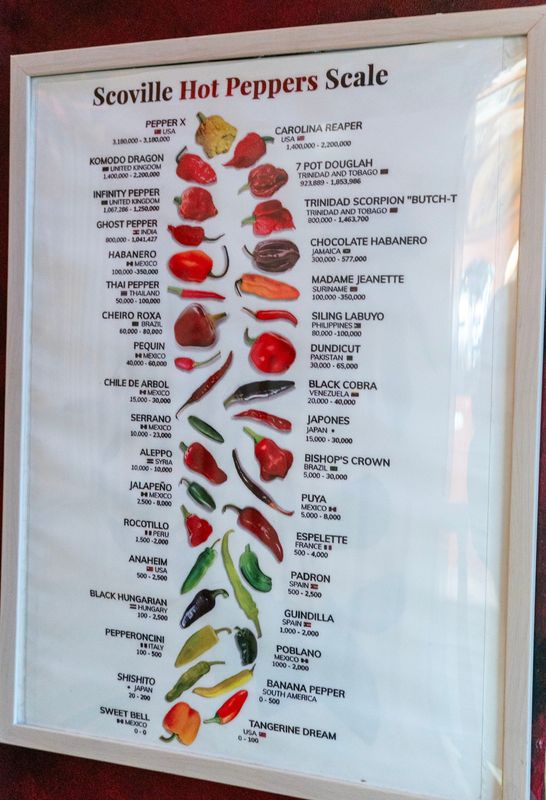
This year’s vegetable is the hot pepper. Peppers bring flavor, color, and spice to our plates as well as nutritional benefits.

Capsaicin is the compound that makes peppers taste hot and is found in the seeds and within the whitish membrane inside the fruits. Removing these before cooking or eating them raw reduces the heat of the pepper.
Here are tips for growing success.
Peppers take a long time to grow. They need heat, both warm air and soil. Start seeds indoors or buy transplants. Start seeds about eight weeks before the last frost, about two weeks before tomatoes or other warm season crops. Seeds germinate best if the potting medium is warm; place containers on a heat mat.
Once seeds sprout, move them under bright grow lights. Acclimate seedlings by placing them outside for a couple of days before transplanting them to the garden or containers. Some varieties can take over 100 days to ripen. Look at days to harvest information on seed packets or plant tags, the shorter the time, the better.
Cornell has just released the vegetable varieties list for 2026 which includes the varieties that grow best in New York. Visit https://gardening.cals.cornell.edu/garden-guidance/foodgarden/ to download a copy.
Pepper plants are very cold and sensitive; don’t be in a hurry to plant outside. Place plants outside when all danger of frost has passed and night temperatures stay consistently at 55 degrees F.
Space plants 12 to 18 inches apart. If growing in containers, use larger pots of at least 12 inches. Peppers need full sun and consistent moisture. Plants benefit from a water-based, general-purpose fertilizer about once a month. Peppers are self-pollinated and should set fruit without intervention. Harvest varies by pepper variety; fruit will be hottest when fully ripe.
Look at seed packets or plant tags for recommendations. Use clippers to cut fruit from plants and wear gloves when handling the fruit. Even if you don’t eat hot peppers, the plants with fruits are great ornamental plants in the garden and containers. Visit Cornell’s Garden Based Learning food gardening website for more information at https://gardening.cals.cornell.edu/garden-guidance/foodgarden/.
Cornell Cooperative Extension Oneida County answers home and garden questions which can be emailed to homeandgarden@cornell.edu or call 315-736-3394, press 1 and ext. 333. Leave your question, name, and phone number. Questions are answered on weekdays, 8 a.m. to 4 p.m. Also, visit our website at cceoneida.com or phone 315-736-3394, press 1 and then ext. 100.
This article originally appeared on Observer-Dispatch: It’s the year of the hot pepper
Reporting by Rosanne Loparco / Observer-Dispatch
USA TODAY Network via Reuters Connect