SPRING VALLEY – Lower Hudson Valley elected leaders and employers decried the humanitarian cost and warned of economic risk after a June 25 Supreme Court ruling paved the way for the Trump administration to eject hundreds of thousands of Haitians in the U.S. on Temporary Humanitarian Status, or TPS.
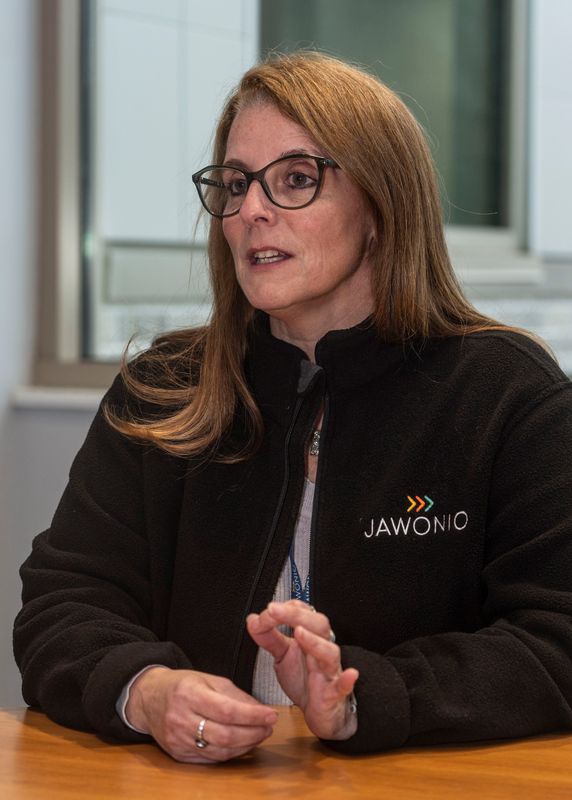
“It’s going to have a devastating impact on our workforce and other nonprofit organizations,” said Jawonio CEO Randi Rios-Castro, who leads an agency that provides lifespan services for people with disabilities.

Her agency could lose 10% of its direct-care workforce, the people who help people with developmental disabilities live as independently as possible. This is on top of a 20% vacancy rate the agency constantly faces with these low-paid and demanding jobs.
“Hospitals and nursing homes will also have an impact,” Rios-Castro said if and when TPS is formally rescinded for people from Haiti.
Inside Supreme Court ruling’s impact on New York Haitian population
The court’s 6-3 ruling on June 25 spelled out that courts cannot second-guess decisions by Trump and his U.S. Department of Homeland Security regarding TPS.
The specific case addressed revocation of TPS for Haitians and Syrians, but the precedent puts TPS status at risk for any number of nations.
The court majority also dismissed assertions that Trump, who has a record of years’ worth of derogatory statements about Haitians, has based the decision on racial animus.
Trump has repeatedly maligned Haitian immigrants, including falsely accusing Haitians living in Ohio of eating people’s pets. During the 2024 campaign, Trump promised “large deportations” in Springfield.
Local nonprofit leader Renold Julien disagreed with the high court’s view that the TPS rollback was unrelated to any animus by Trump.
“It’s racism,” said Julien, CEO of Konbit Neg Lakay, a nonprofit that has worked for decades supporting Haitian and other immigrants in the greater Spring Valley area.
Konbit has recently expanded educational training and certification programs that help feed a pipeline of workers for many healthcare professions.
When asked how rescinding TPS for Haitians could impact the healthcare workforce here, Julien said he doubted economic fallout was part of the Trump administration’s calculation.
“A racist doesn’t have no brain to think about nothing,” Julien said. “They are hurting immigrants of color.”
Large Haitian diaspora in the Hudson Valley
Tens of thousands of Haitians live and work in the Lower Hudson Valley. Rockland County is home to the second-largest Haitian diaspora, per capita, in the U.S. Haitian-Americans have multi-generational roots in Spring Valley, along with a large newcomer presence.
Haitians have had TPS status since a devastating earthquake there in 2010; protections for Haitians had been extended amid continual natural disasters and political upheaval.
The U.S. State Department considers Haiti among the most dangerous places to travel; a Level IV “Do Not Travel” advisory has been in place for Haiti for years. The risk of unrest and crime, including kidnapping, are considered a threat to visitors and Haitians alike.
“What about those people been in this country, business owners, homeowners,” Julien asked about those who now would have TPS protections stripped. “They worked hard for their money. You cannot ask them to leave this country, leaving this investment behind.”
Julien, whose agency helps newcomers navigate a complex U.S. immigration system, said it can take years, if not decades to establish the connections and paperwork needed to get permanent immigration status, or green card, let alone citizenship.
U.S. Rep. Mike Lawler, whose 17th District includes a large Haitian-American community, acknowledged the high court’s ruling on the social media platform X, saying “I have never disputed the ability of the President to end Temporary Protected Status (TPS).”
But, he added, “I strongly disagree with ending Haitian TPS at this time.” The Republican called the Caribbean nation “a humanitarian and political disaster.”
Impact on the local workforce, community
Lawler also cited the economic impact on the local healthcare field.
“Of the 350,00+ lawful Haitian TPS holders, roughly 1/3rd work in the healthcare system,” Lawler wrote on X. Shutting down TPS for Haitians, he said, “will create a crisis in our hospitals, nursing homes, and in the I/DD community.”
TPS status grants recipients permission to work in the U.S.
In Rockland, key healthcare fields have been magnets for workers from Haiti.
That includes direct support professionals, known as DSPs, who work with people with disabilities in group home and day habilitation settings. They provide a range of care that can include feeding and toileting individuals with complex needs.
Agencies like Jawonio and St. Dominic Family Services and the ARC in Rockland County have expressed concern that the end of TPS could upend staffing that helps provide lifespan services for people with disabilities in the Lower Hudson Valley.
The jobs are tough to fill: they are low paid and difficult, agency leaders have said, and demand a level of patience and compassion.
Rios-Castro said the impact is about more than a census of workers. Many of the DSP workers who are TPS workers are longtime staff who know the people they work with well. The loss of these relationships will hurt workers and people who need support.
“It really is going to be problematic,” Rios-Castro said. “You’re not talking about people’s lawns going unmowed. You’re talking about people’s health being impacted because of this.”
Tracy Parker, chief human resources officer of Jawonio, questioned how the decision benefitted the U.S. “You are taking people who are currently working and paying taxes into a system they will never get any benefit from: There’s no logic whatsoever.”
Gov. Kathy Hochul said if the Supreme Court ruling leads to the removal of TPS protections for Haitians, “It’s going to cripple our healthcare system.”
“Who’s going to show up tomorrow to take care of grandma?” Hochul, a Democrat, said during an 1199 SEIU United Healthcare Workers East, press conference June 25 in Manhattan. The union represents around 450,000.
She pledged to find a path forward. “This is New York, we fight back. We defend our people.”
Could TPS still be extended other ways?
Officials pointed to another pathway to protect Haitians’ status here: Congress can extend TPS status.
Lawler, who said he had repeatedly urged the Trump administration to maintain TPS protections for Haiti, said the House passed legislation that he co-sponsored that would extend Haitian TPS.
The legislation remains stuck in the Senate.
Both New York Democratic senators, Kirsten Gillibrand and Chuck Schumer, have supported the legislation.
That legislation would extend Haitian TPS through April 2029.
Meanwhile, Lawler had asked the Trump administration to allow TPS holders to keep work authorizations while their immigration cases move through the system.
Cait Conley, Lawler’s Democratic challenger for his 17th District seat in the November midterm elections, called the Supreme Court ruling “an awful decision,” and urged Congress to “act immediately” to protect Haitian TPS.
“The Haitian community is critical to our community in the Hudson Valley and the backbone of our healthcare system,” she said.
Meanwhile, Rios Castro said, they are awaiting guidance from DHS for the next steps.
Nancy Cutler covers People & Policy. Reach her at ncutler@lohud.com; follow her on X, Bluesky and Instagram at @nancyrockland.
This article originally appeared on Rockland/Westchester Journal News: How Trump’s court victory on Haitian TPS could hurt NY healthcare
Reporting by Nancy Cutler, Rockland/Westchester Journal News / Rockland/Westchester Journal News
USA TODAY Network via Reuters Connect
By Nancy Cutler, Rockland/Westchester Journal News | USA TODAY Network