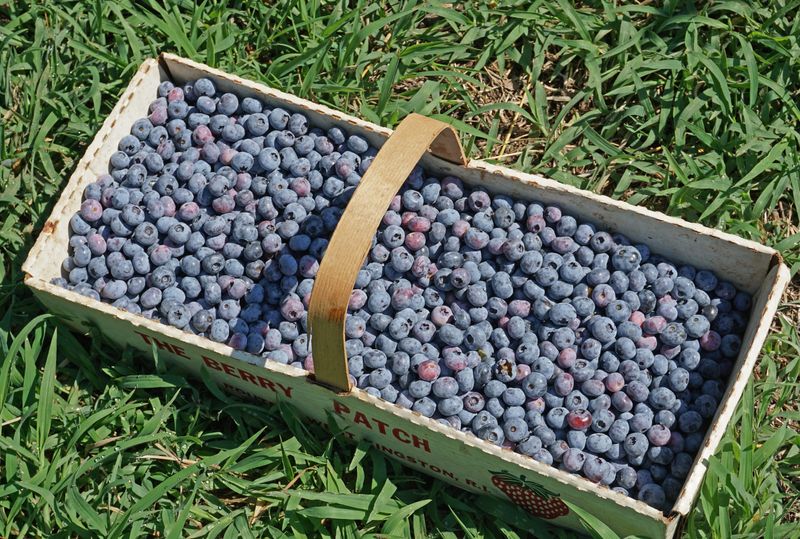
Blueberry plants are perennial woody shrubs. They are one of the few native American fruits commonly grown in the home garden.
Highbush blueberries are a great landscape plant, grown as an alternative to the burning bush which is currently listed as a regulated plant on New York State’s invasive plant list.

In addition to highbush, there are also lowbush blueberries for small gardens. There are even blueberry cultivars for containers.
Blueberries are a bit challenging to grow. Here are the facts to help you succeed.
Growing needs. Plants need full sun and plenty of organic matter such as compost. The most critical need is the proper soil pH: blueberries need acidic soil, around a pH of 5.0.
Consider a soil test before you plant; CCE of Oneida County can help you. Blueberries are drought-sensitive; water plants during dry spells and use mulch to conserve moisture. Adequate pollination ensures good fruit production. Plant two or more varieties, three feet apart, for the best results.
Maintenance. Blueberry plants grow slowly; don’t be surprised if plants stay small for several years. In the first two years, remove flowers in spring to encourage plant growth; this will ensure healthy, productive plants.
At planting, only remove dead/dying branches. After the first year, prune the bushes annually in early spring before growth starts. Prune to remove dead wood, shape, maintain vigorous stems, and stimulate new shoots. Be careful not to prune too aggressively.
Investing in a good fruit growing book is always a good idea to help you with growing needs as well as proper identification of problems. Use our CCE of Oneida County website fruit page as one resource; included on our website is the Cornell Guide to Growing Fruit at Home. You’ll find suggestions on varieties of blueberries that are well-suited for growing in central New York as well as fertilizer and pruning tips. Visit https://cceoneida.com/home-garden/gardening/fact-sheets/fruit-vegetable-gardening/berries-small-fruits.
Patience is key when growing blueberries. Plants won’t produce much fruit for the first two to three years. However, the plants themselves are beautiful while you’re waiting for the fruit. If you’d like to learn more, join the master gardeners at Norths Star Orchards, 4741 NY-233, Westmoreland, NY 13490 during their “you pick” blueberry season. We will be there on Saturday, July 12, 2025, from 9:00 am to 1:00 pm. We’ll answer your blueberry growing questions as well as any other gardening questions. Join us and enjoy picking blueberries while waiting for your own plants to produce!
Cornell Cooperative Extension Oneida County answers home and garden questions which can be emailed to homeandgarden@cornell.edu or call 315-736-3394, press 1 and ext. 333. Leave your question, name, and phone number. Questions are answered on weekdays, from 8am to 4pm. Also, visit our website at http://cceoneida.com/ or phone 315-736-3394, press 1 and then ext. 100.
This article originally appeared on Observer-Dispatch: How to grow blueberries
Reporting by Rosanne Loparco / Observer-Dispatch
USA TODAY Network via Reuters Connect