It was quite a winter for snow and steady cold temperatures. At times it seemed like winter was dragging on – given that it started back in November and we had little reprieve since then. Many of you might be saying to yourselves that that’s an understatement. But, yes, we have had two normal winters in a row – especially if you remember winters from decades ago.
I recently had a birthday and Mom always reminds me of a brutal blizzard that took place while she was in the hospital on Abe Lincoln’s birthday in 1960. Mom and Dad were operating a dairy farm, and at that time there were many dairy farms, and thus there was much more local bulk milk trucking action on all the country roads. It was critical that the milk trucks would be able to collect the milk from all of the dairy farms with milk pickup every other day. During this blizzard, the snowdrifts were so high that snowplows were virtually making one-lane tunnels to help milk trucks reach their farm destinations.

Fast forward to today, and much has changed in the world of dairy farming! Yes, the number of cows in New York state is about the same, however, they are congregated into fewer but much larger dairy facilities. Small dairy farms are now a rarity as much larger farms, with greater efficiencies for growing crops and milking cows, have taken over.
As a commercial and agricultural banker for 40 years, I have watched this transition first hand. Our farm here on LaGrange Road in Wyoming, NY is one of those former small dairies because, as a banker, I decided to stay in farm lending and not take over my parents’ active dairy herd. It was a tough decision, but probably the right one. But instead, our family would celebrate three decades of successful and very memorable dairy farming. Having that experience of growing up on a small family farm was precious. Today, that farm remains, and grows crops that supply one of the local larger dairy farms with feed for their cows.
That little bit of history I witnessed, together with watching the rest of the dairy world transitioning, further validated the transition that actually started somewhere around 1900 when country roads were populated with many much smaller farms, each with only a few cows. These farms all had to keep their pastured cows separate from their neighbors’ cows using traditional wood post fencing. That meant lots of fencing and lots of pastures.
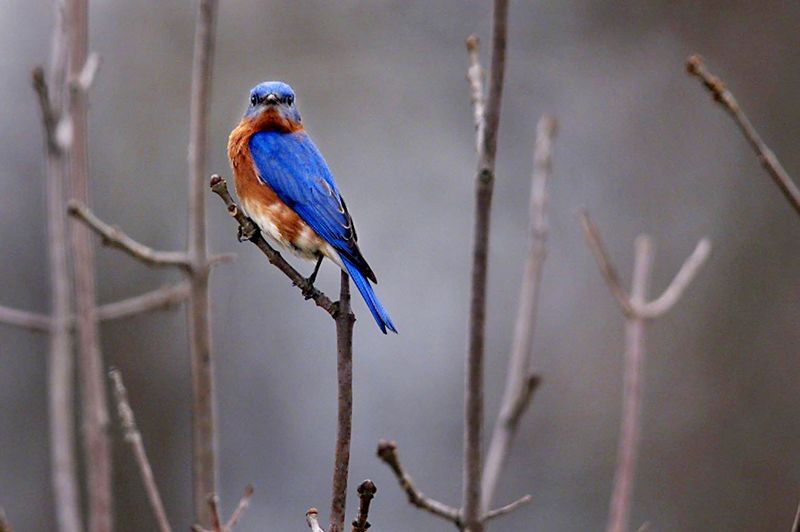
The wooden fenceposts at that time had many holes in them which were perfect for cavity nesting birds, especially the Eastern Bluebirds. The pasture habitat was also perfect for the Bluebirds as they like hunting for insects in open short grass habitats. Yes, the Bluebird population was booming back in the early half of the 20th century. But as dairy farming modernized and dairy herds increased in size, the traditional “perfect” fences and pastures started to dwindle. That meant less natural nesting habitat for Bluebirds to thrive in, and that meant a large decline in the Bluebird population.
It wasn’t until the 60s, 70s and 80s that placing Bluebird nest boxes out for Bluebirds would start the revival of their population. Today their population is in good shape thanks to the many people and organizations that have placed these nestboxes out for them in their preferred open habitats. Today, many small hobby farms and parks are providing that desired habitat.
The demise of the Bluebird also had to do with the advanced apple/fruit orchard agriculture replacing the many old fruit orchards that included many hollows that were also perfect for Bluebird nesting. Today few old orchard trees with hollow cavities even exist. Add to that the steady rise in the invasive bird species – the English Sparrow and the European Starling – both taking over many of the few remaining natural nesting cavities and also nest boxes.
So, as you can see, agriculture’s changing scene over the last 125 years has a lot to do with the Bluebird population and success and challenges over that time. Thus, we need to do all we can to help the Bluebird, our NYS bird, to thrive in the future. Keeping English Sparrows from dominating the Bluebird nest boxes remains a challenge. And keeping Starlings from dominating Red-headed Woodpecker nesting cavities is a major issue.
Bluebird nesting season is fast approaching. There’s much to learn about Bluebirds and helping them to be successful.
Don’t forget about the NYS Bluebird Society and its conservation efforts on behalf of Bluebirds and other native cavity-nesting birds! We will be holding the annual NYS Bluebird Society Conference in Warsaw, NY on April 25. It’s a great program lineup which you can read about on the NYS Bluebird Society website. If you plan on coming, reservations are not required, however, for planning reasons and space, a reservation is appreciated. You can do this by call/text to me Hans Kunze at 585-813-2676.
Until next time keep paying attention to the many signs of spring!
— Hans Kunze writes a New York state-focused birding column.
This article originally appeared on The Evening Tribune: How changing farming practices have impacted NY bluebird populations
Reporting by Hans Kunze, Columnist / The Evening Tribune
USA TODAY Network via Reuters Connect