The Village of Endicott’s lawsuit against IBM alleging water well contamination will move forward following a federal court ruling.
Endicott, the birthplace of the technological manufacturing company, filed a lawsuit against IBM in December 2024 calling for financial compensation, alleging the company’s actions contaminated the village water supply with toxic substances in the soil and groundwater, which have since entered the village’s water supply wells, forcing them to be shut down.

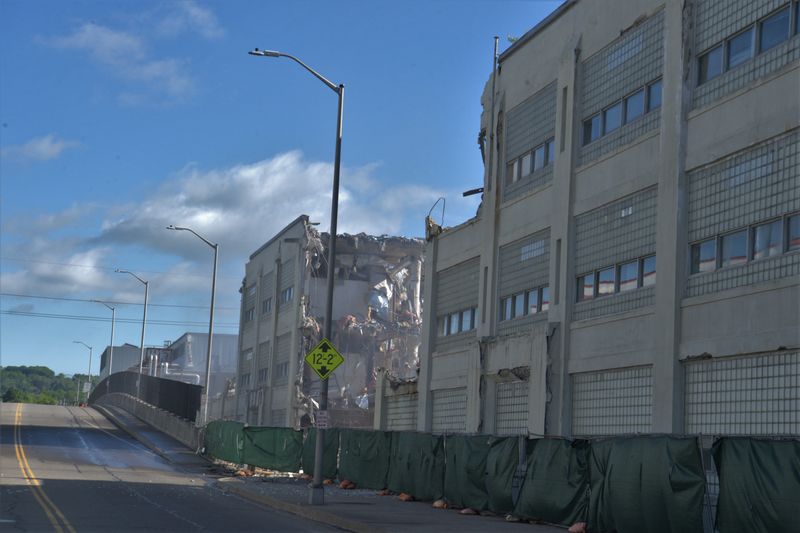
The lawsuit was filed nearly a decade after IBM reached a settlement with 1,000 plaintiffs stemming from toxic spills at the company’s former Endicott manufacturing plant, which was demolished in 2025. In a decision released on May 6 by the U.S. District Court Southern District of New York, a federal judge determined the village can move forward with several of the claims made in its lawsuit against the company.
In the initial lawsuit filing, the village claimed IBM improperly disposed of hazardous materials including 1,4 Dioxane, PFAS, or forever chemicals, and various other toxic substances tied to developmental problems, kidney and liver damage as well as cancer.
After IBM moved to dismiss the lawsuit, the federal court granted IBM’s motion in part by dismissing some of the claims, but the village succeeded in maintaining others.
Claims made by the village
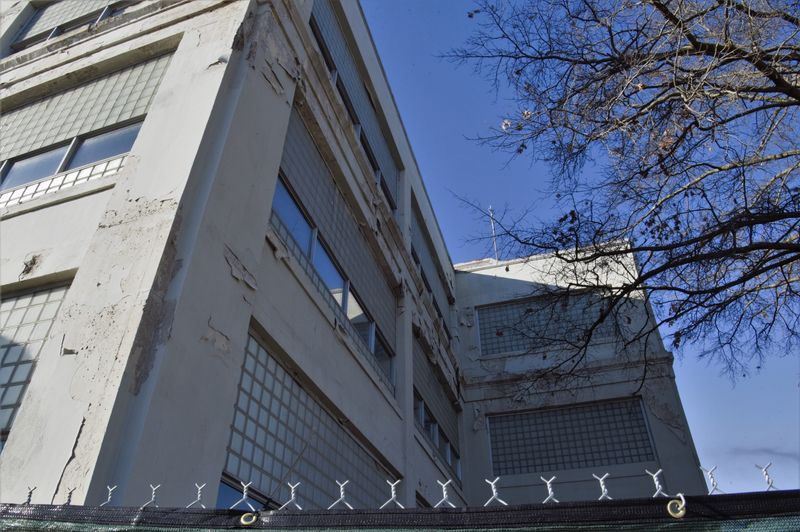
From 1911 to 2022, IBM operated a large industrial and manufacturing campus in Endicott which hosted a “wide range of industrial activities,” including the manufacture of calculating machines, typewriters, printed circuit boards and computer components, as well as other manufacturing, research and development operations, according to the federal court order.
IBM’s operation at this location included circuit board assembly processes utilizing liquid cleaning agents and chemical solvents. All operations on IBM’s Endicott campus produced waste material, including “numerous chemicals and solvents.”
The village alleges the company’s practices resulted in the release of hazardous substances into the environment through spills, leaks and improper disposal practices. In one example, the village alleges that in December 1979, IBM inadvertently released approximately 4,100 gallons of 1,1,1-Trichloroethane, a substance stabilized with 1,4-Dioxane, into the environment.
These practices led to the contamination of three of the village’s water wells, according to the lawsuit. As a result, two of the wells were purportedly shut down, the village had to purchase water from another municipality, monitor contamination and spend $12 million to construct a new groundwater well.
In the lawsuit, the village is seeking to sue IBM for claims under the Comprehensive Environmental Response, Compensation and Liability Act, as well as various state law claims, including negligence, failure to warn, public nuisance and trespass.
What is in the federal opinion and order
In its opening brief, IBM sought to dismiss the case in its entirety. While two of the village’s claims regarding one of the village’s wells were dismissed, others survived the judge’s decision.
The judge first denied the village’s CERCLA and state-law claims relating to Well 32, otherwise known as the Ranney Well located by Grippen Park. Well 32, according to the decision, is already part of a federally managed Superfund Site known as the Endicott Village Well Field. The site has already been designated for federal cleanup, and the U.S. Environmental Protection Agency is currently conducting its sixth “Five-Year Review” of the location to ensure proper cleanup.
The village allegedly has been designated as a “potentially responsible party” by the EPA for a landfill it operated where the contamination may have originated, according to the decision. This and the federal government’s involvement with the site means the village cannot undertake any additional legal actions in regard to Well 32 without the EPA’s authorization.
CERCLA claims made by the village regarding Wells 5 and 28, however, survived the court’s decision. In a motion to dismiss, IBM argued the two wells are connected to the same aquifer as Well 32 and are therefore part of the Superfund Site. According to the ruling, it is too early in the case to dismiss this without further evidence.
The court ruled the village had “plausibly alleged a negligence claim” in regard to Wells 5 and 28, given the “well-recognized duty” of a company to not contaminate the water of its surrounding community. The court cited the incident in December 1979 and decades of groundwater contamination as a reasonable claim of negligence. The failure-to-warn claim made by the village, however, was dismissed because it was “nearly identical to its negligence claim,” according to the decision.
The village’s public nuisance and trespass claims were not rebutted by IBM in its motion to dismiss the case, so the court ruled to keep the claims in regard to Wells 5 and 28.
In its rebuttal to the initial lawsuit, IBM contends that the village “improperly seeks damages” that were addressed in a prior settlement. The village was a part of a $13 billion public water systems settlement resolving claims that the 3M company contaminated the village’s water supply with PFAS, according to the decision. The judge denied IBM’s claim for now, citing the need for further discovery before addressing possible double recovery.
In a statement released on May 8, Village of Endicott Mayor Nick Burlingame said he is grateful the court is allowing the village to move forward with the lawsuit and “seek accountability” from IBM.
“Our residents and businesses have borne the financial and emotional strain of losing key wells, buying outside water and planning expensive new infrastructure just to ensure that the taps run clean,” he said in a statement. “This decision strengthens our resolve to deliver safe, reliable drinking water and affirms a principle that our community holds dear — local taxpayers and ratepayers should not be stuck paying to clean up the mess left by industrial polluters.”
Attorney Paul J. Napoli, who is representing the village, said the decision marks “an important step forward” for the village and its residents.
“This ruling ensures that the village will have the opportunity to pursue discovery and continue seeking accountability and recovery of the substantial costs incurred to protect the community’s drinking water supply,” Napoli said.
IBM did not return a request for comment on May 11.
This article originally appeared on Binghamton Press & Sun-Bulletin: Endicott wins key ruling in IBM legal battle over water contamination
Reporting by Jillian McCarthy, Binghamton Press & Sun Bulletin / Binghamton Press & Sun-Bulletin
USA TODAY Network via Reuters Connect