A recent financial boost is helping to move a community garden alternative forward in Endicott.
The Union-Endicott Food Forest Project was awarded a $3,000 grant from the Endicott Lions Club on March 25 at the Central Methodist Church, initiating a financial foundation for the volunteer-led initiative.

The idea for a food forest came up in a discussion a year or two before the COVID-19 pandemic to introduce the concept of a community garden to the Village of Endicott.
As part of the Broome County Food Council’s 2024 Access Plan, the food forest project is a direct result of the Western Broome initiative to increase collaborative efforts within underserved communities. The council identifies Western Broome as a 20-mile stretch beginning at state Route 26 in West Corners to the Whitney Point area.
Unlike a community garden, a food forest does not use raised garden beds. Instead, the ground is covered with organic matter to build up the soil and seeds are planted directly into it.
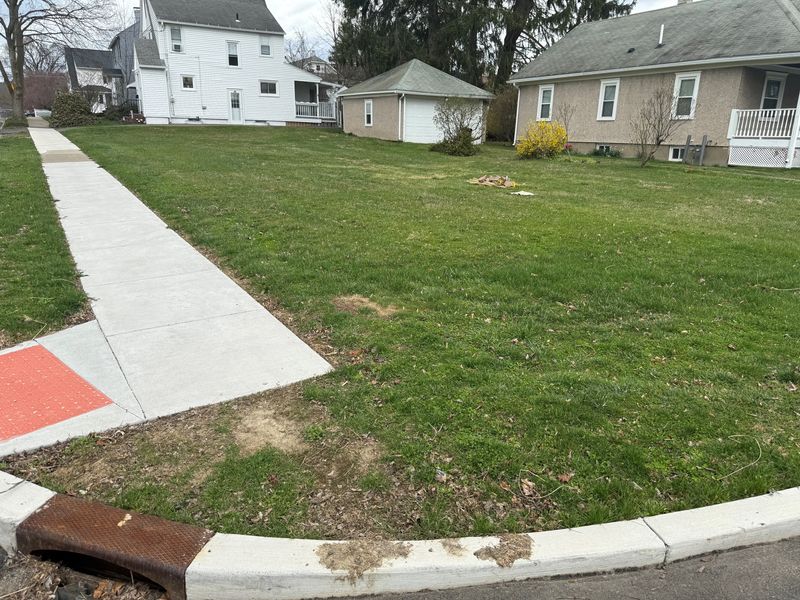
The UE Food Forest Project will be located at 509 S. Loder Ave., spanning 4,700 square feet of land across the street from Mercereau Park.
FEMA has deemed the land a flood-risk area, and Food Forest organizer Cynthia Knight believes the project will make “good use” of the land since nothing else can be built on it.
Knight describes herself as an advocate for food justice and a community member passionate about making healthy food accessible. Conversations between the Broome County Food Council and Knight began months ago to advance the vision of eliminating food insecurity.
Associate pastor and member of Central Serves at Central Methodist Church Paul Reed has supported the project since day one and plays a key role as a grant writer for the Food Forest. As part of one of the grant requests, funding for a part-time garden coordinator has been included.
Food Forest timeline in Endicott
Union‑Endicott students will be involved in the project. Civil engineering students are developing the final blueprint for the food forest, while the Broome‑Tioga BOCES construction trades division will build the storage shed over the summer. The heavy equipment division at BOCES has also committed to helping in the fall with tasks such as installing fencing.
The groundbreaking to begin piecing together the forest infrastructure is expected to begin in the coming weeks and take two full seasons to complete.
Planting is expected to begin by July 2026, and it will take roughly two to three years for plants like fruit trees and berry bushes to mature and produce a robust harvest.
How is the food forest different from community gardens?
Community gardens are typically limited to raised beds managed by individuals or families in the nearby community.
Food forests use a technique called permaculture, in which the ground is covered with organic matter to build up the soil and allow seeds to be planted directly into it.
The idea behind a food forest is to create a self-sustaining ecosystem of vegetation through companion planting, during which two plants that benefit from each other and share the same nutrient needs can be planted next to each other, creating an environment for the two to coexist.
What types of crops are expected to be grown at the UE Food Forest?
How will the crops from the Food Forest be distributed to the community?
It’s still early in the planning process, but Knight plans to have volunteers harvest the produce then deliver to food pantries, organizations that offer community meals and possibly use a stand similar to local blessing boxes.
Another element Knight hopes to include is an educational component to teach residents how to properly store produce to prevent spoilage, along with recipes encouraging healthy meal preparation.
UE Tiger Ventures is looking to potentially include produce from the garden in their satellite pantry and create a fresh produce stand in the Endicott area.
What do the numbers reflect about food insecurity in the Broome County area?
According to the Food Bank of the Southern Tier, the organization distributed 19.4 million pounds of food across its six-county service area in 2025. Broome County residents have received more than 3.4 million pounds of food from the Food Bank and CHOW.
Food organizations like the Food Bank of the Southern Tier have seen significant spikes in food requests and outreach since COVID-19.
Broome County Food Council Manager Theresa Krause said in an April 7 interview that food insecurity is tied to a “deeper structural issue,” including transportation, housing and overall affordability.
The food council is made up of 70 organizations working to build relationships, bring people together and create momentum to address food accessibility.
According to the United for ALICE website — ALICE is an acronym for Asset Limited, Income Constrained, Employed — the number of households in Broome County falling below the ALICE threshold has increased in recent years.
The council partnered with students from Binghamton University to conduct a community survey in 2023 that identified zip codes 13901, 13902, 13903, 13904, 13905 as areas with the highest transportation barrier.
For the City of Binghamton, Kause said the main barrier to food access is transportation— a point that often puzzles people because BC Transit is available. According to Krause, the largest demographic experiencing food insecurity in Broome County are children 5 and under.
In an April 10 statement, Knight said the “sky is the limit once we determine which crops are best suited for both the land and the people we intend to serve.”
Kalyn Grant reports on public service issues for the Press & Sun-Bulletin, focusing on schools and community impact. Have a story to share? Follow her on Instagram @KalynCarmen and on Facebook under Kalyn Kearney. Get in touch at KCGrant@usatodayco.com
This article originally appeared on Binghamton Press & Sun-Bulletin: Endicott food forest project to fight food insecurity in the region
Reporting by Kalyn Grant, Binghamton Press & Sun Bulletin / Binghamton Press & Sun-Bulletin
USA TODAY Network via Reuters Connect