Volunteer firefighters in New York will have more opportunities to offset some of the costs of the job through the expansion of a state program, but they are still pushing for different forms of financial assistance as state lawmakers kicked one bill off the floor last week.
Over 90% of fire stations across New York rely on volunteer firefighters, according to fire officials. However, nearly half a dozen volunteer-based firehouses across the state closed their doors in 2025 due to a lack of staffing, and response times are increasing as the ranks of volunteer firefighters have fallen to the lowest level in 40 years.

There are many “tools in the toolbox” to address those issues, says Ralph Raymond, the Association of Fire Districts of the State of New York’s second vice president.
The state’s Volunteer Firefighter Training Stipend Program, in effect since 2023, has been helping departments recruit and retain members, and two more tools being considered in Albany — income tax credits and nominal compensation — would improve both response times and firefighter safety, fire officials say. But one of those may be off the table this year.
Here’s the latest.
How New York’s training stipend program has helped fire departments
The state’s training stipend program provides funding for those working to become volunteer firefighters in New York. For example, New Yorkers can receive a $250 stipend toward learning how to suppress wildland fires, which is part of their basic training.
The program’s goal is to help add to and sustain the state’s volunteer firefighter workforce and, so far, it’s working. According to Gov. Kathy Hochul’s office, more than 4,000 volunteer firefighters have completed their training through the program since 2023, and several training courses have seen increased completion rates.
Hochul announced an expansion of this program last week, adding five more stipend-eligible training courses for a total of nine ranging from a $250 stipend up to $1,250. Fire officials, including those from the Firefighters Association of the State of New York (FASNY), are praising the growth.
“FASNY has been working with the State and the entire New York fire service to increase recruitment of new volunteers for a long time, and we welcome the growth of the training stipend program, which provides support to these new firefighters and officers while they undertake these vitally important training programs,” FASNY President Eugene Perry said in a written statement.
Assemblyman’s income tax credit bill won’t be voted on
Assemblymember Joe Angelino, R-Binghamton, previously introduced legislation that would provide tax credits to volunteer firefighters equal to the cost of the issuance of fishing and hunting licenses and allow volunteer firefighters in good standing to collect a state income tax credit of up to $2,500.
Tax credits of $250 have been in place for more than two decades, FASNY Secretary John D’Alessandro says, and his organization has been pushing for an increase in the amount for more than 10 years.
Last week, Angelino requested a vote on the bill, which he says had been stagnant, and the Assembly majority declined to allow a vote. From the Assembly floor on April 22, the former fire chief and current volunteer firefighter for the Norwich Fire Department said a third of volunteer fire departments in his district “probably won’t make it to the end of the year.”
“I remind you, these are volunteers, meaning no pay,” Angelino added. “Yet they are doing dangerous work and they take great risk every time they answer a call. A tax credit is certainly warranted for these individuals and will help attract the new generation of our firefighters.”
Both Raymond, who is also commissioner for the North Massapequa Fire Department on Long Island, and D’Alessandro, who is currently a firefighter in the Halfmoon-Waterford Fire District in Saratoga County, says last week’s decision is disappointing.
“We hope some good will come out of what happened in the sense that it starts a significant, real debate, discussion about what we need to do to get that tax increase higher,” D’Alessandro said.
“It would be an important incentive that departments can use to try to attract new members. It’s not the magic bullet, but it certainly would be an important thing to have in the recruitment toolkit,” he added.
And Raymond said that firefighter groups throughout the state are “continuing to move forward.”
“We’re trying to push through any kind of tools we possibly can that are going to assist us in improving retention during these times,” Raymond said.
What’s the difference between nominal compensation and a tax credit?
Another one of those tools? Nominal compensation.
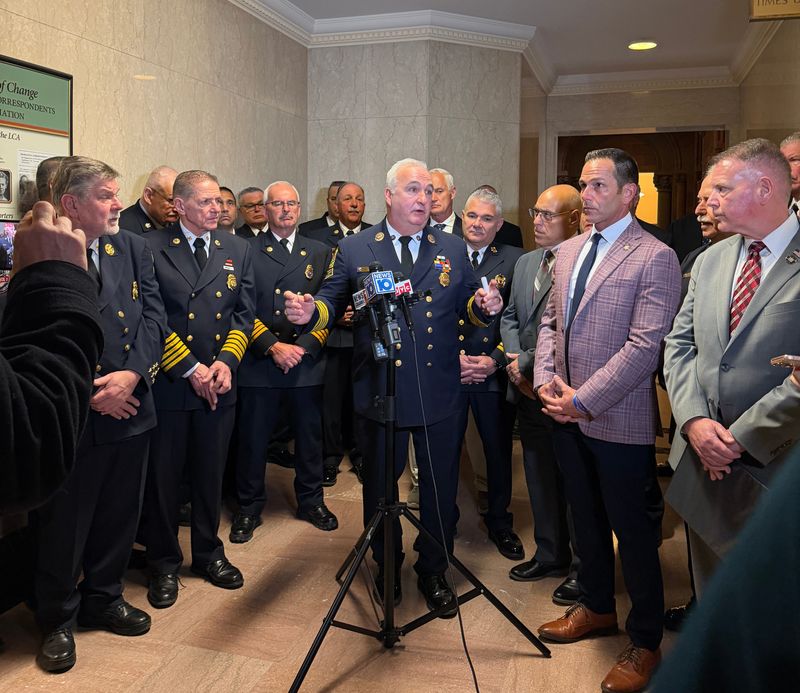
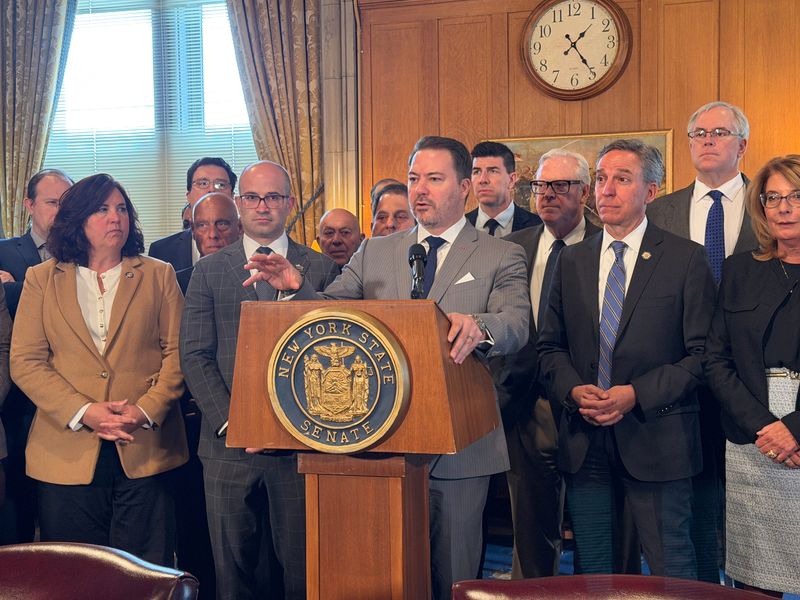
Earlier this year, fire officials gathered inside the state Capitol to push for the measure, which would cover expenses such as the cost of travel to calls or paying members for being on call, for mandatory, on-duty fire personnel staffing firehouses.
It differs from a tax credit in that departments would have the option to provide pay for certain expenses in a way that works for their individual budget. Tax credits would be all-encompassing for firefighters across the state and subtract from taxes owed.
And while D’Alessandro says FASNY supports nominal compensation, oversight and a fund for smaller departments that are financially unable to pay for these costs on their own are necessary for the success of a measure like that.
Assemblymember Michaelle Solages introduced a bill in March that would change the current state laws that keep fire districts from incentivizing or reimbursing volunteer firefighters. And it’s doing well, Raymond says.
“We have Assembly support across the board,” Raymond said. “We’re working with the Senate side, currently, to try to introduce the bill, and then once that’s complete, we believe we have the support of the governor.”
Emily Barnes covers state government for the USA TODAY Network-New York with a focus on how policy and laws impact New Yorkers’ taxes, communities and jobs. Follow her on Instagram or X @byemilybarnes. Get in touch at ebarnes@usatodayco.com.
This article originally appeared on Rochester Democrat and Chronicle: Emergency response times increase as volunteer firefighters seek help
Reporting by Emily Barnes, New York State Team / Rochester Democrat and Chronicle
USA TODAY Network via Reuters Connect