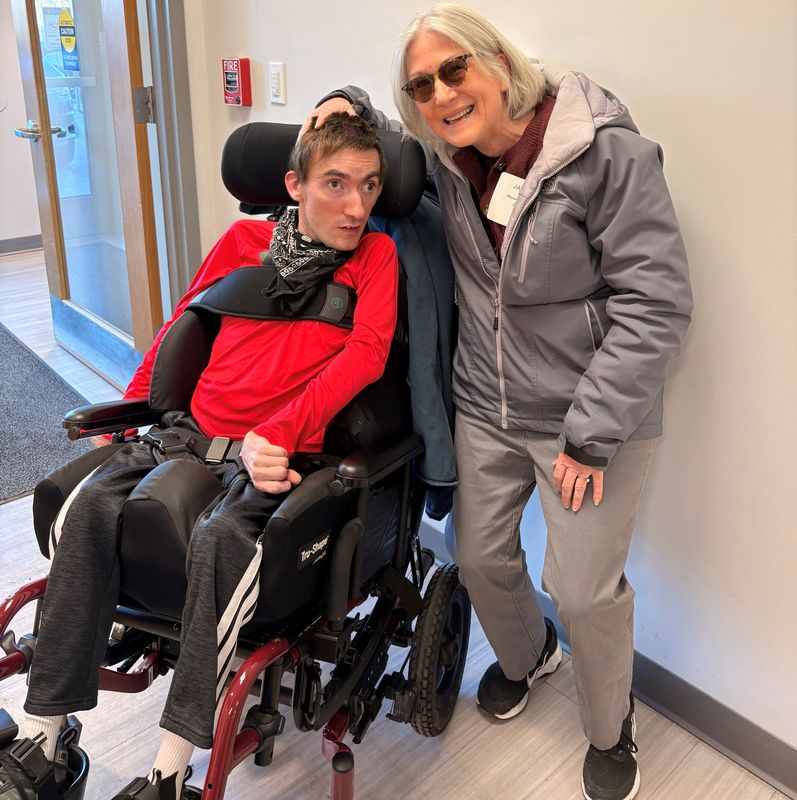
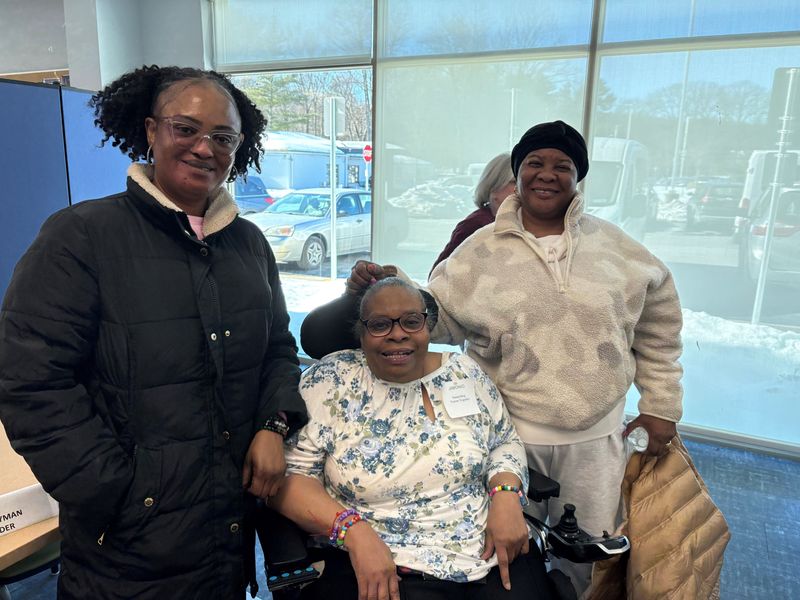
NEW CITY – Families, leaders and consumers of Rockland’s human-care agencies met with state elected leaders to once again pitch a wage boost for direct-care workers in the upcoming state budget.
Agencies that serve people with developmental disabilities, including autism and others in need of supportive care, say that staffing shortages endanger their financial stability and the independence of the people they serve.

“We need a workforce that can afford to stay in the work they love,” Jawonio CEO Randi Rios-Castro said during a Feb. 13 legislative forum hosted by Jawonio and attended by representatives from other nonprofit agencies that provide lifespan services, including ARC of Rockland, St. Dominic’s Family Services, Venture Together and Greater Mental Health NY.
Most of Rockland’s state delegation attended, including: State Sen. Bill Weber, R-Montebello; state Sen. Peter Harckham, D-South Salem; Assemblyman Patrick Carroll, D-Bardonia; and Assemblyman Chris Eachus, D-New Windsor.
The ask: Raise for workers, independence for all
Gov. Kathy Hochul’s 2026-2027 budget plan calls for providing agencies a 1.7% “targeted inflationary increase” in funding that organizations use to reimburse direct-care workers’ pay.
Advocates want a 2.7% rise in funding for a cost-of-living, or COLA, raise to cover nonprofit workers’ wages.
Norma King, who resides in Venture Together supportive living, told the legislators she understands they are making tough decisions in Albany. “I know what it is to budget and do without to pay for other things.”
King then laid out the stakes: If group homes and other independent living programs shutter for lack of staff, where does that leave her? “Could I end up in a nursing home, or worse?”
New York state has a long history of strong values, she said — “Please don’t make my fears come true for me and my friends.”
Katy Sanchez is president of the self-advocacy group at ARC of Rockland. She said her direct support professionals, called DSPs, are skilled and compassionate workers.
Neither the issue, nor the solution, are complex, Sanchez said: “We need our staff to stay. They need higher wages.”
The affordability crunch
The numbers, advocates say, make clear the need: In the last five years, inflation has increased more than 20%. New York’s minimum wage has gone up 26.5% in the same period.
But direct-care workers’ salaries have increased 15.8% in the same period, according to New York Disability Advocates, a statewide coalition representing more than 300 non-profit organizations.
And that’s for a job that can include the responsibility of total care of another human being. As one parent told the lawmakers during the Feb. 13 discussion, DSPs perform a series of daily miracles.
When DSP wages go down in value compared to other pay, staff leave. In 2024, according to NYDA, the DSP staff vacancy rate statewide was 20% and the turnover rate was 34%.
The cost of living in Rockland makes DSP work unsustainable, agency leaders and staff said.
United Way uses a calculation called ALICE — or Asset Limited, Income Constrained, Employed — to show the actual livable wage for the region. In Rockland County, the ALICE household survival rate is $26.93 for a single adult or $37.03 for one adult with a child.
DSPs earn just under $19 an hour, on average.
Flor Marie Joseph, a DSP at Jawonio, said she and most her workers have more than one job. She said she works two full-time jobs, has little time to spend with family, but remains dedicated. “We have the most challenging job in the world,” she said. “But we do love it.”
This article originally appeared on Rockland/Westchester Journal News: Can NY budget fix pay gap for workers who aid those with disabilities?
Reporting by Nancy Cutler, Rockland/Westchester Journal News / Rockland/Westchester Journal News
USA TODAY Network via Reuters Connect