There’s no denying that we face real environmental challenges — climate change, air pollution and long-term sustainability. All demand smart public policy.
But good intentions don’t always beget good outcomes, and the energy policies driving New York state, particularly in the lower Hudson Valley, are starting to look like a cautionary tale — when bright-line mandates collide with the realities of energy markets and the economics of grid reliability.

Taming the beast that is NY’s CLCPA
New York’s Climate Leadership and Community Protection Act, or CLCPA, is an overly ambitious plan that aims to achieve 70% renewable electricity by 2030, and 100% zero-emission electricity by 2040.
Those are objectively unrealistic goals on such a compressed timeline.
Albany lawmakers passed the legislation in July 2019.
On Tuesday, Feb. 24, Republicans in the state Assembly rolled out a plan to ease the economic pain that New York ratepayers are suffering.
The plan is called “Lights on with Energy Relief”, or LOWER.
According to the New York Independent System Operator’s — or NYISO’s — 2023-2032 Comprehensive Reliability Plan, “Since the Enactment of the CLCPA, more than twice the capacity of generation has deactivated than has been added to the system.”
Indian Point was NY’s nuclear warhorse
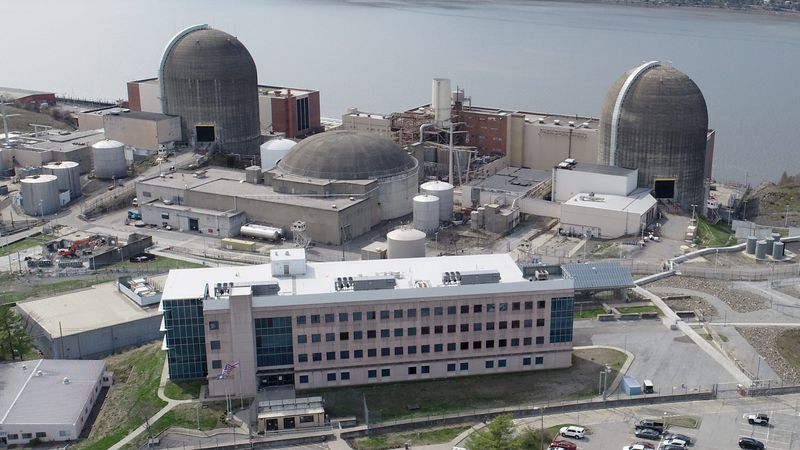
A big loss to New York’s capacity to generate energy came with the closure of Indian Point nuclear power plant. For decades, the Buchanan generation plant provided a large share of clean, reliable electricity right where it was needed.
Before its closure, Indian Point supplied roughly 25% of the electricity used in New York City and its close-in suburbs, all without carbon emissions or fuel price volatility.
Former Gov. Andrew Cuomo’s politically driven decision to shutter the plant, especially with no energy generation replacement, was a massive mistake bordering on political malpractice.
At the Feb. 24 LOWER plan rollout, Republican Assemblyman Phil Palmesano of Corning talked about the fact that no replacement energy like natural gas-powered generation was secured before closing Indian Point saying, “Natural gas has always been referred to as bridge fuel. You don’t tear down a bridge before you build a new one, do you?”
After Indian Point’s retirement, that generation didn’t just vanish; it was replaced primarily with fossil fuel generation on the grid or energy imported from places as far away as Canada. Both of which come with higher costs and greater emissions than existing nuclear generation.
Mandate madness without a plan
On Tuesday, Palmesano also talked about another terrible mandate that the CLPCA requires that will hit taxpayers especially hard.
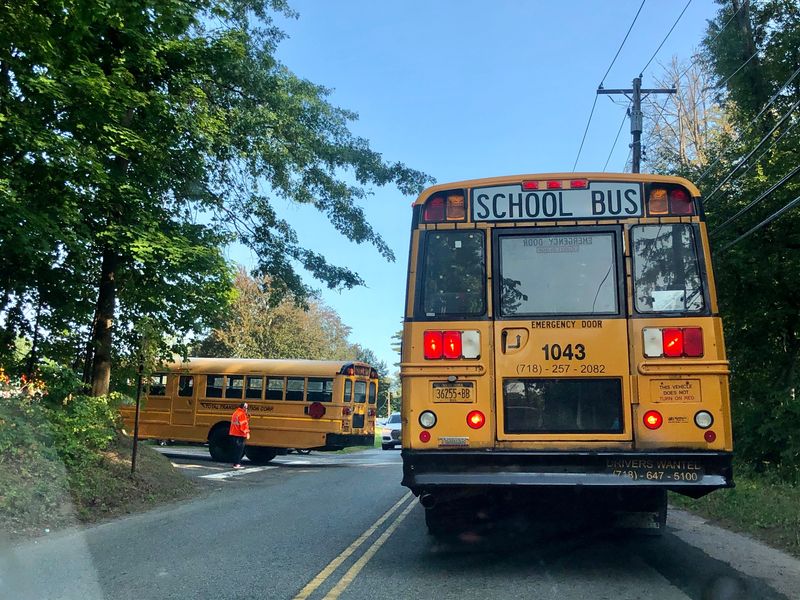
“The mother of all unfunded mandates, the electric school bus mandate,” Palmesano said. “$8-$15 billion in replacement costs, not even getting into charging and infrastructure improvements.”
New York’s all-electric schools bus mandate will kick in in 2035 — a full five years before the state will be required to replace its own medium and heavy-duty fleets of vehicles.
This cost will have to be born by school districts, which means property taxes will surely rise.
Private citizens should be able to participate in a free market of energy products and fuel sources.
Policies like forcing builders and their clients to use electric utilities and appliances in new construction, electric vehicle mandates and a disjointed enforcement plan over myriad state and local agencies leave the regular working families out in the cold. All while politicians claim credit for environmental accomplishments that are likely to never be realized.
Republican Assemblyman Matt Slater, who represents northern Westchester and Putnam counties touted the LOWER plan, and pointed out the disastrous effect of Hochul’s and Albany Democrats’ energy policies.
“This didn’t happen overnight,” Slater said. “Residential electricity prices have gone up by more than 47% since 2019 and that’s all while reliable power has left the grid faster than it’s been replaced.”
Slater called the energy crisis “simple math” and said, “When supply shrinks and demand surges, especially during extreme cold, prices spike. These spikes are hitting ratepayers directly.”
New York must move toward sensible energy policy
New York’s CLCPA ambitions would be laudable if they were accompanied by practical implementation timelines and cost-management strategies
Even Hochul has signaled that she’s starting to see the unrealistic goals of her party’s climate and energy policies.
Hochul didn’t propose explicit legal rollbacks to the CLBPCA in her administration’s proposed 2026 budget, but by not backing strong funding or enforcement mechanisms and by shifting emphasis toward other energy strategies, she showed a willingness to change how aggressively the law is implemented.
She has discussed looking at an “all of the above” approach to finding solutions to the crisis. Listening to the Republicans LOWER plan would be true “all of the above” consideration.
If we truly care about consumers and climate both, we should be able to pursue clean energy goals and maintain economic competitiveness. That means:
The lower Hudson Valley deserves energy policy that respects both environmental stewardship and economic reality. Closing Indian Point and doubling down on aggressive mandates without adequate alternatives has raised costs for families already struggling with inflation.
If we truly want an affordable, reliable and clean energy future, Albany politicians would do well to learn from these lessons rather than repeat the same mistakes for performative policy making.
Matt Richter, a veteran Hudson Valley journalist, is local news and regional opinion manager for lohud.com and The Journal News. He can be reached at mrichter@lohud.com.
This article originally appeared on Rockland/Westchester Journal News: Albany must help NY ratepayers. This plan could help | Opinion
Reporting by Matt Richter, Rockland/Westchester Journal News / Rockland/Westchester Journal News
USA TODAY Network via Reuters Connect