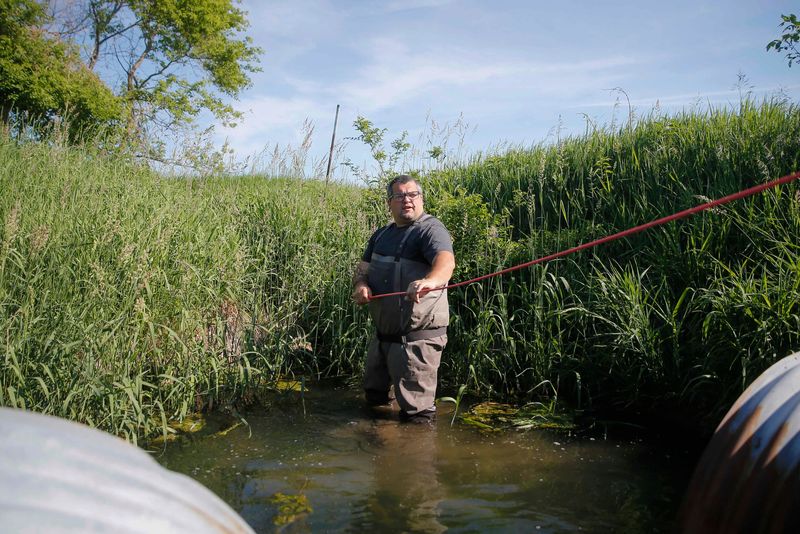
Over the past 12 years, Iowa farmers, the state and federal governments, businesses and nonprofits have pumped an estimated $5.6 billion into planting prairie and cover crops, building bioreactors and other conservation practices to cut the farm runoff that pollutes the state’s rivers, lakes and streams.
Is it working?

Yes, say farm groups and state officials, pointing to Iowa’s national leadership in conservation measures that include its acreage of wetlands that improve water quality, creating grass buffers that filter runoff and cultivating pollinator habitat.
“There’s a good reason we’re in those leadership positions. We’ve been investing heavily, and we’ve had a long-term, sustained focus on these things,” said Iowa Agriculture Secretary Mike Naig in an interview. He added that Iowa follows science and the national framework for adopting conservation measures to improve water quality.
But critics say they don’t see the claimed improvement, especially when Des Moines, Iowa City, Cedar Rapids and other Iowa cities and towns struggled last summer with near record-high nitrate levels in their drinking water sources that threatened to overwhelm their treatment capacity and their ability to meet safety standards.
For the first time ever, Central Iowa Water Works banned lawn watering for nearly two months in 2025 to curb demand.
Agriculture contributes about 80% of the nitrate in the Des Moines and Raccoon rivers, the drinking water sources for 600,000 central Iowa residents, a report last year highlighted. Excessive nitrate levels, which have continued this winter, also could be a factor in the state’s high and growing cancer rate, a connection researchers are investigating.
Water quality will likely be a flash point in this year’s agriculture secretary race, with Naig, the Republican incumbent, facing two Democratic challengers. Chris Jones, a retired University of Iowa research engineer, has long been a vocal advocate for stronger measures to ensure water quality. Wade Dooley, a sixth-generation central Iowa farmer active in conservation groups, also wants to see changes in the state’s approach.
While Naig calls for continuing Iowa’s approach, Dooley said the state needs to reevaluate it, better supporting the programs offered to farmers. Jones is calling for “transformational change” in agriculture, saying, “We’re flirting with disaster with these big-city water supplies.”
‘There will never be enough money to make the system perform in an environmentally sound way’
The state released what it calls the Iowa Nutrient Reduction Strategy in 2013. It set a goal to cut by 45% the nitrogen and phosphorus levels that flow from the state into the Mississippi and Missouri rivers and contribute to dead zone at the Mississippi’s mouth in the Gulf of Mexico, also known as the Gulf of America. The dead zone is an area about the size of Connecticut so devoid of oxygen that it is unable to support aquatic life.
The strategy, which outlines pathways for farmers, businesses and municipalities to achieve the state’s goal, could significantly cut pollution entering the state’s waterways. Achieving that is gaining importance as research shows nitrate levels even at half the federal drinking water limit of 10 milligrams per liter increase the risks of birth defects and some cancers.
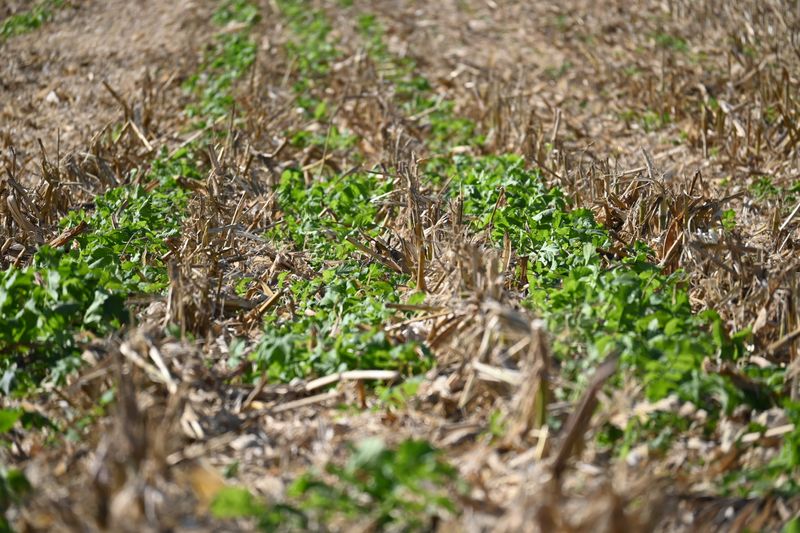
Cover crops, like cereal rye, soak up and hold fertilizers in the soil over winter and in the spring, preventing them from moving into Iowa waterways and ensuring they’re available for the new corn and soybean crops being planted. They also help prevent erosion and improve soil health, researchers have found.
But Jones contends Iowa will never be able to meet that goal with nearly 70% of its land — roughly 23 million acres — planted with fertilizer-intensive corn and soybeans crops. He also cites the state’s 5,000 confined animal feeding operations, of CAFOs, each housing thousands of pigs, cattle, chicken and turkeys.
He calls expensive, edge-of-field infrastructure like bioreactors ― buried trenches filled with woodchips that filter farm field runoff before it reaches waterways ― “Band-Aids.”
Here’s why: While water from about 13,700 Iowa acres are cleaned through bioreactors — along with saturated buffers and oxbows, other nitrate-removal structures — that is far short of the 7.8 million acres required under one pathway outlined in the nutrient reduction strategy, state reports show.
That approach, which also calls for wetlands and other practices, is estimated to cost $756 million annually over the next 50 years.
“There will never be enough money to make the system perform in an environmentally sound way, just going around and trying to patch up the system,” he said.
But that system has helped turn Iowa into an agricultural powerhouse and accounts for about 25% of the state’s $265.8 billion annual economy when farm equipment manufacturing, food production, insurance, seed and other related industries are tallied.
A 2020 report indicated farming and ag-related industries employed nearly 700,000 people in Iowa. The state leads the nation in corn, pork, egg and ethanol production, ranks second for soybeans and is a top producer of turkey, beef and milk.
Manure from the 124 million farm animals across the state helps provide the fertilizer farmers use to grow crops. But that manure, spread on fields along with other fertilizers, is a major source of the excessive nitrate levels in Iowa’s waters, critics say.
The Iowa Soybean Association’s Joe McClure said conservation efforts need time to change water quality.
“It’s a big effort, but it’s working,” he said, comparing the work to putting a dropper of dye into an Olympic size pool and seeing no impact until it’s repeated many times.
“Every practice that’s being adopted by farmers is effective locally,” preventing soil and nutrient loss, “but it takes a certain amount before you really start to see the benefit downstream, as things aggregate across the landscape,” said McClure, chief officer of ISA’s Ankeny-based Research Center for Farming Innovation.
Conservation work since the 1930s Dust Bowl to prevent soil erosion has helped Iowa nearly reach its goals for reducing loss of phosphorus, a fertilizer that moves with displaced soil, said Naig. Iowa is now focusing on reductions in nitrates, which are carried by runoff and field drainage systems to waterways.
“We’re on a trajectory of growth. We’re accelerating,” said Naig, pointing to the construction of nutrient-filtering wetlands as an example. Those wetlands can cut nitrates from large swaths of land by up to 90%, farm groups say.
Naig said Iowa is going from building two or three such wetlands a year to 26, adding, “We are focused on scaling up.”
Farm groups point to Polk County’s Central Iowa Source Water Research Assessment last year, which noted a “general decline in both nitrogen and phosphorus at many locations within the watersheds.” The findings, the report said, suggest the state’s “nutrient management strategies implemented over the past two decades have likely contributed to reducing levels.”
Still, nitrate levels are highly affected by drought and rainfall and the report said data “also reveal that the occurrence of very high concentrations in certain years persists,” repeatedly “surpassing the drinking water standard.”
A decade of nitrate data shows about 54,000 tons on average flow through the Des Moines and Raccoon rivers in Des Moines annually. When converted to pounds, the report said, that equates to about 25,400 of the familiar nurse tanks of nitrogen fertilizer that show up in Iowa fields each spring and fall.
But, when years of drought are followed by heavy rainfall, as last summer, nitrate levels can spike much higher.
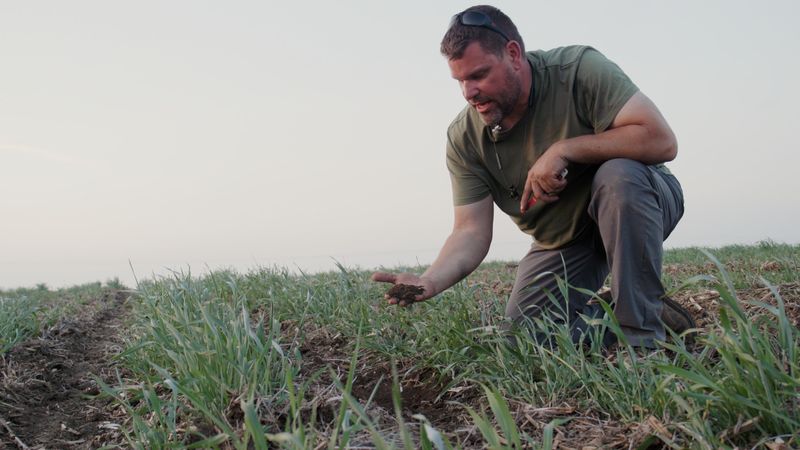
Dooley, who plants cover crops on every acre annually, said Iowa soils are like a leaky colander farmers are working to close. But the state releases programs, often pilots that spread small amounts of money across the state, that fail to fully support growers and need to be re-evaluated, he said.
“They sound great for sustainable agriculture,” Dooley said. But “they can’t do anything. It’s just lip service.”
We don’t want ‘the kind of pollution that we saw last summer’
Jones, author of the 2023 book “The Swine Republic: Struggles with the Truth about Agriculture and Water Quality,” said the state’s “incremental progress is hardly a victory.”
He wants the state to consider different approaches to improve water quality, like providing incentives to diversify Iowa’s dominant corn and soybean crops. He also advocates taxing fertilizer applied to fields in the fall, creating the potential for over-winter loss when the soil is fallow, and revamping state CAFO siting regulations to prevent overapplication of manure.
Experts say bringing oats, wheat, alfalfa and other small grains into Iowa’s corn-soybean rotation would require fewer fertilizers and chemicals, improve soil health and break pest and weed cycles.
To do that, though, Jones said Iowa should help provide incentives that create markets for those products so the income they generate is comparable to that from corn and soybeans.
He points to a state mandate requiring every Iowa gas station to have at least one pump for E15, a gasoline blend containing 15% ethanol, by the end of 2026. Now, most U.S. gasoline is blended with 10% ethanol, or E10.
“If Iowa can force every station in the state to sell E15, why can’t we make Quaker Oats use Iowa oats?” Jones said, referring to the company’s world-leading cereal plant in Cedar Rapids, which gets most of its oats from Canada.
“Or why can’t we set up these ‘food halos’ around” Des Moines, Cedar Rapids, Iowa City and other communities, with farmers providing fresh vegetables, fruit and meat for local families, he asked.
Diversifying what farmers grow can help solve Iowa’s water quality problems, said Michael Schmidt, an Iowa Environmental Council attorney. But “farmers are operating in a system that strongly encourages them to grow as much corn and soy as possible,” he said.
“Farmers have to make a living. But the system isn’t producing results that are fair” to Iowans who use the water for drinking, he said, adding, “We need a more diverse landscape, so we don’t have the kind of pollution that we saw last summer.”
‘Farmers are trying to adapt as quickly as they can,’ but it takes time, resources
To reduce runoff, thousands of Iowa farmers have adopted conservation practices that either prevent fertilizer losses or treat the water leaving fields to reduce the environmental impact on the state’s waterways.
Cover crops, for example, soak up fertilizers, especially during heavy spring rains, before corn and soybean crops begin using the nutrients. They can cut nitrate and phosphorus losses by about 30%. And bioreactors can cut nitrates by about 45%.
The federal government has provided the largest contribution to Iowa conservation efforts over the past 12 years, providing $3.7 billion through conservation reserve program.
But the state is helping, too, agreeing in 2018 to provide $270 million in long-term water quality funding over a dozen years. In 2021, the effort was extended to 2039, adding $320 million.
It could be more.
In 2010, 63% of voters approved a three-eighths-cent-per-dollar sales tax to funnel money into the Iowa Natural Resources and Outdoor Recreation Trust Fund. But lawmakers have declined to raise that sales tax. At $187.5 million generated annually, the fund would have provided $2.81 billion to support water-quality conservation efforts, trails and parks since the passage of the initiative.
Schmidt, the Iowa Environmental Council attorney, said the state is making progress in improving water quality, but “it’s still far short of what we need to be doing … it’s far short of the scale that’s needed.”
For example, Iowa has nearly 4 million acres of cover crops, more than doubling the acres planted in 2017, the Iowa Nutrient Research and Education Council reported in January. Still, only about 18% of Iowa’s total corn and soybean acres are planted with off-season cover crops.
But the state is outpacing Illinois, the nation’s second-largest corn grower and leading soybean producer. Iowa’s neighbor has about 2 million acres of cover crops, or 10% of its farm acres, according to an Illinois Ag Retail Survey.
And while farmers are adopting practices like planting cover crops and reducing tillage and nitrogen use, they often aren’t sustained, said Schmidt. He points to an Iowa State University report in September that shows 20% of farmers stopped using cover crops after trying them for one year.
Similarly, among farmers who tried a practice called no-till that reduces soil erosion and phosphorus losses, 13% resumed tillage the following year.
“There’s a lot of encouragement to take up a practice, but not continuing support,” Schmidt said, echoing Dooley’s complaint.
Jasper County farmer Will Cannon is among the Iowa growers adopting conservation practices like cover crops, even after some early attempts hurt yields and cost him money.
“We were on the bleeding edge,” said the Iowa Corn Grower Association board member. “And we bled some.
“It’s easy to say ‘you should make these decisions,’ but it’s pretty scary when it affects your bottom line,” said Cannon, adding there’s “a lot of momentum for change that I don’t think is easily seen from the outside.”
Some changes will come as younger farmers move into farm operations, Cannon said. And more will come as farmers are able to adopt emerging technology that lets them more precisely apply fertilizer and herbicides.
Right now, though, farmers face a fourth year of losses and are looking to cut costs. Court records show that farm bankruptcies in Iowa for 2025’s first six months were already twice those in 2024 and the most since 2021.
“Farmers are trying to adapt as quickly as they can, but like anything in life, it takes time and resources,” Cannon said.
‘We’re going to need a diversity of practices to make a difference’
Sarah Carlson, a Practical Farmers of Iowa leader, said growers could dramatically improve water quality across the state by planting cover crops every fall on the roughly 10 million acres that producers typically seed with soybeans.
A cover crop, like the winter-hardy cereal rye, can germinate under fall’s cool conditions and resume growing over winter and in early spring, anytime temperatures are above freezing, said Carlson, Practical Farmers of Iowa’s senior programs and member engagement director.
“To keep nitrates in the ground, where crops need them, and out of the water, we have to have living roots in the ground during the winter,” she said.
Planting nearly three times more cover crop acres annually would be a huge challenge, especially given the small window between the end of harvest and the onset of frozen soil, Carlson said, but not impossible.
In recent years, farmers have been “DYI’ing” solutions to the time-crunch challenge — like adding equipment to their combines to spread cover crop seeds as they harvest, she said. Given a challenge, “farmers innovate,” she said.
They also hire contractors to do the work, sometimes using planes or drones. New cover crop businesses are often run by young farmers, said Carlson, whose group created a business accelerator to help cover crop businesses get started.
Matt Helmers, director of the Iowa Nutrient Research Center, said cover crops help. But the state also needs other infrastructure — wetlands, bioreactors and grass and saturated buffers — to meet the state’s nutrient reduction goals.
John Swanson, who helps lead Polk County’s water quality efforts, agrees. Polk County is investing heavily — its $10 million has attracted about $30 million in public and private funding — to tackle water quality projects.
“It’s not an easy problem to fix,” Swanson said, especially since the Des Moines and Raccoon river watersheds cover thousands of square miles upstream from the capital.
To address the challenge, the county helped develop a model called batch-and-build that engineers and coordinates construction of several projects at once, reducing their costs and administrative headaches for landowners.
The approach has been so successful that the state and 13 other counties have adopted it to accelerate on-farm water treatment that cuts nitrogen and phosphorus runoff. The state, for example, says it has about 200 bioreactors and saturated buffers under development.
“Cover crops can work everywhere … but we’re going to need a diversity of practices to make a difference,” Swanson said.
(This story was updated to add a video.)
Donnelle Eller covers agriculture, the environment and energy for the Register. Reach her at deller@registermedia.com.
This article originally appeared on Des Moines Register: With billions invested in farm conservation, is Iowa’s water cleaner?
Reporting by Donnelle Eller, Des Moines Register / Des Moines Register
USA TODAY Network via Reuters Connect