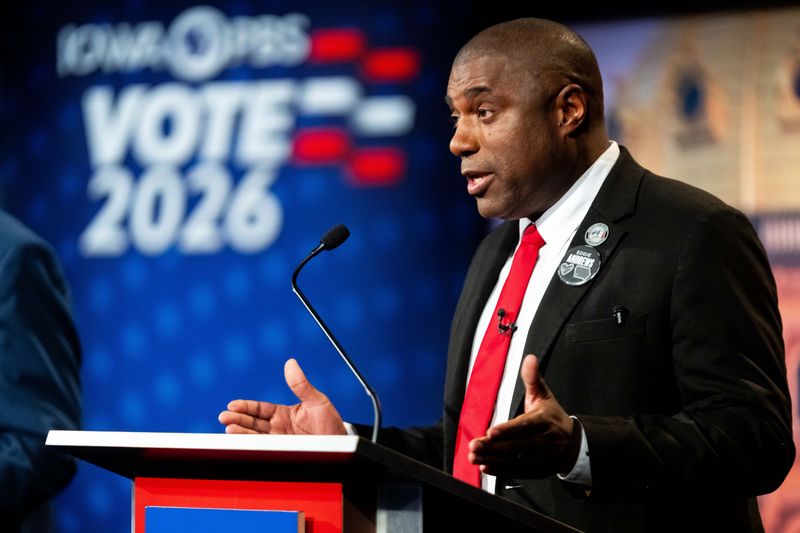
Five candidates are competing for the Republican gubernatorial nomination in a closely watched race that could turn into a general election “barnburner.”
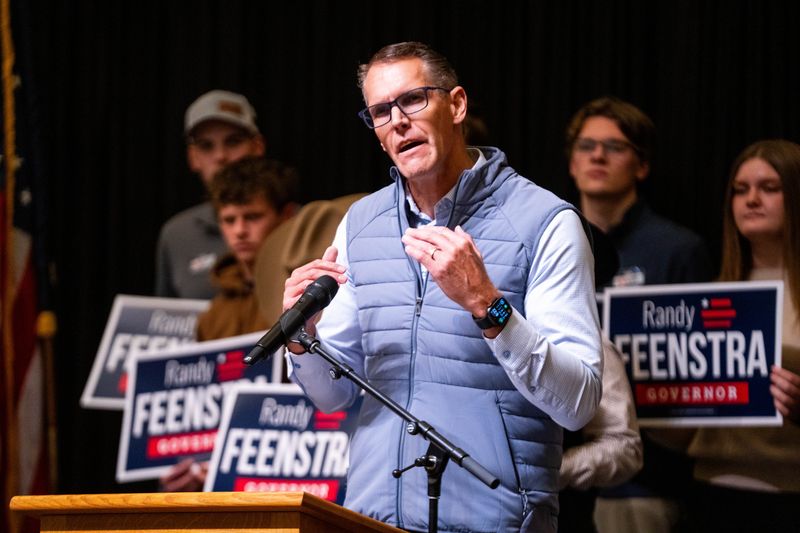
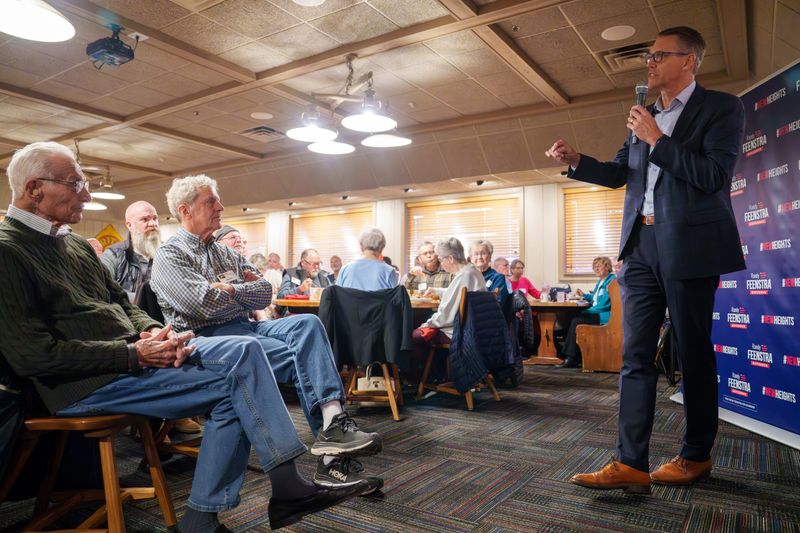
U.S. Rep. Randy Feenstra, who is serving his third term, is the best-known candidate in the race with millions of dollars’ worth of fundraising as well as the backing of some of Iowa’s top elected officials.

But he’s had difficulty connecting to the party’s grassroots, and he has been unable to comfortably consolidate widespread support going into Election Day.
That’s left an opening for his challengers, but it’s unclear whether any have gained enough traction to seize it.
With early voting set to begin May 13 for the June 2 primary, each of the candidates are making a final push to energize their supporters and reach undecided voters.
State Rep. Eddie Andrews, businessman Zach Lahn, former state Rep. Brad Sherman and former Department of Administrative Services director Adam Steen all are seeking to topple Feenstra on primary night — or at least keep him from earning more than 35% of the vote.
If no candidate can hit that benchmark, the race would instead be decided by Republican delegates at a June 13 state convention.
There’s been scant independent polling of the Republican primary race for governor to help show whether that’s a real possibility.
A poll conducted April 14-15 by Victory Enterprises, an Iowa-based Republican consulting firm associated with Feenstra’s campaign, found that Feenstra led the GOP primary field with 41% of the vote.
No other candidate topped 10% in the poll, which had a margin of error of plus or minus 4.4 percentage points.
Republicans, who have dominated the state electorally in recent years, are unusually nervous about this year’s governor’s race.
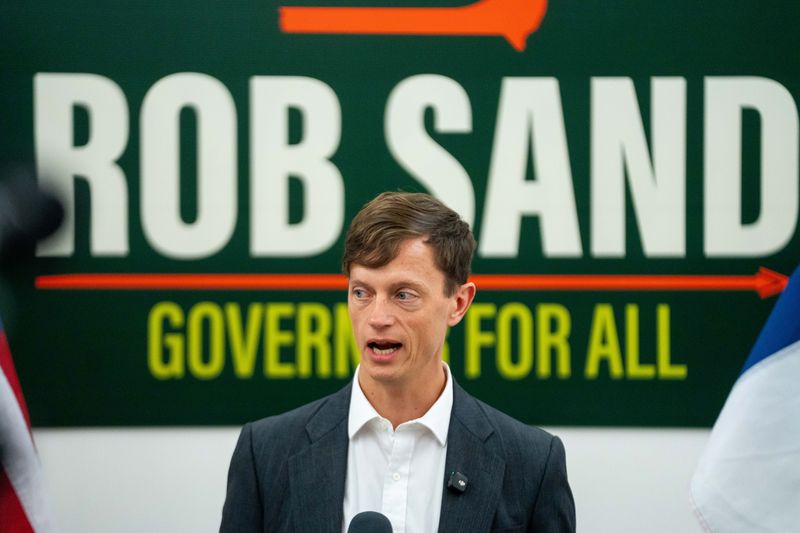
The nominee they choose in June will square off against Democratic state Auditor Rob Sand in November’s general election. They concede that Sand, the lone Democrat running for governor this year, is a formidable contender.
Elections analysts at the Cook Political Report rate the race as a toss-up going into the general election.
“The battle for Iowa’s governorship is officially a barnburner,” wrote Matthew Klein, a Cook analyst who focuses on gubernatorial contests.
Steve Scheffler, president of the Iowa Faith & Freedom Coalition, told Republicans at an April 25 event in Osceola that the party must unify after the primary to take on Sand, acknowledging some of the divisions that have come up in the primary race.
“We can’t quibble about this,” he said. “Because with your least favorite candidate on the Republican side of the primary, you’re going to get 98% of what you want. With a Democrat in office, you will get zero.”
Water, cancer, education: Iowa issues dominate gubernatorial race
In a political climate where elections have become more nationalized than ever, Iowa’s governor’s race has been centered around decidedly Iowa issues.
Dominating the GOP gubernatorial campaign trail are conversations about reining in property taxes, regulating eminent domain use for a proposed carbon capture pipeline, combatting water quality problems, addressing skyrocketing cancer rates, shaping “school choice” policies and addressing population declines.
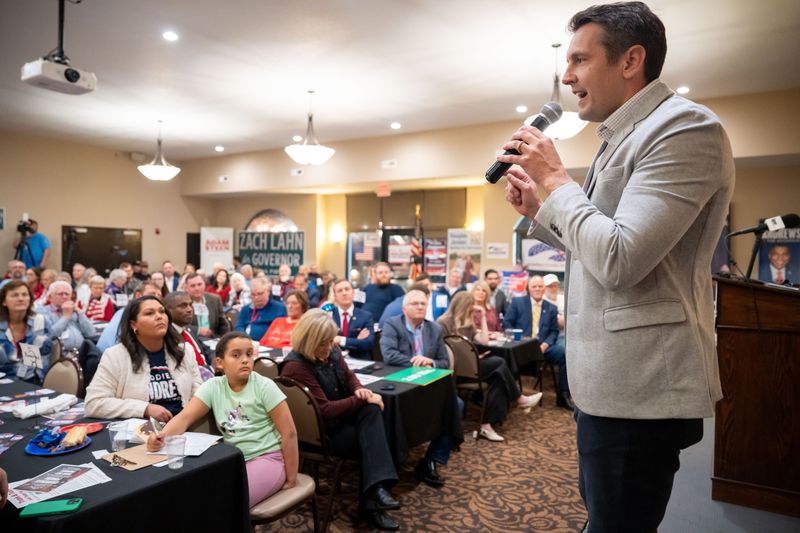
Kylie Kloewer, a 23-year-old West Des Moines resident and registered Republican, was still weighing her options in the primary race when she attended an April 23 Lahn campaign event.
One of her top voting issues this year is holding big agricultural companies responsible for “the things that they’re telling our farmers that are safe to spray on our crops (and) on our gardens.”
She said her father was diagnosed with early onset Parkinson’s disease, which she believes is linked to pesticide exposure. Research is still investigating the ties between Parkinson’s and pesticides.
Iowa has the second-highest rate of new cancers in the country and is one of a few states where those rates are rising.
Discussions about how to reverse the trend have permeated the race.
“We have to find the root cause of that, no matter what it is, and get rid of it,” said Chris Rheinherren, a 59-year-old Republican from West Des Moines who is supporting Lahn.
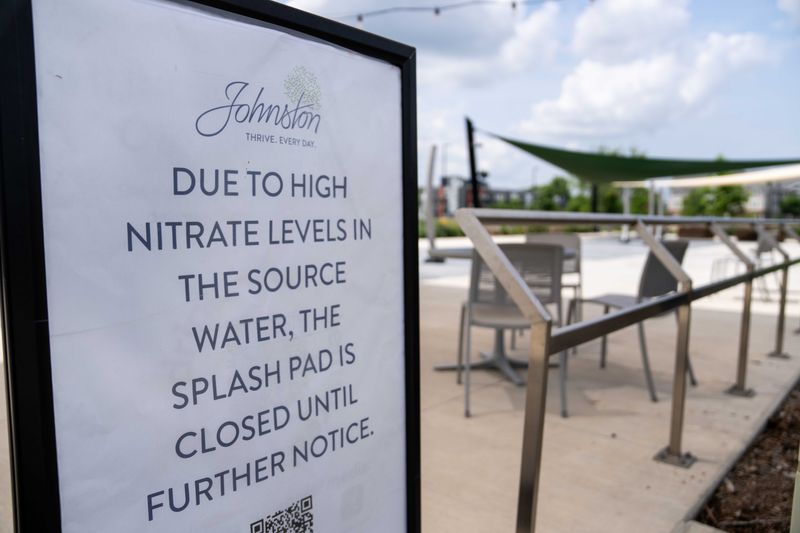
Republican voters also routinely question the gubernatorial candidates about water quality after nitrate pollution became a major point of concern in central Iowa last summer.
Jennifer Clark, a 52-year-old Corning resident and registered Republican, said water quality is “very important” this year.
“I think the farmers have gone a little too far with the fertilizing,” she said.
Clark, who is supporting Feenstra, said she’s also interested in defending the 2nd Amendment, addressing rising property tax rates and “just stopping the Democrats in general.”
Dan Heffernen, a 66-year-old Altoona resident and registered Republican, said his focuses include clean water, restoring competition in agriculture and improving education.
“I feel like I had a good education, but the kids today? They spend too much time doing stuff that’s not educational, in my opinion,” he said. “Way too much time doing other things like pronouns and all of that. Whatever happened to math, reading?”
“It’s a lack of priorities. But there’s not a lack of money.”
Heffernen said he’s undecided in the governor’s race. He liked what he heard from Lahn at the April 23 campaign stop in Altoona, he said, and he’s looking at Feenstra as well.
Randy Feenstra promises business- and ag-friendly administration
On the campaign trail, Feenstra promises to make Iowa “the most business- and ag-friendly state in the country.”
He said he plans to “lower and freeze” property taxes. And he’s said he wants to make changes to how communities leverage tax increment financing, or TIFs, to ensure those types of agreements are not being abused.
“We can’t do a one-size-fits-all property tax,” he said at a December event in Creston. “Urban centers are different than small communities. So we have to look and start addressing, you know, what’s going bump in the night in each of these communities. And that starts with also tax increment financing.”
Feenstra calls for making Iowa education “world-class” by getting rid of diversity, equity and inclusion initiatives and “letting teachers teach.”
But he’s drawn criticism from fellow Republicans for his stance on Education Savings Accounts, which allow families to access about $8,000 in taxpayer funds to help send their children to private schools.
Feenstra suggested private schools accepting public funding should be required to accept all students. Private schools can currently deny entry for any reasons they choose, including if students have disabilities or identify as LGBTQ.
“If we have to compete on a level playing field, the playing field has to be level all the way,” Feenstra told the Westside Conservative Club April 8.
Steen in particular has taken issue with that stance, instead pledging to expand the program to include homeschool families.
Zach Lahn brings MAHA movement to Iowa governor’s race
Lahn entered the race as an unknown entity but has made inroads by promoting many of the ideas espoused by U.S. Health and Human Services Director Robert F. Kennedy Jr.’s Make America Healthy Again movement.
He was the first candidate the Kennedy-aligned MAHA Action PAC endorsed.
On the campaign trail, that translates into support for repealing vaccine mandates and skepticism of major pharmaceutical companies.
Lahn has taken some nontraditional stances for Republicans in the state, including tying Iowa’s rising cancer rates directly to the agriculture industry.
“I’ve said very, very clearly, I do believe that large agricultural companies have been lying about the safety of their products to our farmers and to our people,” he said in April 3 appearance on Iowa Press.
Lahn has also linked the state’s rise in cancer to its problems with water quality.
On taxes, Lahn calls for raising taxes on out-of-state landowners and businesses, including major data center projects, as a way to help lower Iowans’ property taxes.
He’s been vocal in his opposition to the use of eminent domain, earning an endorsement from former U.S. Rep. Steve King, who has been active on the issue.
And as the co-founder of a nontraditional school in Kansas, Lahn also focuses on education. He urges innovation in schools and a return to “the basics.”
“When I’m governor, we will reclaim the curriculum from the Marxists who’ve hijacked it,” he says in a TV ad.
Lahn has poured more than $1 million into television ads across the state beginning in April.
Feenstra has also mounted a major television advertising campaign — a key metric that helps drive name identification among lesser-known candidates.
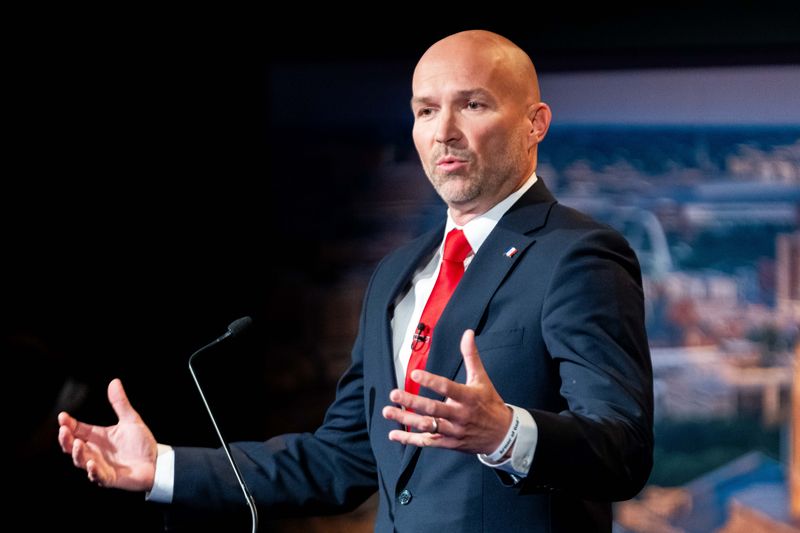
‘Jesus Guy’ Adam Steen casts election as ‘good versus evil’
Steen led the Department of Administrative Services under Gov. Kim Reynolds but resigned to run for governor. He said he was “honored” to have worked with her.
Endorsed by The Family Leader and its president and CEO Bob Vander Plaats, as well as conservative commentator Steve Deace, Steen has put his Christian faith at the forefront of his campaign.
“I am the faith guy,” he said, introducing himself at his August 2025 campaign launch. “I’m a Jesus guy. I’m a ‘Make America Great Again’ guy.”
On the campaign trail, Steen argues that Iowa’s six-week “fetal heartbeat” abortion ban doesn’t go far enough and should be expanded to protect life beginning at conception.
He also touts his role in denying permission for a Satanic Temple event that was proposed to be held at the Iowa Capitol in 2024, and he has called for blocking Sharia law in Iowa — rules based on an Islamic framework derived from the Quran.
In his campaign ads, he casts the race as a fight between “good versus evil.”
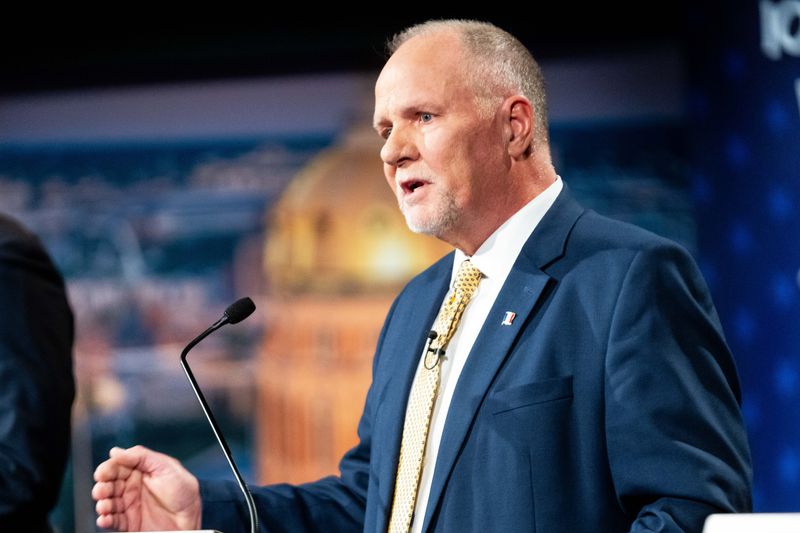
Brad Sherman ready to challenge ‘status quo’
Sherman was the only candidate to announce he would run for governor before Reynolds said she would not seek reelection.
He said he thinks his “willingness to challenge the status quo” resonates with primary voters.
Sherman is a pastor from Williamsburg and has been involved in pastoral leadership and church ministry in Iowa. He was an early Trump endorser ahead of the 2024 GOP presidential caucuses.
He also has campaigned on the idea that life begins at conception, and in the Iowa PBS debate he said he believes there are some instances when abortion should be criminalized.
Sherman said he has some money saved that he’ll “use wisely” ahead of the primary, but he believes his connections with the grassroots will serve him well on Election Day.
“Some of these people feel like they can just buy this election,” he said. “And I decided early on, it’s not about how much money it is. It’s about the people.”
Eddie Andrews touts ‘receipts’ from winning in a purple district
Andrews argues he’s the best candidate to take on Sand in a general election, pointing to his ability to win in a purple district.
Andrews represents Iowa House District 43 in the Iowa House of Representatives, which includes Johnston, as well as parts of Urbandale and Saylorville. He was reelected to a third term in 2024.
“Those are actual receipts,” he said during the Iowa PBS debate.
He said his priority if elected would be improving education. And he has been outspoken in opposing the use of eminent domain for a carbon capture pipeline.
Andrews was the last candidate to make it onto the primary ballot, filing his paperwork with the Iowa Secretary of State just minutes before the deadline closed.
Andrews survived a challenge to his paperwork. He publicly called out Steen’s campaign for playing a role in the challenge and for later appearing to deny any involvement.
Randy Feenstra leads in GOP fundraising
Feenstra led the Republican primary field in fundraising, according to January financial disclosures. He reported $3.2 million in cash on hand going into the year.
Lahn, who gave a $2 million loan to his campaign, reported about $2.1 million in cash on hand.
Steen had about $336,000 in cash on hand, Sherman had about $85,000 and Andrews had just $5,000.
Sand raised about $18 million through the end of last year.
Statewide candidates in Iowa will not have to disclose their latest fundraising numbers until May 19.
Brianne Pfannenstiel is the chief politics reporter for the Des Moines Register. She writes about campaigns, elections and the Iowa Caucuses. Reach her at bpfann@dmreg.com or 515-284-8244. Follow her on X at @brianneDMR.
This article originally appeared on Des Moines Register: Water, cancer, education dominate campaign in Iowa governor primary
Reporting by Brianne Pfannenstiel, Des Moines Register / Des Moines Register
USA TODAY Network via Reuters Connect