Get ready for another watering ban, Des Moines.
While no restrictions are in place yet, central Iowa water officials are warning that last year’s unprecedented lawn watering restrictions likely will be put in place again this summer because of the dangerously high nitrate levels in most of its major water sources.

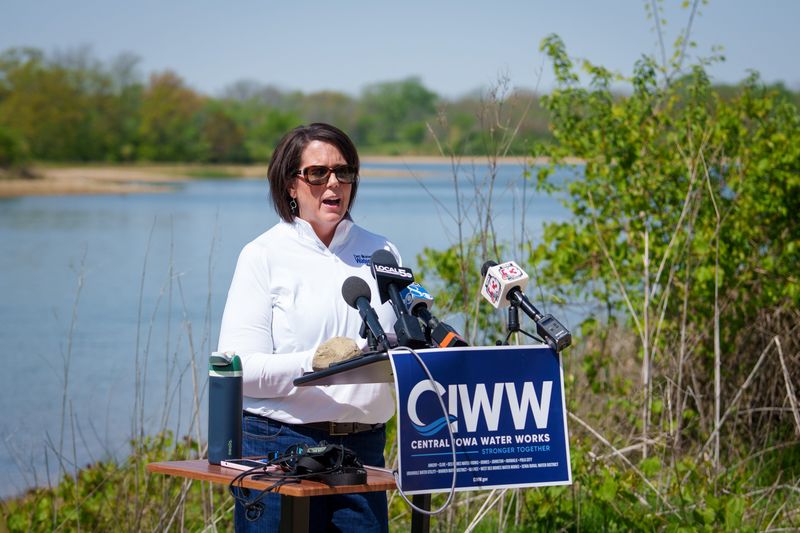
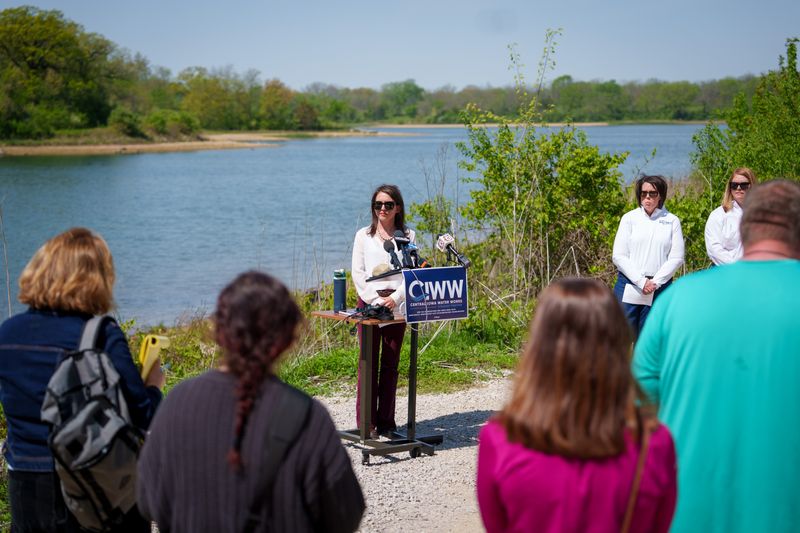
Central Iowa’s nitrate removal facility plant has run most of the year — 111 days since January — because of high nitrates in the Des Moines and Raccoon rivers as well as other raw water sources, Tami Madsen, Central Iowa Water Works’ executive director, said during a May 4 press conference at Maffitt Reservoir.
Those high levels are expected to continue, she said.
“Due to what we are currently seeing, continued precipitation, nitrate conditions and the onset of warmer weather, data are telling us that an irrigation ban may be likely,” Madsen said.
Last summer, Central Iowa Water Works issued its first-ever ban on lawn irrigation as the metro area’s ability to treat water to meet the federal safe drinking water limits failed to keep pace with demand. The ban was in place nearly two months.
Central Iowa is again facing similar conditions.
“Once the weather warms, we know that customer demand will increase … and outpace our ability to treat” water, Madsen said.
“Peak season is upon us — and our system, our sources are stressed,” she said.
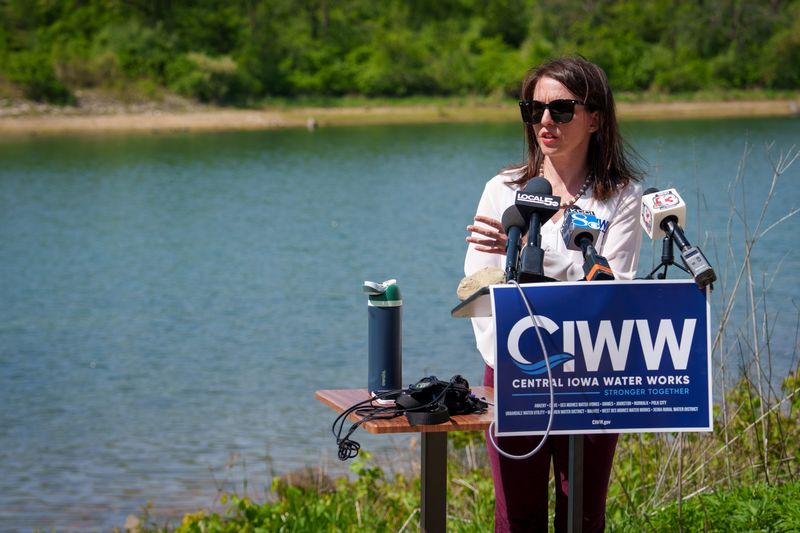
Amy Kahler, Des Moines Water Works’ CEO, said Maffitt Reservoir, south of Des Moines, is about 5.5 feet “lower than it should be” at this time of year, primarily because Des Moines Water Works has tapped the mostly nitrate-free water to blend it with water from the Raccoon at the McMullen treatment plant.
That plant doesn’t have a nitrate removal facility, she said.
Kahler called Maffitt an “emergency water supply” or a savings account — and “our savings account is dwindling,” she said.
Adding to challenges, Kahler said: The Des Moines utility’s Fleur treatment plant is the system’s largest. While it can rely on multiple water sources — an infiltration gallery that collects water, cleaned naturally by sand and rocks, in addition to the Raccoon and Des Moines rivers — all three sources are over the federal clean water standard.
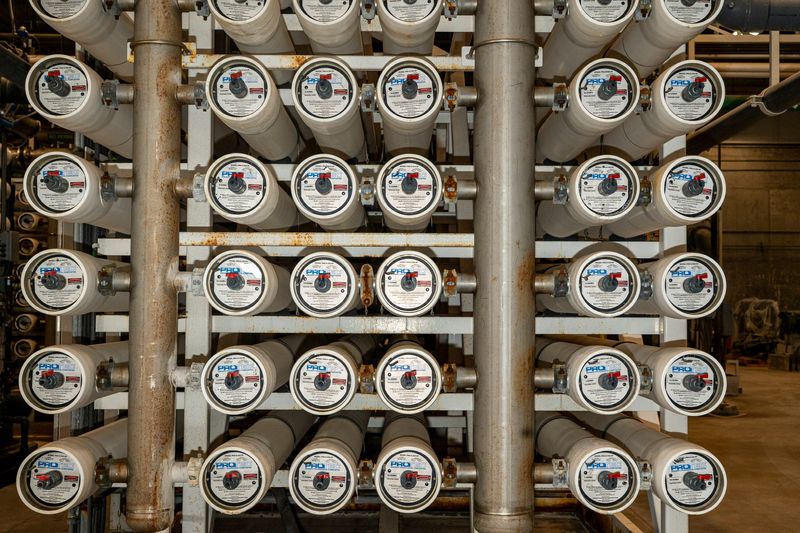
The utility must use the nitrate removal system, she said, to meet the federal limit of 10 milligrams per liter.
“In times like this, the nitrate removal facility is really our workhorse, we lean on it,” Kahler said, adding that the plant has been running at “near capacity all year long.”
She said she felt confident that the plant will continue operating at full strength.
Central Iowa Water Works is a regional authority that owns the metro area’s water utilities. Metro area facilities such as Des Moines and West Des Moines water works operate as contract operators.
The regional authority’s plan for restricting water uses first calls for voluntary conservation efforts — a 25% reduction in use, then 50% cut — before restrictions are mandated on irrigation use.
“If our system is already stressed, delaying irrigation is really important,” West Des Moines Water Works Christina Murphy said, adding that recent rainfall made irrigation unnecessary for most central Iowa residents.
Unlike last summer, Central Iowa Water Works’ plan allows some water use for seeding or new sod, golf courses and splash pads, Madsen said. Last year, cities and towns set warnings and penalties for residents and businesses that failed to meet the requirements.
Murphy said central Iowa residents and businesses should fix water faucet, toilet and other leaks, have full loads when running dish and clothes washers, water lawns early in the morning or in the evening.
“If you’re going to turn on your irrigation system — preferrably not now, right — please don’t set it and forget it,” she said, adding that 30% to 40% of summertime use comes from irrigation.
Donnelle Eller covers agriculture, the environment and energy for the Register. Reach her at deller@registermedia.com.
This article originally appeared on Des Moines Register: Lawn-watering ban in Des Moines likely this summer over high nitrates
Reporting by Donnelle Eller, Des Moines Register / Des Moines Register
USA TODAY Network via Reuters Connect