Housing developers are decrying a proposed change in the Iowa Senate’s property tax plan that would increase taxes on multi-residential properties in Iowa, warning the change lead to rent hikes.
Landlords and developers aired concerns in a public hearing Tuesday, April 21, about a provision in the Senate bill, Senate File 2472, that would create a new tax class for apartments, nursing homes and assisted-living facilities.

The measure seems to have met resistance among House lawmakers wary of inadvertently driving up housing prices and enacting a policy that may counter their goal of curbing Iowans’ living costs.
The legislation reestablishes a separate multi-residential property tax class, reversing tax cuts from a 2013 measure that created a new property tax class for multi-residential properties on the premise that it would drive competition and lower rents.
It aimed to cut multi-residential property taxes and gradually lowered their assessment rollback to match residential rates, but it caused significant tax valuation shifts for communities including Des Moines.
Jordan Bouslog, a commercial real estate broker with Cushman and Wakefield, said the bill would reverse the decade-old policy that shifts multi-residential properties from being taxed at the same rate as residential properties back to being taxed at a higher rate.
He said changing the rules could disrupt many existing apartment loans that were approved based on the current law, forcing community and regional banks to “re‑stress,” or re-evaluate, all the similar loans in their portfolios.
“Property tax passes through as rent,” Bouslog said. “A bill sold as homeowner relief becomes a rent-hike burden on Iowa workers.”
Lawmakers have not reached a property tax deal
Although legislative leaders identified property taxes as their top priority, lawmakers haven’t reached consensus on which approach to take to cut property taxes as the session reaches its final days.
The proposed changes to multi-residential property taxes are among the sticking points between the House and Senate as they iron out how to proceed. The Senate voted 41-4 on April 8 to pass its bill, though it did not represent a final deal.
The tax-writing House Ways and Means Committee advanced the Senate’s plan Tuesday, with an amendment that excludes the changes to how multi-residential properties are taxed. The panel’s change replaces the Senate bill with the House’s compromise amendment that combines elements from all three plans.
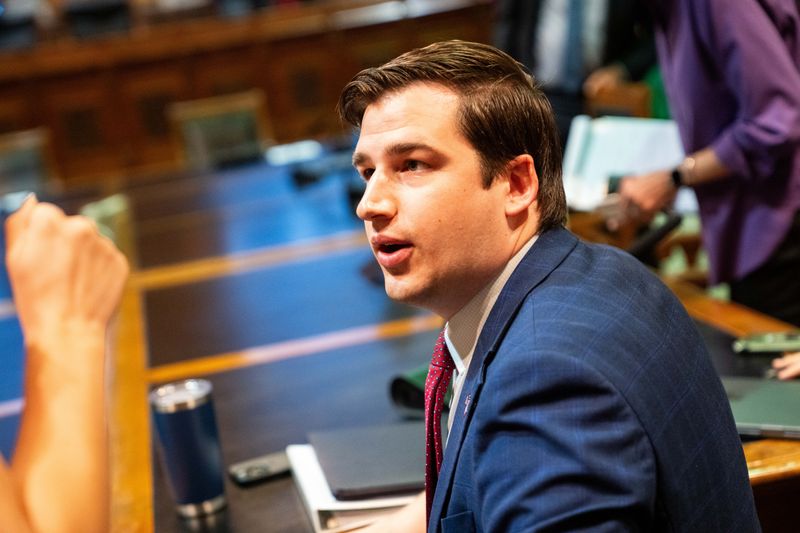
It appears to signal those proposed changes are unlikely to advance, but Rep. Carter Nordman, R-Dallas Center, who chairs the committee, has not said whether certain provisions are “on or off” the negotiating table.
Asked if advancing the Senate bill without these changes indicated a lack of support in the House, Nordman said “conversations are ongoing between all of us and (we will) see where we arrive.”
“It would be a substantial raise in property taxes to any multi-residential property in the state of Iowa, which will be directly passed on to renters, and it would be a rent increase across the state,” Nordman told reporters. “So I think we need to be cognizant of that.”
Sen. Dan Dawson, R-Council Bluffs, did not comment on Tuesday’s development but has said the Senate plan aims to expand the tax base and diversify revenue sources for local governments to sustain property tax cuts.
He has railed against the 2013 measure as a “property tax cronyism” bill that failed to deliver as promised.
“This bill is a new way forward by simply embracing basic optimal tax policy, broadening the base and lowering rates,” Dawson said during Senate debate on its bill.
Developers warn the tax hike would be passed on as rent increases
Several developers warned increased taxes on multi-residential properties would be passed onto Iowans as rent hikes, disproportionately affecting middle- and lower-income Iowans who are more likely to rent than own their homes.
The Senate bill targets relief toward seniors and homeowners, and several speakers argued that renters shouldn’t miss out on the benefits of property tax cuts.
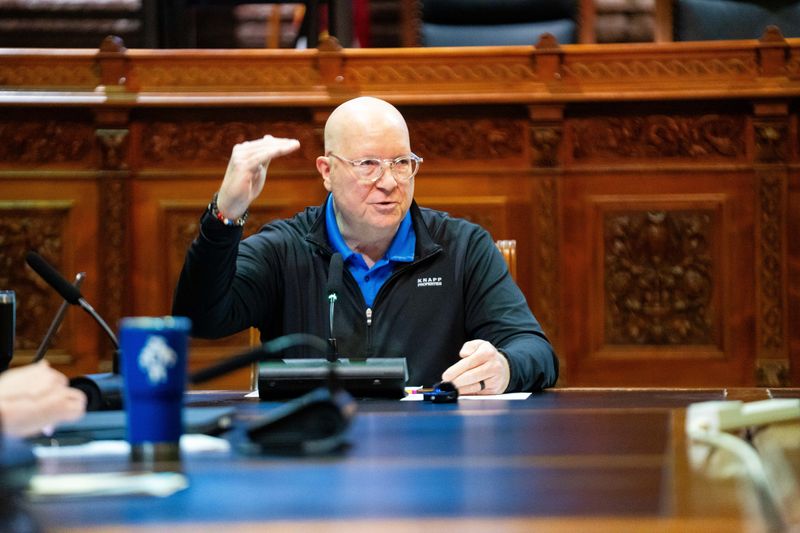
Chris Costa, president and CEO of West Des Moines-based Knapp Properties, which owns or manages about 2,000 apartments in central Iowa, said his company recently entered into an agreement to buy a local property and calculated the bill would increase taxes from $130,000 a year to $235,000 a year.
He said that gap may have to be made up with rent increases to make the project pencil out financially.
“That difference is going to have to be made up somehow in order for us to close on this transaction,” Costa said.
Darryl High, founder of Cedar Rapids-based High Properties real estate and development company, said he is “struggling to make the deals work as they currently.”
While Iowa projects the state another 18,144 homes to meet the demands by 2030 — 29.7% being for rental units, according to state data — High said this tax change would hinder developers from creating new housing stock. He warned this would limit the state’s ability to attract workers and stimy business growth as a result.
“We just need to continue to provide our economic development people the ability to have units because housing is on the checklist when these companies come and look at our communities,” High said.
Amanda Parker, with the social impact real estate company Nestidd, said many Iowans with disabilities lack the resources to buy a home themselves and most agencies providing their care aren’t funded to offer housing.
The company purchases homes and leases them to care agencies serving individuals with intellectual and developmental disabilities. It owns 110 single family homes in 20 counties in Iowa, all of which are state-licensed Medicaid care homes where more than 400 Iowans with disabilities receive care.
Per the company’s estimates, its annual property tax bill would increase $150,000 or more, which she said is not something that individuals with disabilities nor their care agency partners could absorb.
“We are concerned this legislation would put an outsized burden on people with disabilities who are already an incredibly vulnerable population that have limited housing options available,” she said.
Debbie Fisher, representing Newbury Management Co. rental property management company and the Iowa Assisted Living Association, said Iowa’s labor shortage and ongoing inflationary pressures have “severely impacted operating margins, particularly in small assisted living communities located in rural areas in Iowa.”
She said it was important that lawmakers prevent a shift in the tax burden to keep housing costs within reach for elderly Iowans.
“It also impacts the ability of elders to move from their homes when they do need care and free up that existing housing stock so that others coming up the ladder can have a single-family home to enjoy,” Fisher said.
How soon could the House take a vote?
The Senate’s proposal to index the gas tax to inflation also saw some pushback Tuesday, while local government officials applauded a provision that would tie limits on local revenue growth to inflation.
The gas tax increase and the “soft” revenue growth cap — which differs from the strict 2% cap the House and governor pitched — also remain in dispute and were left out of the House amendment.
And the House change does not include a Senate provision that would eliminate Iowa’s decades-old rollback mechanism, which limits a home’s taxable value, and replace it with a 50% tax exemption on Iowans’ primary homes, up to $350,000.
Although legislative leaders continue to iron out their dueling approaches, Nordman said the Senate bill could reach a floor vote as soon as this week or potentially next week.
If passed with the House’s proposed changes, the Senate would have to take another vote on the legislation before it could head to the governor’s desk.
“We talk every day on how we can continue to move forward and get something done for Iowans,” Nordman said.
Marissa Payne covers the Iowa Statehouse and politics for the Register. Reach her by email at mjpayne@registermedia.com. Follow her on X at @marissajpayne.
This article originally appeared on Des Moines Register: Iowa landlords warn Senate property tax plan could increase rent costs
Reporting by Marissa Payne, Des Moines Register / Des Moines Register
USA TODAY Network via Reuters Connect