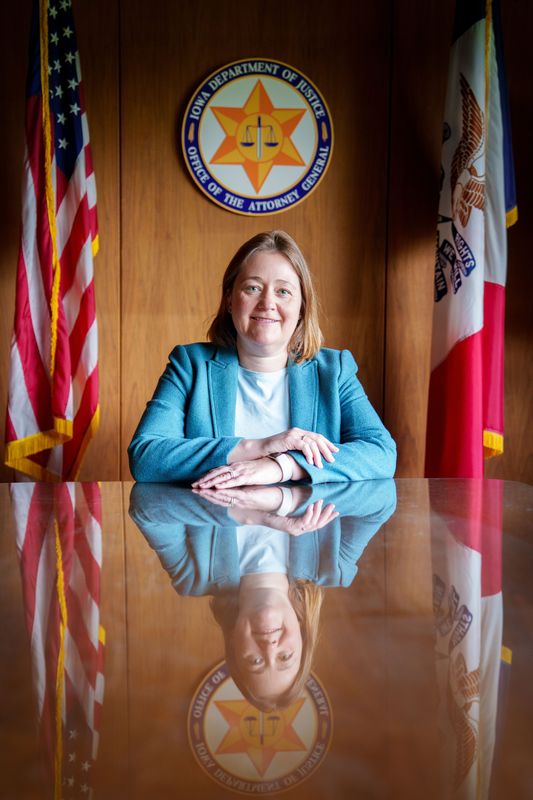
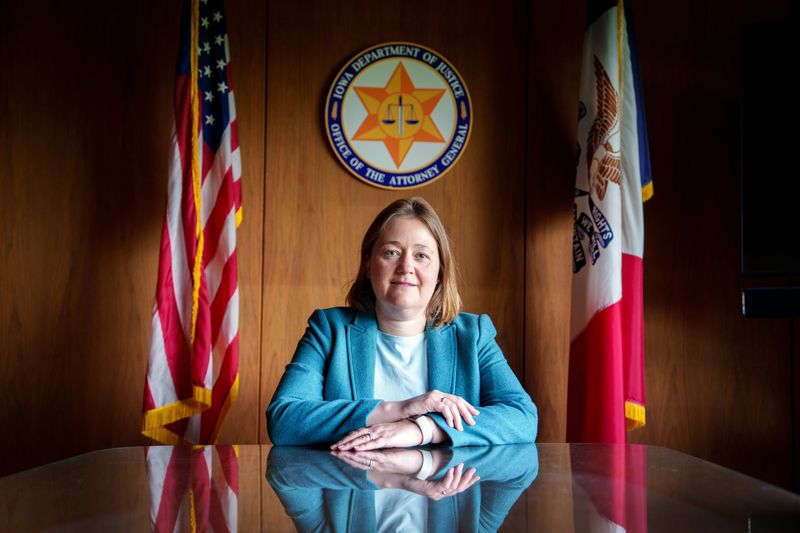
The cases that weigh the heaviest on Iowa Attorney General Brenna Bird are the ones that are forgotten by others. The ones that have gone cold after years of no leads and no answers.
She said she hopes the Iowa Cold Case Unit will not only help the victims to be remembered but also solve their cases.

The unit’s existence realizes a campaign promise Bird made in 2022. But she first saw the need for it while serving as Guthrie County attorney in 2018. She assumed her role as Iowa attorney general in January 2023.
“One of the most important things about the cold case unit is we work on every single case. … Everybody matters,” Bird said in an interview with the Register on April 28. “We never give up, even when it’s hard. Nothing is going to slip through the cracks.”
The Iowa Division of Criminal Investigation previously established a cold case unit that operated from 2009 to 2011, shutting down after the federal grant that funded it ran out. The DCI still investigated cold cases, but without a dedicated unit many stayed cold.
Since Bird re-established a cold case unit in 2024, now based in her office, Barbara Lenz’s 1989 killer has been convicted, and police arrested suspects in the 2011 murder of Ashley Okland and the 2020 murder of Christian Balke-Thompson.
“I think everybody matters, and we know it’s important that every murder is prosecuted,” Bird said.
‘Every case is different’: How a case goes from cold to solved
There are currently more than 400 cold cases in Iowa that the unit is working to solve. There is a cold case from nearly every county in the state.
A cold case can be an unresolved homicide case, a person gone missing under suspicious circumstances or unidentified human remains, according to the Iowa Cold Case Unit website.
The cold case unit, made up of three investigators and one prosecutor, doesn’t look into cases alone. It’s a “team approach” with local law enforcement, Bird told the Register.
“No lead is overlooked,” Bird said. “We’re always turning over each stone, each lead, and just really focusing on these cold cases.”
Cold cases are different than active investigations, Bird said, because previous leads investigators identified have been exhausted, leaving the case unsolved. Many cases go cold because of a lack of evidence or witnesses. The unit investigates them all.
“Any case can be investigated by our office,” Bird said. “The ones that are ultimately charged in a court of law are those where we know we have the right person, and we have met that burden of proof.”
Some cases “rise to the top” based on existing evidence or new tips, Bird said, making them strong contenders for further investigation. Others gain momentum after interviews with witnesses or conversations with local law enforcement. The unit offers resources like DNA testing and re-interviewing witnesses.
But “every case is different,” according to Bird.
“It depends on what sort of help is most needed by the local agency,” she said. “Sometimes there’s quite a bit that has already been done. But bringing in that fresh set of eyes and additional resources can be helpful.”
Recent convictions, arrests show cold case unit’s work
The March 2025 arrest of Robert Davis in Barbara Lenz’s 1989 killing was the first victory for the cold case unit.
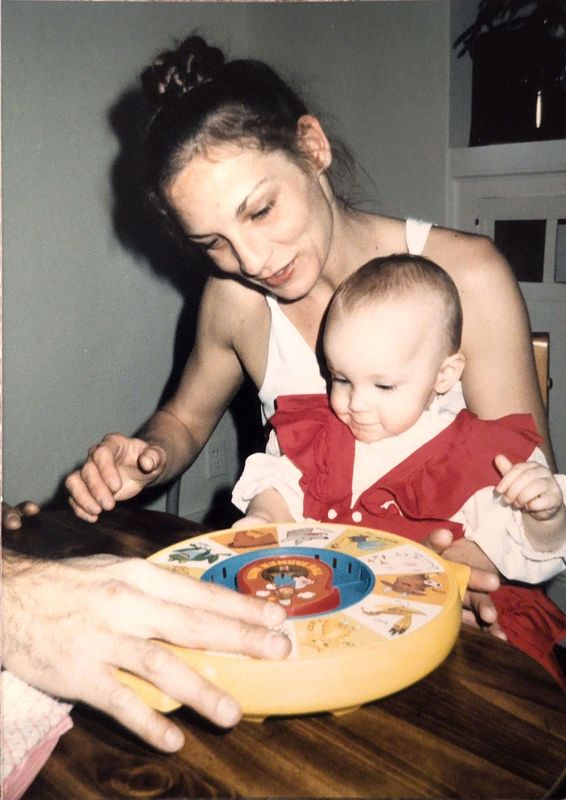
Lenz’s case was unique: her disappearance in 1989 went unsolved, and the 31-year-old’s body was never found. Lindsy Baumgart, Lenz’s daughter who was just three years old at the time, remembers little of her mother, but lived with the uncertainty of her mother’s unsolved case for 35 years.
Witnesses had attested to a tumultuous relationship between Lenz and Davis, her then-boyfriend. But those were not enough, at the time, to make an arrest.
The case was solved with a murder charge for Davis, long believed to be her killer. He was arrested in 2025.
“I think her case is a testament to the value of never giving up and always searching for justice,” Bird said.
Baumgart called Davis’ arrest “divine intervention.” There was no new evidence, according to Baumgart and court filings.
“We just felt a lot of support from the whole Iowa Cold Case Unit all around,” Baumgart said of the investigation.
Davis was convicted of second-degree murder on March 31, 2026. He faces 50 years in prison.
Cases, like Lenz’s, are examined by investigators with the cold case unit to determine next steps — such as producing a warrant — in the investigative process.
The unit’s three investigators are each assigned to a third of the state. Although based in the Iowa Attorney General’s Office in Des Moines’ Hoover Building, the investigators are often in the field, working with local law enforcement associated with cases they are assigned.
“Being able to have a dedicated cold case unit that can come in and support all those efforts and to work together really makes a difference,” Bird said.
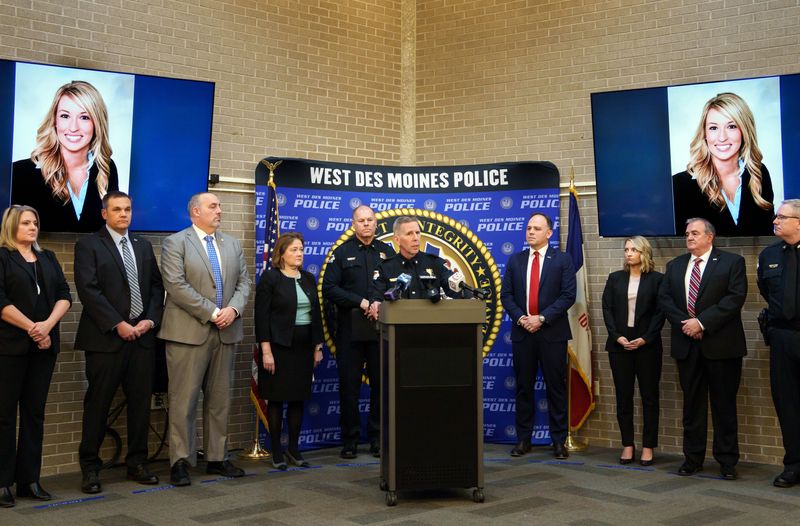
On March 17, Woodward resident Kristin Ramsey was arrested in the 2011 murder of real estate agent Ashley Okland after a grand jury issued an indictment against her.
Okland was fatally shot two times on April 8, 2011, while working at an open house in a West Des Moines townhome development. Her death generated headlines in Iowa and around the country.
West Des Moines Police previously said they investigated nearly 900 leads and interviewed about 500 people in Okland’s murder. Still, it went cold. Ramsey was initially a prime suspect, but there was not enough evidence to charge her.
Ramsey, 53, is now charged with first-degree murder. She posted a reduced bond to be released from jail after an April 10 bond hearing in Dallas County.
Dallas County Attorney Matt Schultz said that the case’s facts and circumstances indicate no other person’s involvement other than Ramsey. Prosecutors presented new evidence to the jury, but the information currently remains sealed.
“I think that (case) just further emphasizes how important it is to never give up on a cold case, to continue working,” Bird said.
One year after cold case playing cards launch, one case sees development
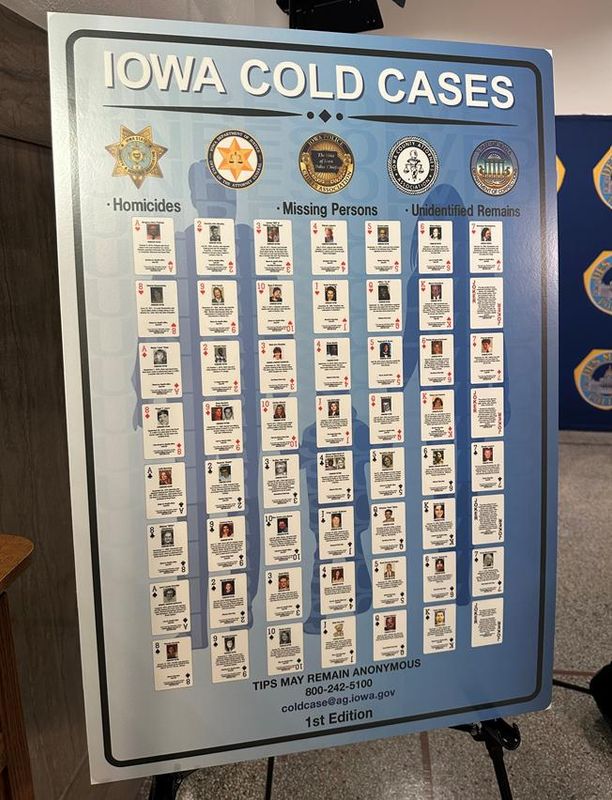
The Iowa Attorney General’s Office distributed decks of playing cards to inmates in Iowa’s nine state correctional facilities in 2025. Each card features a photo of a cold case victim — some with two victims of the same crime — the circumstances of their deaths, and contact information for the cold case unit.
The goal of distributing the cards is to spark new leads and gain new information in a case. Florida, Connecticut, Indiana, Kansas, Minnesota, Washington, Maine and Mississippi have distributed similar cards with the same goals.
“The cards are intended to represent all cold cases,” Bird said. “It’s a powerful reminder — no matter what somebody knows — to help them decide to reach out to law enforcement to take that first step.”
The cards are not funded by taxpayer dollars. Rather, they are a joint effort between the Iowa Attorney General’s Office, the Iowa State Sheriffs’ and Deputies’ Association, the Iowa Police Chiefs Association, the Iowa County Attorneys Association, and the Iowa Department of Corrections.
“Together we can make a difference for those seeking answers,” Steve Ponsetto, who heads the cold case unit, said at a 2025 news conference. “And together we can bring justice to those responsible. Everyone in this room is a partner. If you know something, say something.”
Josh Okland, the brother of murdered real estate agent Ashley Okland, previously said he hoped the cards would spark new leads.
“I’m really excited about what this opportunity presents for not only our family, but for all of the other families that are here with us today,” he said when the cards were first launched.
Cold case unit ‘brings hope’ to victims’ families
Baumgart said the day her mother’s killer was arrested was an “emotional, overwhelming, incredible moment,” but it also “opened the wound back up” and “felt like that was the day that my mom died.”
Many family members of cold case victims are in similar positions.
“Even when a case is solved for the family, they’re reliving that again,” Bird said. “I think it’s important for people to be mindful of that.”
The cold case unit, while investigating and working on convicting Davis, had victim coordinators and advocates support Baumgart and her family through the process by providing updates and answering questions about the investigation, navigating paperwork and offering moral support.
“(They) have done a tremendous job of supporting our family,” Baumgart said. “I believe they are important because they’ve validated me.”
Bird said she often hears thankfulness from cold case families.
“They are thankful that there is a place where there is a cold case investigator in our office that is working on that case … that we are working with local law enforcement and that their case is never forgotten, no matter what, even when it’s been a long time,” Bird said.
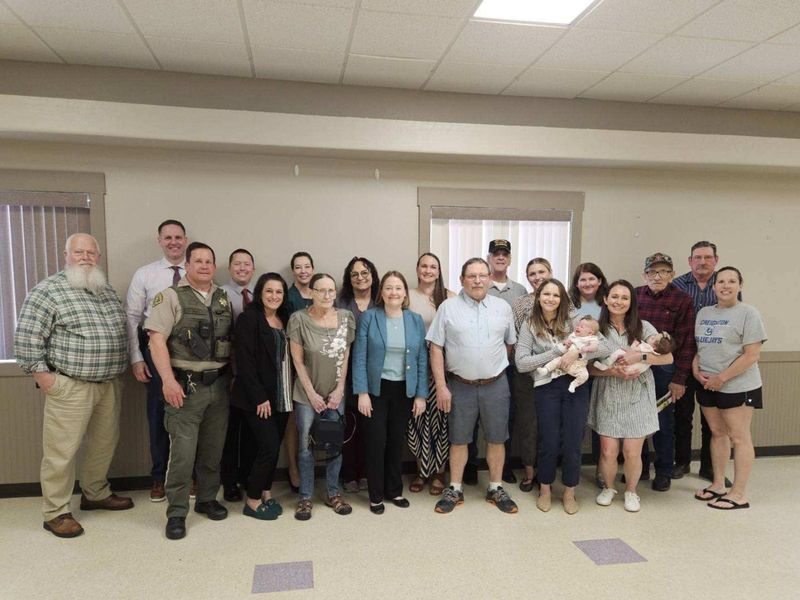
Bird met Baumgart and the Lenz family after Davis’s guilty conviction, giving them a “chance to say what we needed to say” and to “thank her for all she stands for,” Baumgart told the Register.
For Bird, “being able to be part of something like that is very special,” she said. “It’s a very special thing to work for justice.”
How to submit a tip in an Iowa cold case
Even the smallest details can help solve a cold case, according to Bird.
“If anyone has a tip about cold cases, it’s really important they reach out and talk to law enforcement or call our office,” Bird said. “Even the smallest thing can be a very significant lead and help put investigators on the right path.”
Those who have or believe they may have information relevant to an Iowa cold case are asked to call the Iowa Attorney General’s Office at 800-242-5100 or email the cold case unit at coldcase@ag.iowa.gov.
Kyle Werner is the breaking news and public safety reporter for the Register. Reach him at kwerner@registermedia.com.
This article originally appeared on Des Moines Register: Iowa Cold Case Unit works to solve homicides, bring hope to families
Reporting by Kyle Werner, Des Moines Register / Des Moines Register
USA TODAY Network via Reuters Connect