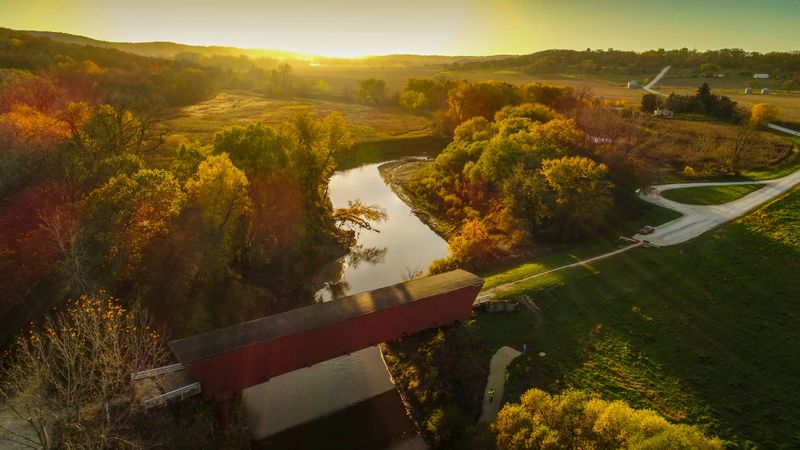
ST. CHARLES — The road out of St. Charles still carries the old promise of rural Iowa.
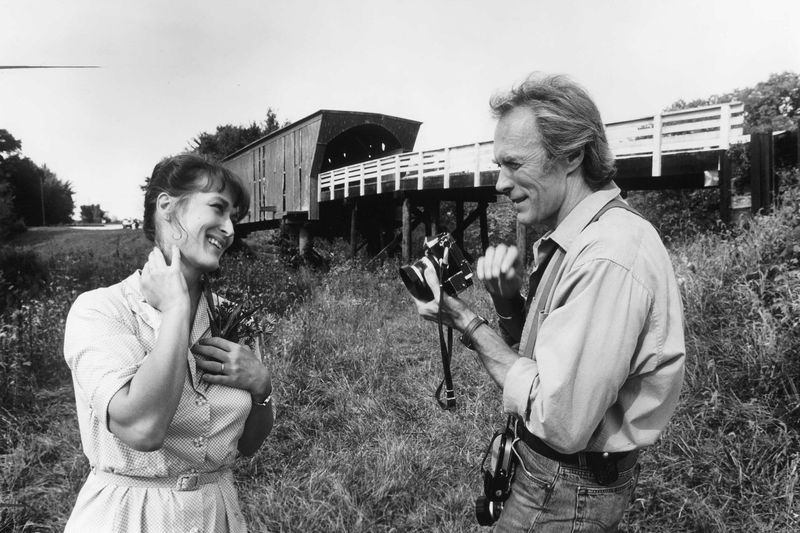
It’s a stillness Clint Eastwood and Meryl Streep brought to movie screens in “The Bridges of Madison County,” farmhouses tucked into open, idyllic fields and a quieter life.

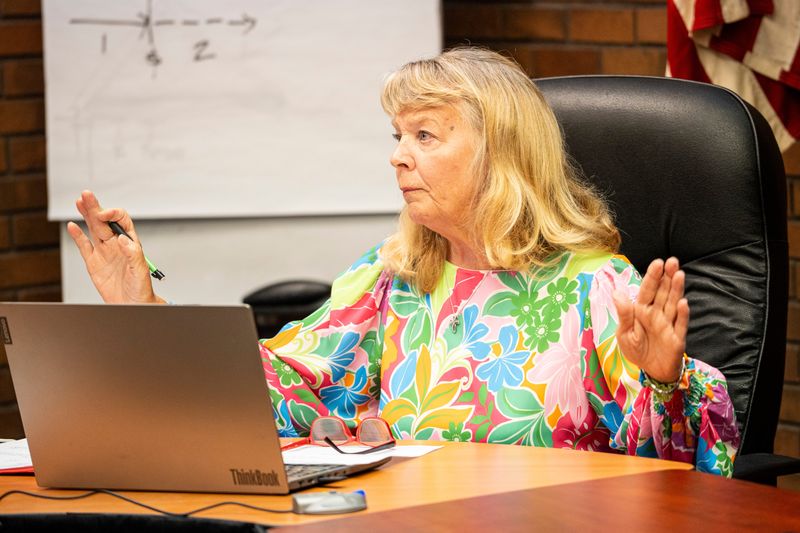
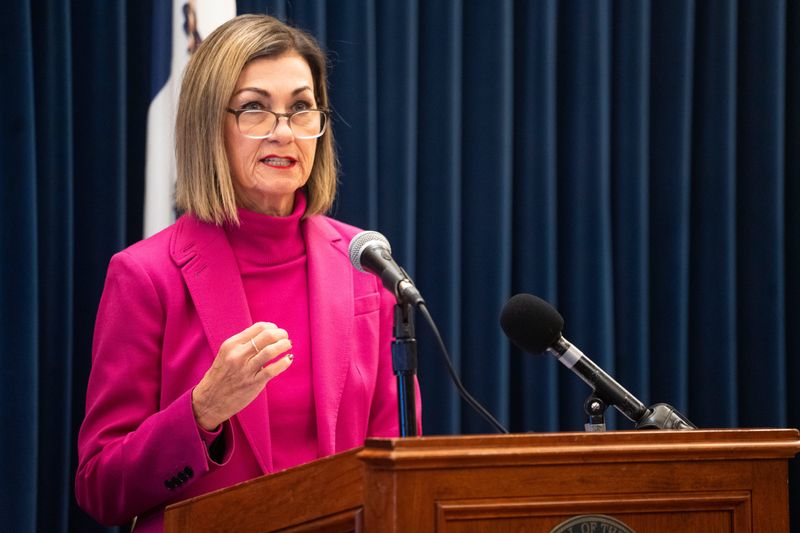
Here, Diane Fitch, a Madison County supervisor, said she found the peace she lacked as a child growing up with an abusive father who struggled with alcoholism.
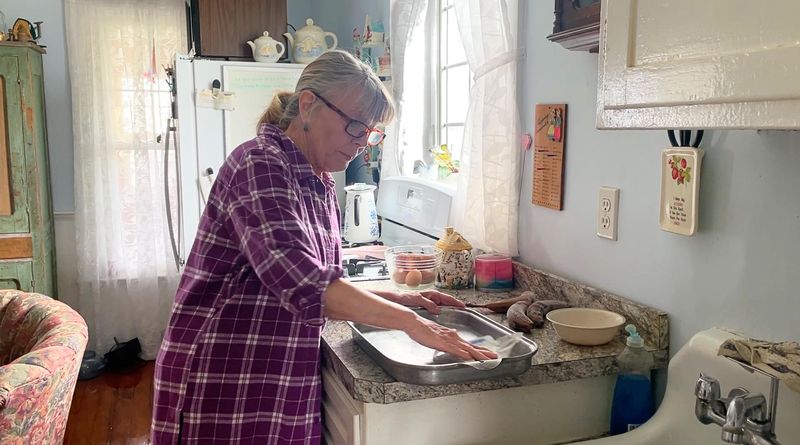
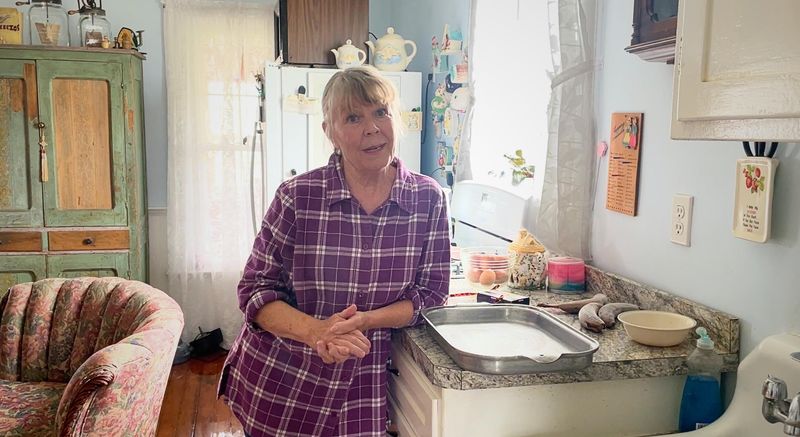
On her rural farmstead, she tends chickens, bakes banana bread and holds onto a version of Madison County where neighbors know each other by name and help each other without hesitation.
“We just pulled a kid out of the ditch yesterday with the tractor,” Fitch told the Register. “We won’t tell his dad.”
Now, she said, that peace has been rattled.
“We’ve never fought like this,” she said. “Suddenly there’s an ugliness here that none of us know how to deal with.”
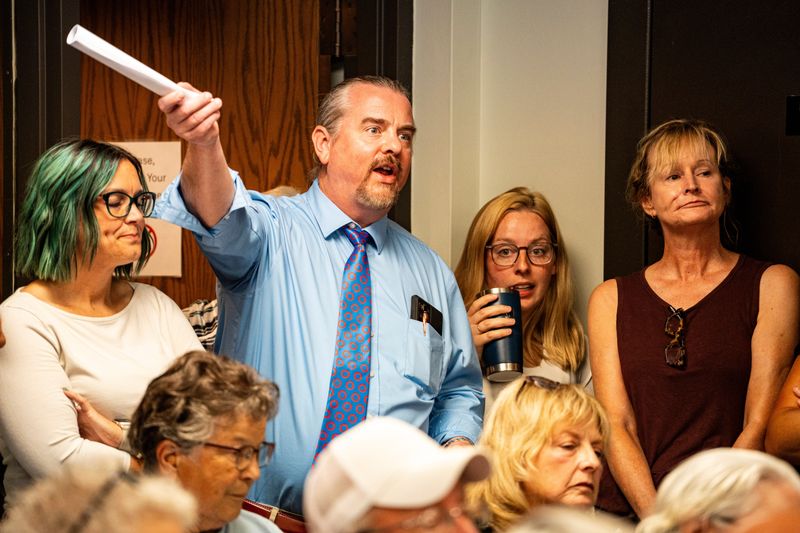
Over the past year, Madison County has been engulfed in turmoil that began in county offices and spilled into public meetings and residents’ daily lives.
The county’s dysfunction reflects the broader strain testing communities across Iowa, where the romance of small-town living is colliding with the increasingly difficult reality of keeping those towns running.
“Our small rural communities are facing real headwinds,” Alan Kemp, executive director of the Iowa League of Cities, said. “Some of them are navigating it a little better than others. And some are just really struggling.”
Those flare-ups, experts, residents and officials say, are reshaping civic life in small-town Iowa, where disputes that once might have stayed inside government buildings now leave few people unscathed and services that keep community life running are becoming fewer.
Small towns face growing bills, fewer resources
Before the shouting reaches the meeting rooms, the cost of keeping a community running was already working against many small towns.
Compared with larger cities, many small towns rely more heavily on property taxes, Kemp said, and sales tax revenue may be limited. A fire truck, water system or sewer project does not get cheaper because fewer people are contributing.
“The trouble is that they sort of lack an economy of scale,” Kemp said. “If I’m going to buy a fire truck, I have to pay the same price that Des Moines does, but I have to spread it out over fewer people.”
Many smaller communities also have older and declining populations.
Iowa’s population grew 4.7% from 2010 to 2020, but 68 of 99 counties lost population, according to 2020 U.S. Census data.
Nearly 7 in 10 Iowa towns with fewer than 3,000 residents in 2010 lost population by 2020, and more than two-thirds of towns with fewer than 6,000 residents also shrank.
That leaves rural areas with fewer taxpayers, more residents on fixed incomes, little new housing to add value to the property tax base and, in some communities, fewer services.
Filings with the Iowa Secretary of State’s office show more cities are moving away from local police departments and turning to sheriff’s contracts.
Just six such city-county law enforcement agreements were filed in 2021. That grew to 54 newly filed agreements in 2025 and 49 in the first three months of 2026. As of March 2026, more than 199 cities in 50 counties had active agreements.
Mitchellville, a city of about 2,500 people east of Des Moines, lost its police department after its former chief resigned and was subsequently arrested when a state audit found more than $50,000 in improper disbursements.
The remaining officers resigned, forcing the city to rely on the Polk County Sheriff’s Office before entering a formal agreement with the county.
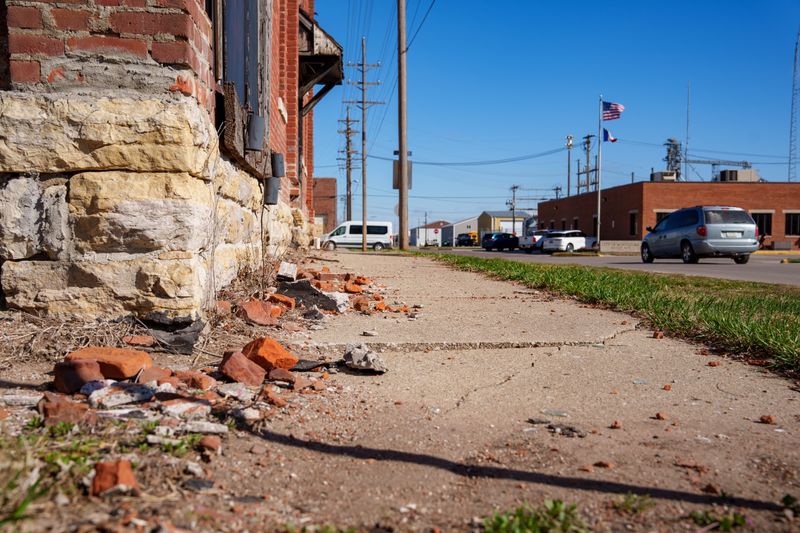
Derelict buildings add another cost. Vacant and deteriorating buildings have increasingly become a burden for rural communities already dealing with shrinking tax bases.
Another rural need, hospitals and other health care providers, are also becoming fewer. Hospital leaders have warned that incoming Medicaid cuts could push thin-margin facilities to reduce services or close.
Together, those pressures often force residents to reconcile the dreams of small-town living with the cost of maintaining the life, Kemp said.
“There are individuals who have a romantic affinity,” he said. “They say ‘I’d really like to go back to a small city, to a lower pace of life.'”
But then a difficult reality sets in.
“The reality is you still want to offer services,” Kemp said. “I think the key is, and has always been, quality of life.”
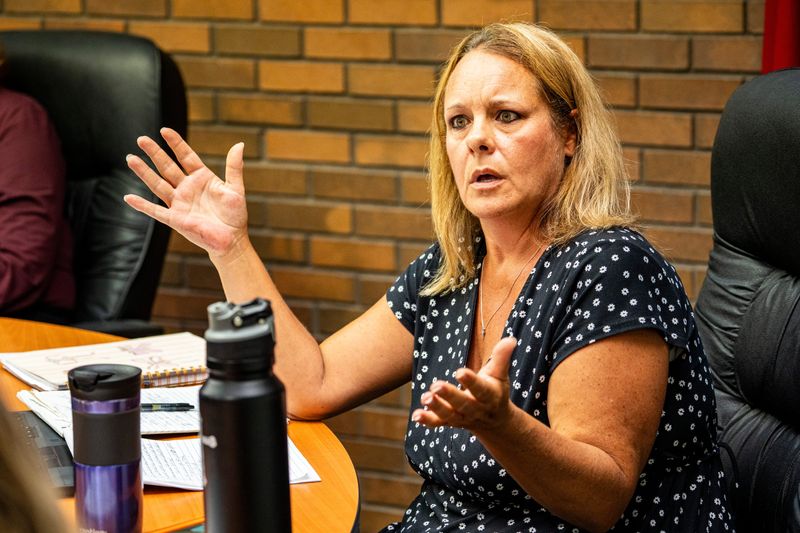
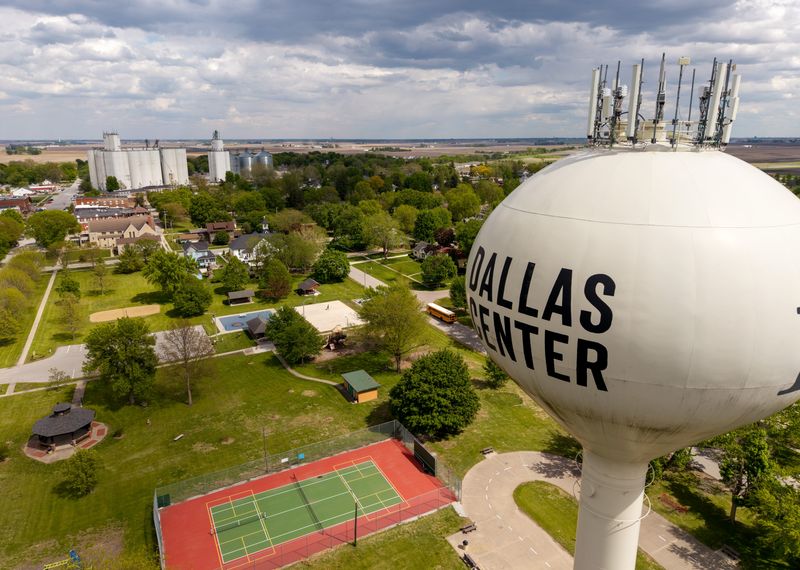
Keena Clark moved to Dallas Center from Waukee about a year ago, drawn by the space and quiet that Waukee no longer offered her. Waukee, a Des Moines metro suburb, has grown more than 350% since 2000.
“I drive home, and I cross these bridges, and I see small-town life, and I see the peonies blooming, and the river basin, and part of your soul is filled up,” Clark said. “We can travel all we want, and we can still come home and have our own little solitude and our piece of paradise here.”
The social difference was immediate, she said.
“I didn’t know any of my neighbors in Waukee really well,” Clark said. “Whereas here, we’re expecting a baby, and our entire neighborhood is like, ‘Hey, what can we do? How can we help?'”
But the small-town promise becomes harder to sell when daily life requires more trade-offs than newcomers expected.
“I’m not willing to trade everything. It’s all to a point,” Clark, who now drives over 20 minutes each way to purchase certain goods, said. “That doesn’t attract young professionals to want to come and invest in your town. I have no friends who are like, ‘I’m definitely moving to Dallas Center.’”
Elected offices are harder to fill in some small towns
The same towns struggling to pay the bills are also struggling to find people willing to take on the work, Kemp said.
That problem is showing up on ballots. During Iowa’s 2025 city and school elections, 157 local races in 122 cities had no candidates on the ballot, according to a Register analysis of results published by the Secretary of State.
Social media is making that work even more difficult, officials have told the Register.
“People may now do just a couple of terms, and then say ‘I’m done,'” Kemp said. “‘I just got tired of having my name dragged through the mud, and my family, so I’m just done.'”
That scrutiny is now shaping how newcomers experience a small town, too, Clark said.
“You can’t join a Facebook group in our community without having your candidacy run by a moderator who decides whose side you’re on,” she said.
She said she might have reconsidered moving had she known how quickly local conflict would become part of daily life. And even as she plans to stay, Clark said she does not assume the next generation will feel the same pull.
“I don’t expect my son to want to live in small-town Iowa,” Clark said.
Fragile systems fan consolidation talk
The money and staffing pressures facing small towns can compound inside governments with few guardrails, Kemp said. Too much control can rest with one person.
“Auditors refer to this as segregation of duties. You really put an organization at risk when you put all the financial authority in the hands of one person or a few,” Kemp said.
In Conesville, a June 2025 state audit found the city clerk, who controlled billing, deposits, disbursements and bank reconciliations, spent nearly $127,000 without proper authorization. The audit said the clerk wrote herself extra payroll checks and used a city debit card for personal purchases, including Gucci sunglasses and hair products.
McCallsburg’s former mayor went to trial in May 2023 over alleged unpaid utility bills and overpayments to a former clerk. His defense attorney, Michael Lewis, argued it reflected broader habits in small-town government.
“Evidence will show if he did anything wrong, it was that he wasn’t paying attention,” Lewis said during the trial. “When you bring in a state of Iowa auditor and start going through every small town’s records, you’ll see exactly the same thing.”
A jury found the former mayor guilty of fraudulent practice in the third degree.
State Auditor Rob Sand, now running for governor, said smaller communities can struggle to catch problems.
“Oversight of tax dollars isn’t easy, especially for smaller communities with fewer resources,” Sand said in a statement to the Register. His office offers training to cities and fields daily calls from residents.
Such recurring dysfunction has meant small towns are increasingly becoming political talking points, as state leaders question whether Iowa’s governmental structure still fits its population and finances.
Iowa has about 1,600 townships, many with duties tied to cemeteries, fire protection, EMS coverage or fence disputes. State lawmakers considered a bill in 2026 that would have stripped townships of most responsibilities and shifted authority to county supervisors. The bill passed the Senate, but the House didn’t take action on it.
Kemp said those debates sit on top of decades of rural consolidation.
“The population used to be largely distributed widely across the state of Iowa, in small communities with a robust farm population,” Kemp said. “You’d have these small cities of just 400, but they’d have a car dealership or two, they have a newspaper, they’d have a lumberyard.”
The Farm Crisis in the 1980s accelerated the shift, he said.
At the Iowa DOGE task force’s June 2025 meeting in Des Moines, task force member Terry Lutz described Iowa’s local government structure as “thousands of people required to work with outdated systems.”
The task force openly discussed consolidating some of the state’s counties.
“This outdated structure may make us feel better politically, but we are wasting valuable resources, and it is costing us millions,” Lutz said.
For some local officials, the push toward efficiency is raising concerns about losing local control.
“Speaking with a long-time government leader from Clarke County, we are both afraid governments will quietly take away local authority,” Fitch, the Madison County supervisor, wrote in the local Madisonian in 2025.
Residents who wanted peace become watchdogs
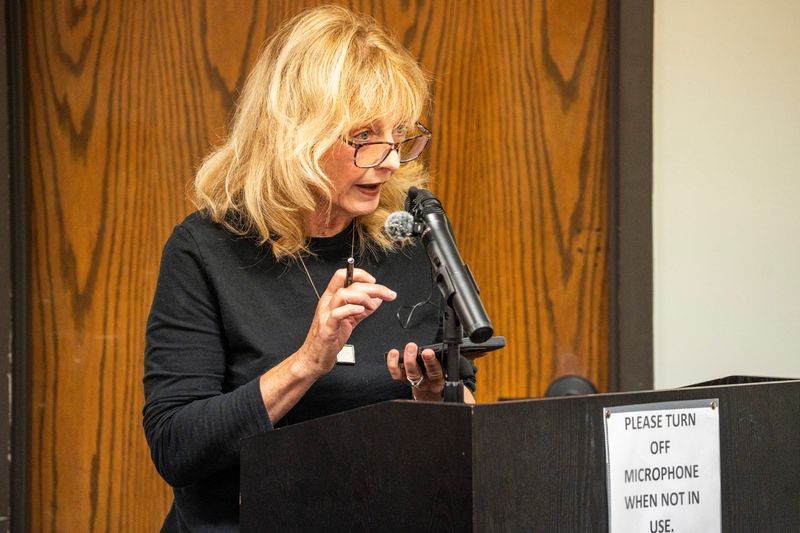
Vicky Brenner told the Register she did not move to Madison County to become a local watchdog.
“We landed out here by accident,” Brenner, who grew up in Le Mars and moved to Madison County from Des Moines in 2002, said. “We just saw it in the Des Moines Register: ‘acreage for sale.’”
The county’s residents showed up after her house caught fire, then rallied again after a March 2022 tornado tore through the Winterset area, killing six people and damaging dozens of homes.
“We felt proud to say ‘Madison County Strong,’” she said.
When county government began to unravel, Brenner said a sense of obligation pulled her into the fight.
“When you see something happening in your community that you know is wrong, you can’t sit back,” Brenner said.
When a newly elected Madison County auditor faced backlash and resigned, supervisors appointed a controversial replacement, with Fitch dissenting. The position quickly became a flashpoint in local politics.
Brenner began closely tracking agenda items and explaining disputes to neighbors.
The work has been exhausting, she said.
“It’s just so disheartening, because when you love where you live, it makes you mad, and it makes me really sad,” she said. “The cavalry isn’t coming. It’s going to be up to the people to unite and work towards common goals.”
For Fitch, some of that change has come in the language of national politics. A Republican, she said other county officials have begun calling her a RINO, shorthand for “Republican in name only.”
“They call me a bureaucrat, too, because I’ve always worked for government,” said Fitch, who chose not to run for reelection and whose term ends in January 2027. “We’ve gotten so divided, and that starts from Washington. It’s just coming down the pike.”
That same pull from Washington showed up in Dallas Center, where a local water project became tangled in national politics.
A roughly $5 million request for federal money for a new water treatment plant in the small town of 2,000 included references to fluoride in the water and possible risks to children’s brain development — language that echoed a national health debate tied to the Make America Healthy Again movement.
It was a jarring turn for Clark, who moved to escape politics.
“I left Waukee so I’d have a sanctuary away from politics,” she said. “I now feel like I’m more involved in Dallas Center politics than ever.”
In Madison County, Fitch said the damage feels personal because the people fighting once happily cohabitated.
For years, she wrote a paid column in The Madisonian, “The Musing of a County Supervisor,” that moved between county government, rural life, Christian faith and small-town humor.
In one column, she wrote about muddy roads, littered ditches and her husband’s socks.
“P.S. In my effort to conserve energy I hung clothes on the clothesline Sunday,” Fitch wrote. “If you find white socks flying by your home, seeking their soul mate, they belong to my husband.”
As the community fractured, so did her columns, which grew progressively sadder.
“The consequences of the very personal wounding articles hurled at me, is proving to be detrimental to innocent citizens of this county,” Fitch wrote in April 2024 in one of her latest and, for now, last columns.
That is the tension running through romanticized small-town Iowa, made famous by films and books like “The Bridges of Madison County.”
“Things change. They always do,” Robert Kincaid, the traveling photographer Eastwood played in the film, tells Francesca Johnson, the Madison County farm wife Streep embodied. “Most people are afraid of change, but if you look at it as something you can always count on, then it can be a comfort.”
Nick El Hajj is a reporter at the Register. He can be reached at nelhajj@gannett.com. Follow him on X at @nick_el_hajj.
This article originally appeared on Des Moines Register: Increasing conflict threatens promise of quiet life in rural Iowa
Reporting by Nick El Hajj, Des Moines Register / Des Moines Register
USA TODAY Network via Reuters Connect


By Nick El Hajj, Des Moines Register | USA TODAY Network