Most library directors didn’t know what to make of the thick envelope from a law firm.
Some thought: “Are we getting sued?!” In small-town Iowa, where budgets are tight and staffing is lean, unexpected mail from attorneys is rarely good news.

It wasn’t a lawsuit, though. It was a check — from a name few of them recognized: Norma Jean Warner.
Across the state, 485 public libraries in small towns are receiving gifts from Warner’s estate. Another 128 senior community centers also are beneficiaries.
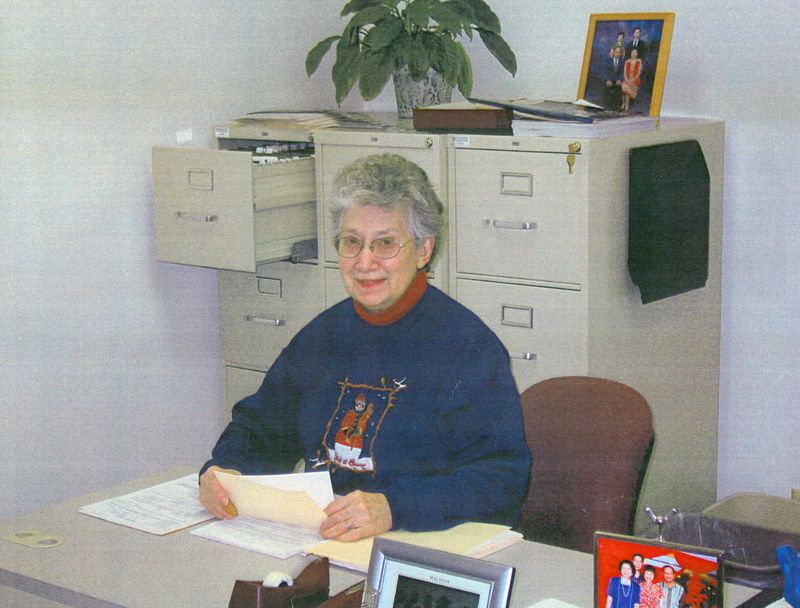
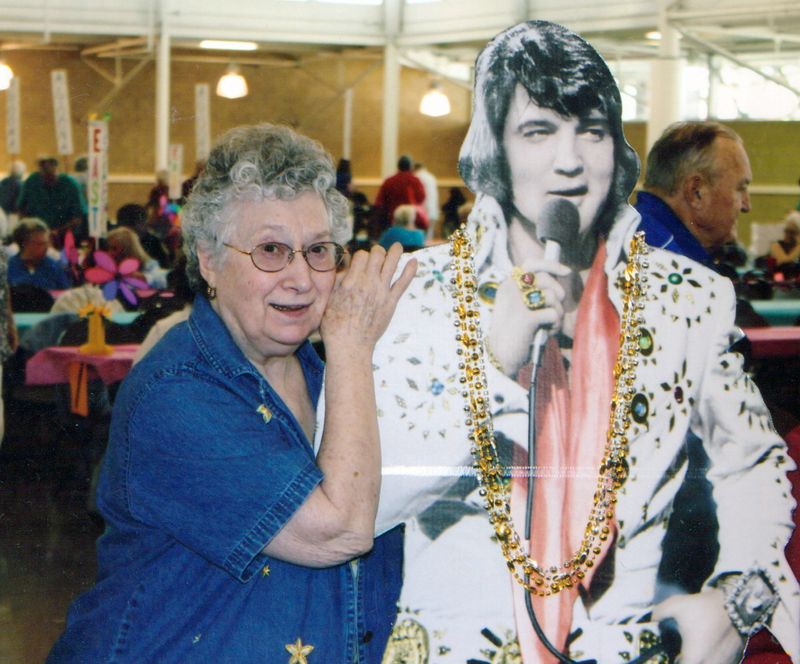
Warner was not a business magnate or heiress. She was the youngest of seven children, the daughter of a rural farmer in Clarke County. She worked at an optical shop. Her husband, Waldo, a World War II and Korean War veteran, worked in sales for Pittsburgh Paints in Des Moines. They lived for years in a modest house on Ovid Avenue.
They had no children, traveled little and invested every dollar they could spare.
Warner died at age 85 from endometrial cancer on May 12, 2023, in Des Moines. She cared for her husband as he battled Alzheimer’s disease in the final years before his death in 2011 at age 93. She spent much of her free time volunteering through church organizations and ministries, sewing blankets and crafts for charity.
She left little public profile and requested no obituary be written for her.
And although her life was quiet, instructions for how her savings be distributed were not.
She directed nearly all of her estate to charity, carving it into precise percentages and dispersing it across Iowa with strict language that the funds would not go to administrative bodies, but directly to the sources themselves: libraries, senior centers, veterans, conservation, cancer research, Alzheimer’s research, food banks.
“This is the sort of gift that really does leave a legacy,” said Tyler Hahn, director of the Cherokee Public Library, which received a grant from Warner’s trust. “It truly is heartwarming and transformational for hundreds of smaller communities and thousands of people across this state.”
A blueprint for direct giving
Warner’s trust, signed in June 2010, reads like a map of what she valued.
“What is evident throughout this trust instrument is her commitment to philanthropy,” said Ross Barnett, an attorney with Abendroth Russell Barnett Law Firm who is helping administer the distributions. “Rather than leaving money to the State Library Foundation, she specifically selected public libraries in towns with fewer than 7,000 residents, and then senior community centers in towns with fewer than 7,000 residents.”
Barnett said the firm used 2020 Census data to build a list of qualifying towns, then confirmed whether each had a library or senior center.
“She really had a strong commitment to small-town Iowa, which is the backbone of this state,” Barnett said. “Economics have sort of gutted small-town Iowa, but she recognized the libraries are still there.”
The trust’s charitable breakdown includes:
Barnett said the work of contacting tiny institutions across the state has been unusually personal.
“They’re just so committed to what they do, and it is just so rewarding to be able to communicate with them and say, ‘Yeah, hey, no, this is a real thing and here’s a check from a woman you didn’t know,’” he said.
Putting resources straight into local hands
When the envelopes arrived, library directors in towns from Cherokee to Clarinda to Columbus Junction were already managing expanded roles in their communities despite tightening budgets.
Inside was an explanation from Barnett on why their library had been named.
“Norma was known for her quiet strength, sharp intellect, and deep compassion for others. Throughout her life, she believed firmly in the power of education and the dignity of aging with support and connection. These values guided her personal life and her remarkable acts of giving,” the letter reads.
It continues: “I hope that her generosity will benefit places where curiosity is nurtured, friendships are formed, and community bonds are strengthened. Her memory will live on in every book read, every conversation shared, and every life touched through the institutions she so lovingly supported.”
Cherokee, Clarinda and Columbus Junction public libraries each received just shy of $950.
Andrew Hoppmann, director of the Lied Public Library in Clarinda, population 5,300, said a gift of this scale is unique.
“It’s unprecedented as far as I know for such a large group gift like this to go to so many libraries across the state,” Hoppmann said.
Clarinda plans to use the funds for materials, including print books and digital resources, he said. Demand for e-books and downloadable audiobooks continues to grow, and licensing costs remain high.
“What’s really kind of heartwarming for me, at least, is that this is so very altruistic. We didn’t know Norma Jean Warner,” Hoppmann said. “This gift is just wonderful.”
In Cherokee, a town of about 5,200 in northwest Iowa, the public library still operates in its original Carnegie building, first funded more than a century ago.
The library partners with local schools and businesses and hosts after-school activities. In some northwest Iowa communities that have lost school districts, Hahn said the local library remains a central institution.
“Having a local library is a point of pride for them,” Hahn said. “It holds their community’s heritage, it holds the answers of their past, it holds the entire family history.”
Hahn described the donation from Warner’s trust as part of that continuum.
He said recent budget shortfalls forced the Cherokee library to reduce its weekly hours from 47 to about 43 and operate with lean staffing. He said the gift represents more than a month’s worth of resources for the library and will allow it to strengthen programming.
“Being able to operate at a higher capacity thanks to this gift means that we have new books on our shelves for our summer learning program,” Hahn said. “It means that we have activities for our after-school program with our early outs on Fridays.”
In Columbus Junction, library director Mandy Grimm said the gift arrives as libraries navigate rising costs and growing expectations.
For her library, she said, the impact is tangible.
“For us, it’s about a month’s worth of books,” Grimm said. “That is substantial. This gift is about what it takes for a successful summer reading program.”
Columbus Junction, home to a Tyson meatpacking plant, has a large population of refugees, immigrants and asylees. Louisa County does not have an Iowa DHS office or an unemployment office, and residents often turn to the library for help navigating government systems.
She described the gift as more than a financial boost.
“It just comes sort of out of the blue at a time when it’s really nice to get to have good news. Library legislation within the state, within the country, has been on the forefront of all of our minds,” Grimm said. “This is just a really lovely reminder that Iowan citizens appreciate the work that their public libraries do.”
Nick El Hajj is a reporter at the Register. He can be reached at nelhajj@gannett.com. Follow him on X at @nick_el_hajj.
This article originally appeared on Des Moines Register: In her final act, this Des Moines woman donated to 485 Iowa libraries
Reporting by Nick El Hajj, Des Moines Register / Des Moines Register
USA TODAY Network via Reuters Connect