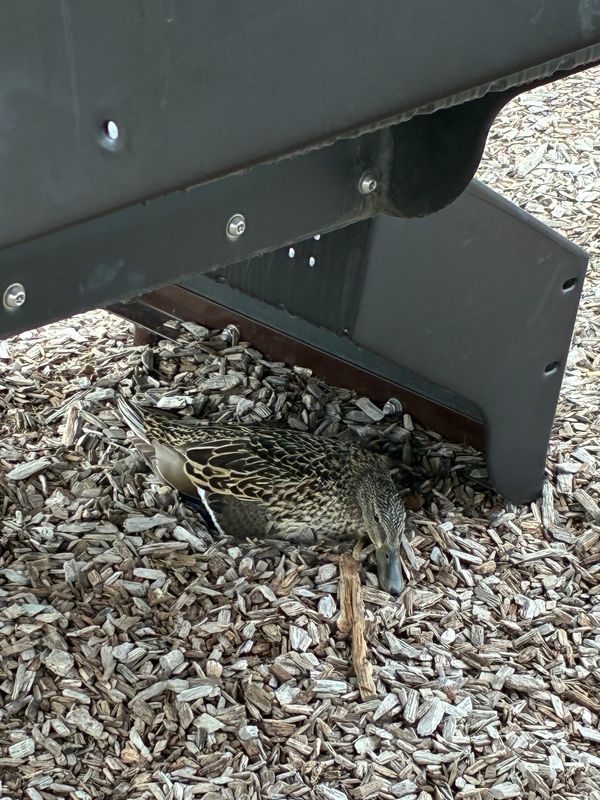
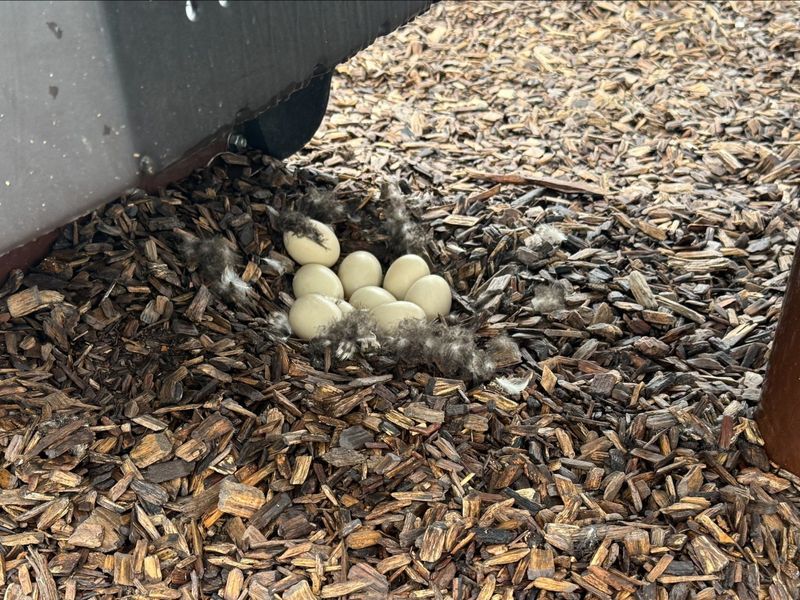
Ankeny city officials have closed off a section of Centennial Park to let a mama duck hatch her eggs in peace.
A social media post announcing the closure quickly had people sounding off in the Facebook comments.

Some are saying that the city should’ve done nothing, letting nature’s “survival of the fittest” take place. Others are saying the entire park should’ve been closed, since humans have encroached on animals’ native habitats.
The choice to fence off part of the playground is an interesting case study to understand how humans can coexist with animals, said Andy Kellner, Iowa DNR urban wildlife biologist.
“It’s just one duck in the realm of things, but at the same time, how the story plays out with its interactions with people is really important,” Kellner said.
Kellner hopes this is an educational moment that helps families respect and value wildlife.
If 30 kids come back to the park repeatedly to watch the hatching process play out, to learn how to appreciate nature, then that outweighs his concerns of someone destroying the nest.
And if a raccoon or coyote ends up eating the eggs, well. That’s a learning moment too.
Why is there a duck nest in Ankeny’s Centennial Park?
By the time the duck nest was discovered on Tuesday, April 14, Kellner said it was too late to move it somewhere else.
There are a couple of factors in play: If Kellner moved the nest, the mother duck might no longer recognize the eggs as her own. State agencies like the Iowa DNR also lack the special permits required to conduct hands-on work with mallards.
The duck had already laid eight eggs when the nest was discovered on April 14. Mallards typically lay about one egg per day, which means she had already been at her work for more than a week.
Despite kids playing near her, the duck still chose that site as a nesting location.
“I do think some of the people are right, at least in the vein that she’ll have to do some trial and error to figure things out,” Kellner said. “That’s what birds do. They try nesting in one spot, and if it’s not successful, they may have another attempt that year.”
Is it common for birds to nest in urban spaces in Ankeny?
The DNR sees several cases like these a year, where birds nest in playground equipment or close to someone’s house.
Animals have found ways to adapt to the urban landscape, Kellner said, and this duck is no different.
Ankeny has a lot of storm retention ponds surrounded by open ground, which mimics mallards’ preferred nesting habitats. With fewer natural habitats available, animals are willing to try out other areas.
Mallards are federally protected, which means people can face legal consequences for disrupting them or their nests.
“As we see more birds utilizing spaces in urban settings, there’s going to be some of that trial and error that takes place too,” Kellner said. “Do we want them to come back and do it in that spot, or hit that compromise in the middle?”
“I don’t know. I kind of push it back to everybody else,” Kellner said.
Lucia Cheng is a service and trending reporter at the Des Moines Register. Contact her at lcheng@gannett.com or 515-284-8132.
This article originally appeared on Des Moines Register: Duck tries nesting at Ankeny park. DNR sees it as educational moment.
Reporting by Lucia Cheng, Des Moines Register / Des Moines Register
USA TODAY Network via Reuters Connect