The American bison played a key role in the early years of Iowa’s settlement.
A little-known fact is that the U.S. had a “National Mammal” for years before the Bald Eagle. In 2016, Congress passed the National Bison Legacy Act, which formally recognizes the bison as an American icon.

Ten years since receiving the designation, and as the nation prepares to celebrate the 250th anniversary of the signing of the Declaration of Independence, the milestones converge in Iowa City.
The University of Iowa Museum of Natural History is a featured stop on a historic cross-country journey celebrating the American bison, part of the Smithsonian’s National Museum of Natural History’s latest exhibition, “Bison: Standing Strong.”
Bronze bison make their way to Iowa City
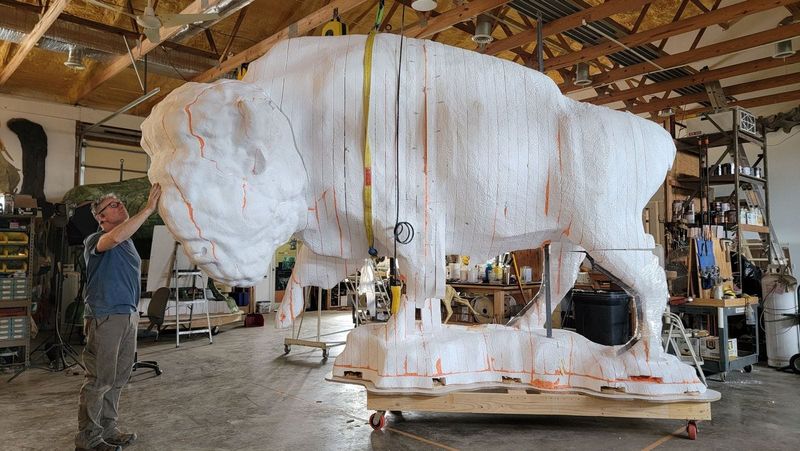
“The Great American Bison Road Trip” features three bronze bison statues traveling across the country, stopping at various museums before landing in Washington, DC.
For one day, from 1:30 to 3 p.m. on Sunday, March 15, at the University of Iowa Museum of Natural History, visitors can see the statues up close and hear Smithsonian experts discuss the bison’s history and conservation in the U.S.
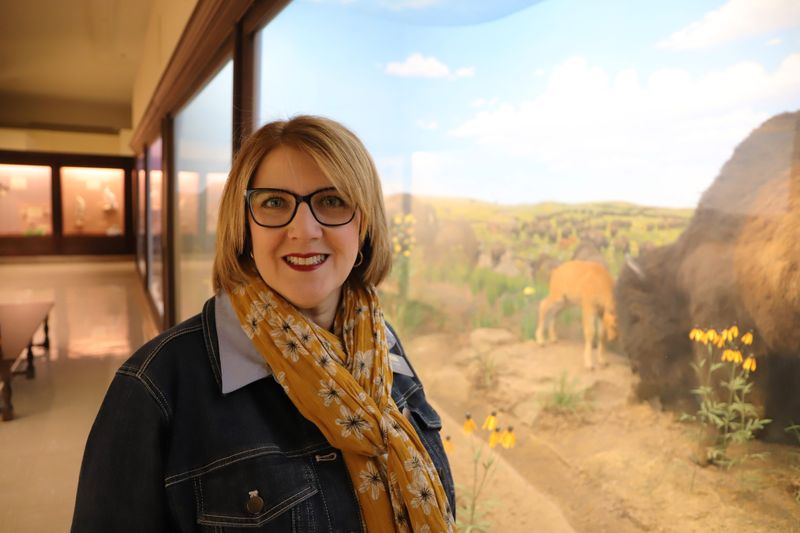
Recently dubbed a “Bison Ambassador” by the Smithsonian, Liz Crooks, the director of Pentacrest Museums, calls the exhibit a “once-in-a-lifetime opportunity” because of her lifelong love for bison.
“Bison are part of the reason Iowa is the agricultural state it is today, because without that rich prairie soil, we wouldn’t have the base we have now,” Crooks said.
Iowa bison helped create the state’s rich soil, provided source of food, tools
In Iowa, bison broke down dense mats of prairie grasses by disrupting the soil with their hooves and grazing, allowing new plants to grow. For thousands of years before European settlers arrived, bison were a source of food, tools and housing for Native Americans across the country. Native Americans also considered the Bison a sacred creature.
Bison spanned as far east as the Virginias, where George Washington would hunt, and as far north as Alaska.
At one point, the herds of bison were so large that occasionally, settlers would be stalled for days waiting for the bison to pass, Crooks said. But by the late 1800s, the bison population had dwindled from millions to only hundreds as westward expansion intensified.
National taxidermist who warned of Bison plight studied in Iowa
Though President Theodore Roosevelt gets credit for bison conservation efforts, it was William Temple Hornaday who drew attention to the plight. When the Smithsonian taxidermist, who studied at both Oskaloosa College and the Iowa State Agricultural College, was tasked with collecting bison only to encounter empty prairies, the issue became pertinent.
“It was a time when people realized natural resources could be depleted, exhausted, and that we have to be careful and take steps to preserve these special spaces and animals,” Crooks said. “Hornaday and Roosevelt were the ones publicizing the efforts…[to save bison], it was a widespread effort from ranchers to natives.”
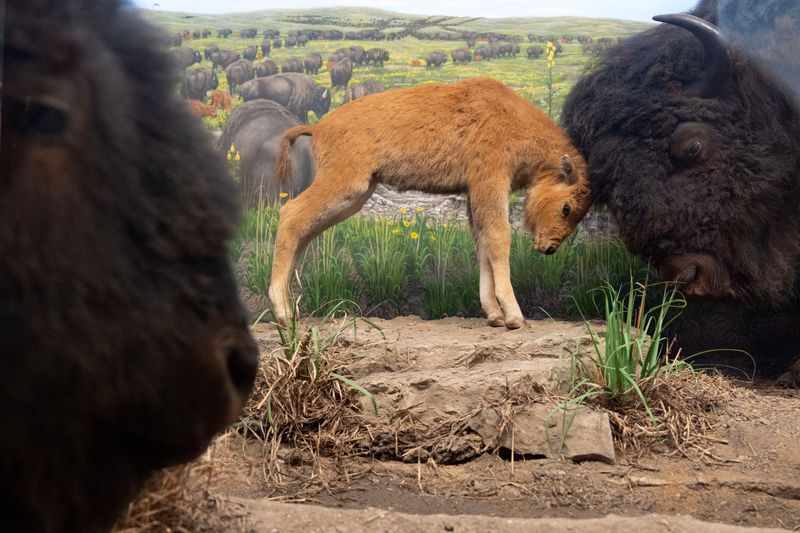
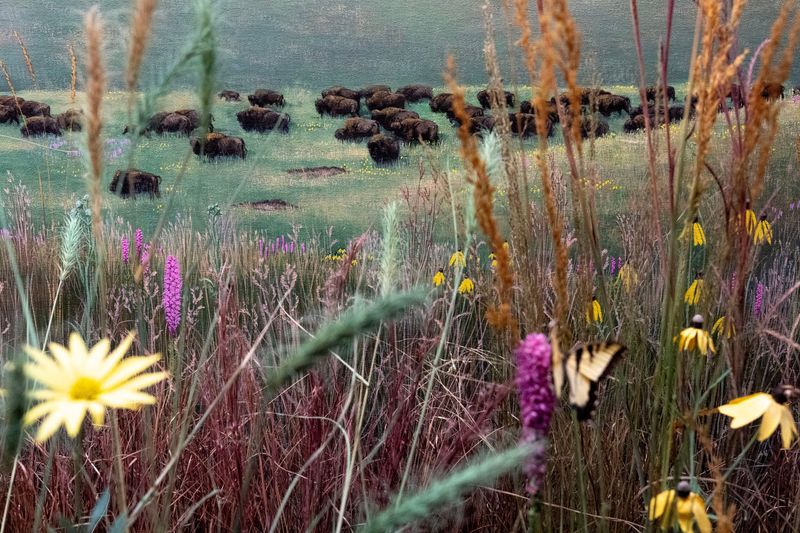
The UI Museum of Natural History displays several of Hornaday’s creations, as well as its own taxidermied bison and other artifacts highlighting the creature’s ecological impact and cultural significance.
“To be able to share this experience with our community, to have curators from the Smithsonian come and give a program is a unique opportunity,” Crooks said. “It’s a once-in-a-lifetime opportunity.”
“The Great American Bison Road Trip” is free and open to the public. The bronze bison will be parked on Clinton St. in front of the Museum of Natural History until 3 p.m. In-depth public talks will be held from 1:30-2:30 p.m. inside the museum.
Jessica Rish is an entertainment, dining and education reporter for the Iowa City Press-Citizen. She can be reached at JRish@press-citizen.com or on X, formerly known as Twitter, at @rishjessica_
This article originally appeared on Iowa City Press-Citizen: Bronze bison to stampede into Iowa City on Smithsonian tour
Reporting by Jessica Rish, Iowa City Press-Citizen / Iowa City Press-Citizen
USA TODAY Network via Reuters Connect