It was almost impossible to get through a week of Iowa’s 2026 legislative session without hearing about the state’s high cancer rates.
Beginning with Gov. Kim Reynolds’ Condition of the State speech on Jan. 13 and continuing through the final budget passed on May 3, state officials exhibited a bipartisan desire to lessen the impact of cancer on Iowans.

From pediatric cancer research to radon mitigation and water quality, lawmakers took steps to tackle the issue from multiple directions — even as they fell short of what some advocates wanted.
“We’ve done quite a bit for cancer,” said Rep. Brent Siegrist, R-Council Bluffs. “Is it enough? No, it’s not enough. It’s never enough. … I have been around here a long time. And what I’ve seen, time after time after time, is you get it bit by bit. I’d love to be bold sometimes. But the fact the matter is, this is a step forward.”
Lawmakers’ actions come against the backdrop of Iowa’s $209 million Rural Health Transformation Program grant, which includes $50 million dedicated toward cancer screening, prevention and treatment this year. The money from the federal government is meant to partially offset steep Medicaid cuts in Republicans’ “One Big, Beautiful Bill.”
Here are five things Iowa lawmakers did this year to try to take action on cancer — and two that didn’t make it across the finish line.
Funding for pediatric cancer research
Iowa will spend $3 million to fund pediatric cancer research at the University of Iowa, thanks to a provision tucked into a budget bill, House File 2800.
The state will use $3 million from the sports wagering receipts fund for a one-year appropriation beginning July 1.
The scope of the research would include laboratory research, clinical trials and providing therapy access to patients at the University of Iowa Stead Family Children’s Hospital. The money could not be used for administrative costs or overhead.
New tax on vapes and alternative nicotine products
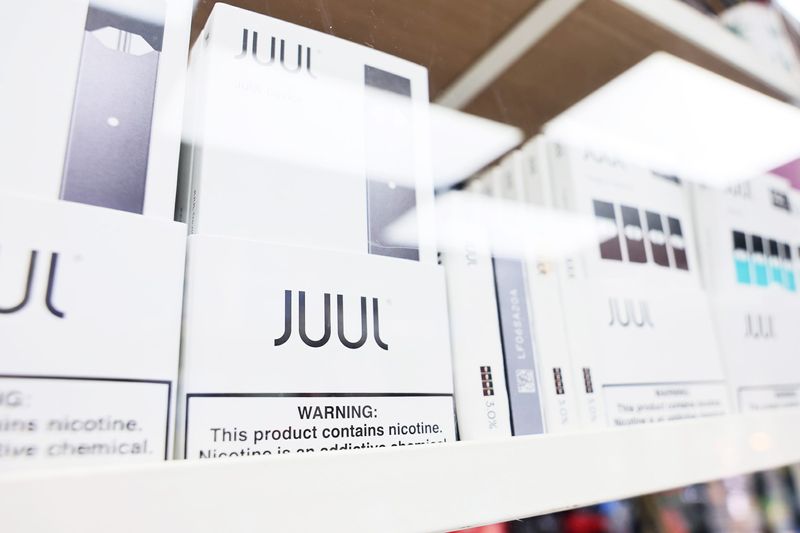
Ongoing funding for pediatric cancer research at the $3 million a year level will be funded by a new 5-cent tax on vapes and alternative nicotine products, like pouches.
It’s the first time Iowa has placed any tax on the products, other than the state’s standard sales tax.
Republicans, in consultation with the tobacco and vape industry, say they expect the tax in Senate File 2480 to bring in $15 million to $18 million annually.
Any money raised from the tax beyond the first $3 million would be used to fund Iowa’s Medicaid program.
Iowa’s nonpartisan Legislative Services Agency estimates the revenue increase will be smaller, ranging from $2.6 million in fiscal year 2028 to $3 million in fiscal year 2031.
Public health organizations such as CAFE Iowa Citizen Action Network criticized the tax, saying it won’t be large enough to deter new users of the products. And the group said it’s bad policy to tie funding for pediatric cancer research to continued nicotine use.
“A 5 cent tax on vapor and nicotine products is not meaningful public health policy,” the coalition of public health organizations said in a statement. “It is the tobacco industry’s preferred approach because it does not reduce use or deter youth addiction. This is ineffective policy by design.”
Siegrist called the tax “a step forward” and said he plans to work on raising it next year.
“This is something that moves the needle ahead,” he said. “Combined with other things, it starts to have us make a little bit more progress in all of this. It’s not enough. We’ll be back next year, but you have to do some things around here.”
The tax takes effect Jan. 1, 2027.
No increase in cigarette tax
Iowa legislators did not take up Reynolds’ call for an increase in Iowa’s tax on cigarettes, which public health advocates say would be the most effective step Iowa could take to reduce cancer rates.
Reynolds in February proposed a 65-cent increase in Iowa’s cigarette tax, which would have taken the state from a tax of $1.36 to $2.01 per pack. And a coalition of public health groups proposed a larger $1.50 per pack increase.
Neither policy advanced.
Carrie Arblaster, the Midwest regional advocacy director for the Campaign for Tobacco-Free Kids, said by not increasing cigarette taxes, legislators “protected the interests of the tobacco industry — an industry responsible for over 30% of cancer deaths in the state.”
“The Iowa Legislature has missed a huge opportunity to protect kids, save lives and address the state’s cancer crisis by failing to enact a significant tax increase on cigarettes and equivalent taxes on other tobacco products,” she said in a statement.
More funding for water quality, nitrate removal
Iowa is shuffling how it spends money on water quality, including funding nitrate removal efforts in Iowa’s largest population center.
The state will provide $25 million to Central Iowa Water Works to expand the central Iowa authority’s nitrate removal system with the goal of doubling its capacity in the next three years.
Last summer, CIWW announced an unprecedented lawn-watering ban to reduce water usage as nitrate levels in the Des Moines and Raccoon rivers spiked far above the U.S. Environmental Protection Agency’s 10 milligrams per liter limit.
The authority is asking its 600,000 customers to voluntarily reduce water usage this year in anticipation of a similar situation.
Iowa’s water quality funding package also includes $10 million to start up a Rural Iowa Infrastructure Bank — a revolving loan fund with interest rates of 1% or less that small and mid-sized Iowa communities can tap into to upgrade drinking water and wastewater infrastructure.
The Iowa Finance Authority’s Wastewater and Drinking Water Treatment Financial Assistance Program will also see an $8 million one-time investment as well as a higher percentage of funds directed to it each year, going from about $7.7 million to $12 million annually.
That program provides grants to communities around the state for wastewater and drinking water infrastructure.
The Greater Des Moines Watershed Program under the Iowa Department of Agriculture will receive $3.72 million per year for watershed improvement projects, like cover crops and wetlands, in 22 central Iowa counties that feed into Central Iowa Water Works.
Radon mitigation required in new homes
All new single-family and two-family homes built in Iowa must be constructed with passive radon mitigation systems, under House File 2297.
Radon is a colorless, tasteless and odorless gas that is found at high levels in Iowa soil. A report from the Iowa Environmental Council and the Harkin Institute found radon levels in basements, subbasements and crawlspaces averaged about 8 picocuries per liter — double the level that the federal government recommends taking action to mitigate exposure.
“This bill will attack the radon issue on the front end with new home construction,” Rep. Hans Wilz, R-Ottumwa, said during House debate on March 12. “This will just bring the entire industry up to speed for prevention of radon in our homes. This is yet another opportunity to combat cancer rates in the state of Iowa.”
Rep. Austin Baeth, D-Des Moines, who is a doctor, said it makes sense to protect every new home from radon as it is constructed.
“It’s not every day that we pass bills that will directly save people’s lives and this is one of them,” he said.
Lawmakers won’t require parental consent for minors using tanning beds
Iowa will not require minors to get written parental consent before using tanning beds at tanning salons after the House and Senate failed to agree on final language.
The bill would have required the consent forms to include language stating: “UV tanning devices increase the risk of melanoma, a particularly deadly type of skin cancer. UV radiation is most dangerous when exposed at a young age.”
The Senate passed the bill on April 6 with an amendment that struck the requirement that the forms include a disclaimer about causing melanoma.
The House refused to concur with the Senate’s change, leaving the bill unpassed before the legislative session ended May 3.
That leaves Iowa as one of only a few states in the country with no restrictions on minors’ use of tanning beds.
‘MAHA’ bill with SNAP restrictions, nutrition education
Republicans argued a wide-ranging “Make America Healthy Again” package will help address cancer rates through nutrition education requirements and restrictions on food assistance.
The bill, House File 2676, requires Iowa to ask the federal government to maintain its waiver restricting Supplemental Nutrition Assistance Program or SNAP dollars from being used to buy certain foods.
The list of restricted foods is based on what counts as taxable by the Iowa Department of Revenue. It includes unhealthy foods like pop and candy, as well as many prepared foods.
Republicans say the restrictions focus SNAP dollars on healthy foods, rather than food that contributes to poor health and obesity.
“This supplemental nutrition program for low-income Iowans is intended to provide additional nutrition for these families,” said Sen. Kara Warme, R-Ames, on April 8. “And so we want that to be with healthy foods that help reduce obesity and reduce chronic disease.”
Democrats say the restrictions just confuse Iowans about which foods they can buy. Sen. Sarah Trone Garriott, D-West Des Moines, said food like cake and cotton candy is still allowed, while a fruit cup packaged with a spoon is not.
“Is the goal to make Iowans healthier?” she said. “Restricting foods based on their taxable status does not accomplish that goal.”
The bill also requires nutrition education for medical students and continuing education on nutrition for health care professionals.
But Democrats say other provisions in the bill, like allowing pharmacists to sell ivermectin over the counter to Iowans without a prescription, are dangerous to Iowans’ health.
Des Moines Register Statehouse reporter Marissa Payne contributed to this report.
Stephen Gruber-Miller is the Capitol bureau chief for the Des Moines Register. He covers the Iowa Statehouse, the governor’s office and political campaigns. He can be reached by email at sgrubermil@registermedia.com, by phone at 515-284-8169 or on X at @sgrubermiller.
This article originally appeared on Des Moines Register: 5 ways Iowa lawmakers took action on cancer — and 2 ways they didn’t
Reporting by Stephen Gruber-Miller, Des Moines Register / Des Moines Register
USA TODAY Network via Reuters Connect