Every Beach Boys fan has known for decades that June 11 would come.
We didn’t know the exact date, but, like all of us, Brian Wilson would eventually die, as he did nine days shy of his 83rd birthday.

Born on the summer solstice, June 20, 1942, Wilson grew up to create a body of music that both defined and captured the hopes and joys of the season of his birth.
But his music, like the solstice, which gives way the next day to the gradual loss of daylight until winter begins, contains a melancholic undertow that gives it an emotional depth beyond “fun in the sun.”
To be clear: There’s nothing wrong with the “fun in the sun” records — they’re what hooked me on The Beach Boys when I bought their first best-of album at the age of 8 or 9.
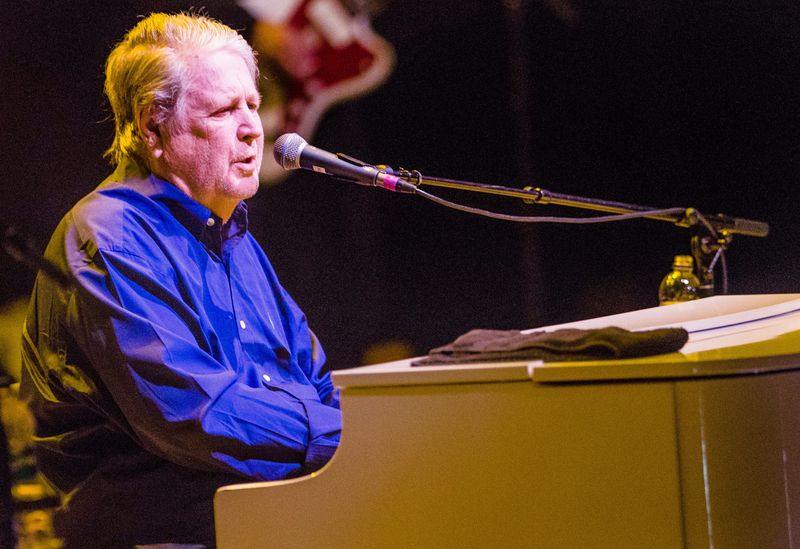
As I wrote in my review of Wilson’s concert Oct. 3, 2017, at the Morris Performing Arts Center in South Bend, Wilson’s music “means more to me than any other music I’ve heard. No matter what else I listen to, I always return to it.”
By now, tributes from critics, musicians and fans have, rightly, flooded the internet and social media with similar praise and love for his music.
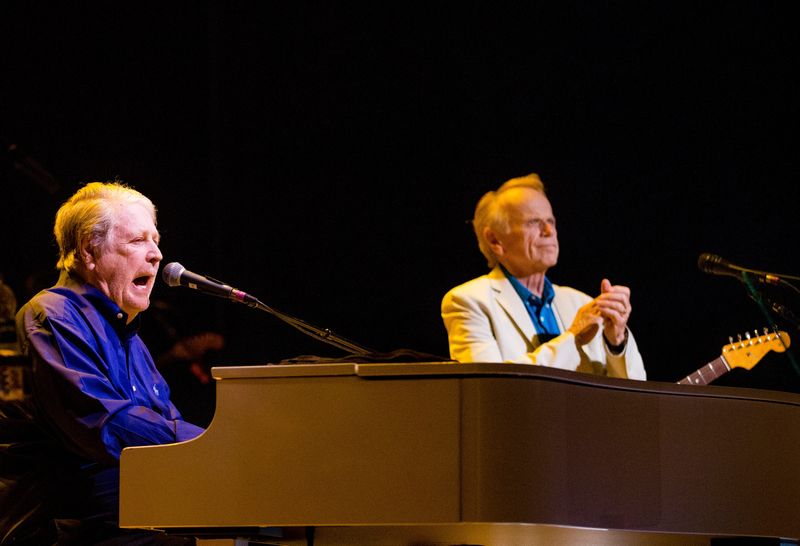
Almost all of what I’ve read so far, however, has focused on Wilson’s legendary work with The Beach Boys or his gentle personality — fellow Beach Boy Al Jardine called Wilson “a real gentleman, a real musical intellect, who taught the world how to smile. … a humble musical giant.”
All of that’s true, and there’s little I could add about Wilson’s Beach Boys material that would be new or original.
I’d like, then, to concentrate on a lesser-appreciated aspect of Wilson’s music: his solo career.
Brian Wilson on tour? Yes, for 23 years
In late 1964, Wilson suffered a nervous breakdown during a flight from Los Angeles to Texas while on tour with The Beach Boys.
After that, he quit touring and instead set up shop at Los Angeles’ top recording studios, where he worked with the legendary session musicians known as The Wrecking Crew and began creating the increasingly complex arrangements and groundbreaking production techniques that would culminate in the singles “Good Vibrations” and “Heroes and Villains.”
He returned to the stage on a regular basis in 1976 during the “Brian Is Back” campaign to support the album “15 Big Ones” and continued to appear regularly with the band into the early 1980s. A few one-off performances would follow, but nothing regularly for about 15 years.
Shy by nature and, apparently, beset with stage fright, Wilson surprised the music world when he announced his first solo tour in 1999.
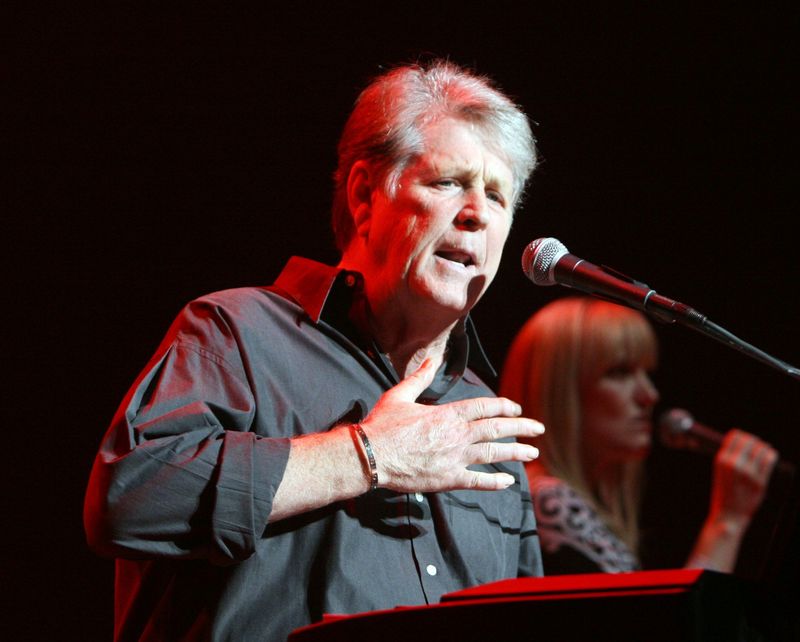
It seemed improbable, but for the next 23 years, Wilson and his band — one of the best ever assembled — traveled the globe to perform for adoring audiences, until, as Jardine told Variety, long COVID forced Wilson to end his tour in 2022.
“It’s a thrill, because people love my music, so I get a bang out of it,” Wilson told me in a phone interview in 2008. “I get a lot of joy and happiness out of touring.”
I consider myself lucky that I saw Wilson five times during those years — twice in 1999 and then Nov. 13, 2008, at the Morris; exactly seven years later on Nov. 13, 2015, at Four Winds Casino’s Silver Creek Event Center in New Buffalo; and Oct. 3, 2017, at the Morris.
I attended the 1999 concerts as a fan — OK, I attended all of them as a fan, but I also went as The Tribune’s reviewer to the final three concerts.
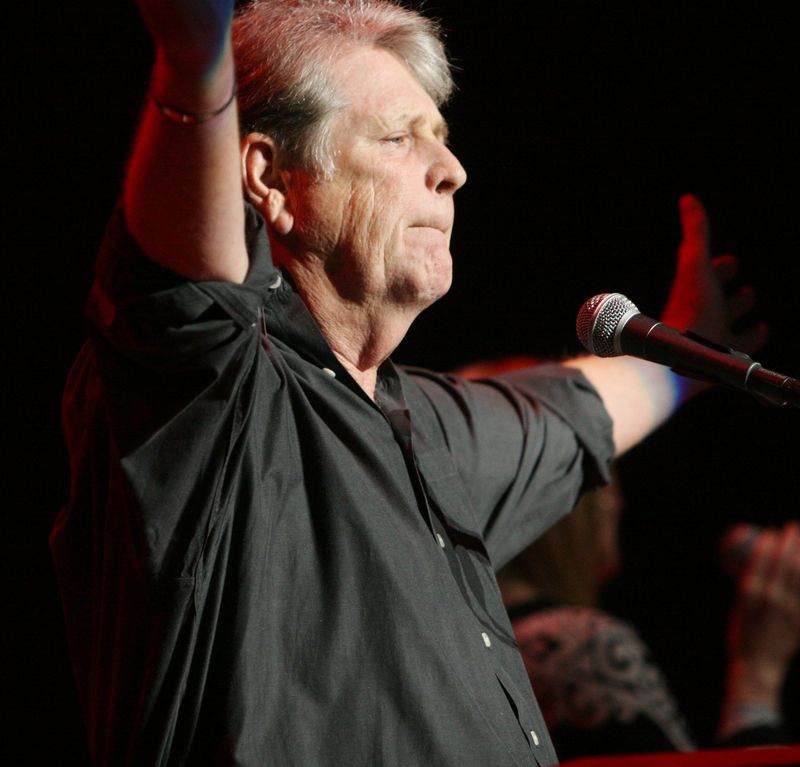
These concerts were delightful, life-affirming nights for me and, I suspect, many others in the audience.
That doesn’t mean the performances didn’t have flaws, and I did note the missed notes, the clipped lines and other imperfections, but none of that ultimately detracted from the joy these concerts created.
For his 2008 tour, Wilson performed his then-new “That Lucky Old Sun” album in its entirety. My review concluded: “It’s not often, and perhaps it’s unprecedented, for a veteran artist’s new material to eclipse his classics in performance, but on Thursday, that was true for Wilson, his band and ‘That Lucky Old Sun.’”
At each concert I saw, Wilson’s voice grew stronger, more confident and more prominent as the night progressed.
“On ‘God Only Knows,’ Wilson reached for the high notes and hit them, even if his voice sounded thin doing so, a quality that gave it a more vulnerable interpretation than his brother Carl’s original vocal had at the age of 20,” I wrote about his New Buffalo concert while also saying his finest vocal that night came on the last song, a plaintive, spiritual delivery of “Love and Mercy.”
“‘That Lucky Old Sun’ live was transcendent; Friday at Silver Creek was simply enjoyable, but that’s good, too,” I concluded.
In 2017, I wrote, “‘God Only Knows’ featured Wilson’s highest and most heartfelt singing of the night and more than earned the standing ovation it received. After Wilson and his band returned to the stage for the encores, the concert erupted into a high-energy celebration that left me feeling elated.”
Two masterpieces in the early 2000s
I won’t argue that Wilson’s solo career surpassed the work he created at the peak of his powers from 1962 to 1967 with The Beach Boys — to me, no one has.
But his solo work shouldn’t be dismissed, either.
That includes 13 studio albums, three lives albums and several concert DVDs.
If you want a quick, worthwhile overview, 2017’s “Playback: The Brian Wilson Anthology” hits many of the highlights from Wilson’s 30-year solo career in the studio, plus two tracks from 2000’s “Live at the Roxy” and two unreleased songs.
But if you want to take a deeper dive, start with two albums from the 2000s that stand with the best of his previous work: 2004’s “Brian Wilson Presents SMiLE” and 2008’s “That Lucky Old Sun.”
Both should be listened to without distractions, because both, like “Pet Sounds,” are layered with complex, dynamic arrangements of instruments and voices.
A little background on the former: In 1966, Wilson began work on an album titled “Smile” as the follow-up to his masterpiece, that year’s “Pet Sounds.”
He hired Van Dyke Parks to write the lyrics, and the two began to construct a thematic album that, simply put, explored America’s westward expansion in the 19th century and beyond.
By early 1967 or so, however, he abandoned the project under the weight of mental illness, commercial and band pressure, and drug use.
“Smile” eventually became the most famous unfinished album in history — until 2004, when Wilson worked with Parks and band member Darian Sahanaja to finish it as a solo concert performance and album.
Over the years, The Beach Boys had dug into the original “Smile” recordings for subsequent albums and as unreleased tracks on compilations, so fans had already heard much of “Smile” by 2004.
That said, I cried the first time I played the album, on the day of its release.
I can’t remember which song caused that reaction, but all these years later, I’d guess it was either “Roll Plymouth Rock” or “Cabin Essence,” both marked by gorgeous vocal arrangements for Wilson and his band.
But maybe it was “Surf’s Up” — after all, Carl Wilson’s vocal on the band’s 1971 reconstruction of the original tracks contains my all-time favorite passage of music, when Wilson’s youngest brother sings, “Columnated ruins domino.”
If “Smile” took the listener west across the country, “That Lucky Old Sun” — largely a collaboration with Parks and band member Scott Bennett — firmly settled in Wilson’s native California for a romantic, nostalgic and, at the end, nakedly honest examination of the myth that Wilson had helped to create.
The first two thirds of the album, including spoken narratives written by Parks, fly by with a buoyant hopefulness in the music and the delivery.
But then comes a mini-suite to close out the album with an introspective examination of Wilson’s mental health problems and his recovery from them.
It all culminates with “Going Home” and the devastating, raw declaration: “At 25, I turned out the light.”
BOOM!
All that’s left to do is sing the cathartic, elegaic “Southern California,” whose chorus brings the album back to its California theme while tying into the verses’ remembrances of Brian singing with his brothers, Dennis and Carl, and gaining worldwide fame for doing so:
“In Southern California/Dreams wake up for you/And when you wake up here/You wake up everywhere.”
Both times that I interviewed him, I thanked Wilson for the immeasurable joy he and his music have brought me.
So, again, thank you, Brian, and rest in peace.
Email Tribune staff writer Andrew S. Hughes at ahughes@gannett.com.
This article originally appeared on South Bend Tribune: Wilson produced genius-level music as a Beach Boy. But don’t overlook his solo career.
Reporting by Andrew S. Hughes, South Bend Tribune / South Bend Tribune
USA TODAY Network via Reuters Connect