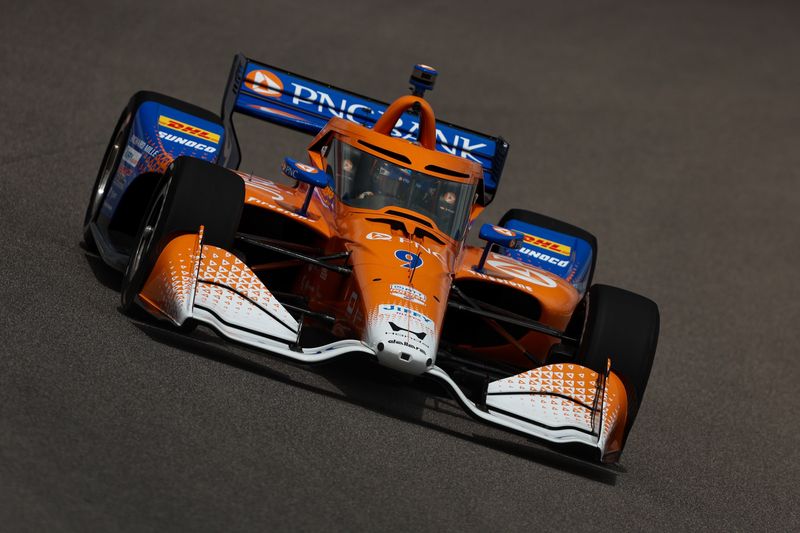
MADISON, IL — Scott Dixon is the latest IndyCar driver to have a race ruined by a hybrid powertrain system failing inside his car. Dixon exited the May 31 Detroit Grand Prix 31 laps early after he said the hybrid in his No. 9 Chip Ganassi Racing Honda went into “failure mode” after going out within in the first five laps of the race.
IndyCar is in its second full season with hybrid powertrains after introducing them in the middle of the 2024 season. The hybrids are energy recovery systems that are made up of the motor generator unit and the energy storage system, which are used to deploy and regenerate energy that produces a 60-horsepower boost.

Since hybrids were introduced and agreed upon by Honda and Chevrolet — IndyCar’s two engine manufacturers — failures have become regular and often lead to the 2.2-liter twin-turbocharged V6 engines shutting off entirely. After his qualifying attempt at the Bommarito Automotive Group 500 on Saturday, Dixon — who will start seventh — reiterated his disdain for hybrids.
“It’s political, right? It’s above my pay grade, man,” Dixon said when asked what the solution is. “I think if you did a poll (of) the drivers or a WhatsApp group, I think it’d be 100%, get rid of them. But there’s bigger things than us, and I don’t know what to tell you about that.”
The frequency of hybrid failures has also led to a shortage of available powertrains, especially as the series has been on track for six consecutive weeks dating back to the Indianapolis 500 open test April 28 and 29.
“IndyCar constantly evaluates the supply and demand of the series’ hybrid power units,” IndyCar said in a statement to IndyStar. “On the heels of a record-breaking Month of May and an event on the unique surface features of the streets of Detroit, the series has put a greater focus on inventory and have adjusted accordingly to assure a successful event this weekend at World Wide Technology Raceway for teams and fans.
“From there, a two-week break before Road America will allow suppliers the time needed to ensure the spare quantity needed for the upcoming summer schedule and push towards the finish of the 2026 championship.”
In 2028, IndyCar is introducing a new chassis, moving on from the Dallara DW12 car that has been used by the series since 2012 and introducing the Dallara IR-28. The new car will be paired with a new 2.4-liter twin-turbocharged V6 engine, which will still use a hybrid powertrain.
While the 45-year-old Dixon wants the hybrids gone, his teammate Alex Palou — who has won the last three IndyCar championships and leads this year — has seen his greatness escalate since hybrids were introduced. Palou said he’d prefer a V1 engine but realizes “it’s probably not what the manufacturers want.” In a somewhat joking manner, Palou said he’d ideally want nothing to change.
“I probably am the happiest driver with a hybrid,” Palou said after winning his fourth straight pole. “I’m not going to say that I want to get rid of it. I like it. I like it how it is. I would keep the same car, same engine, same sticker, everything, for the next 15 years again.”
The hybrid powertrains have been a storyline in more races than not since their integration into IndyCar, and usually not for positive reasons. It seems unlikely that hybrids are changed or removed from, but drivers and teams will certainly remain vocal about perfecting the system (or getting rid of it) before 2028.
Zion Brown is IndyStar’s motorsports reporter. Follow him at @z10nbr0wn. Get IndyStar’s motor sports coverage sent directly to your inbox with our Motor Sports newsletter. Subscribe to the YouTube channel IndyStar TV: IndyCar for a behind-the-scenes look at IndyCar and expert analysis.
This article originally appeared on Indianapolis Star: Veteran believes ‘100%’ of IndyCar drivers would get rid of hybrid, but teammate disagrees
Reporting by Zion Brown, Indianapolis Star / Indianapolis Star
USA TODAY Network via Reuters Connect
By Zion Brown, Indianapolis Star | USA TODAY Network