After Indiana Sen. Andrea Hunley said she won’t run for reelection to Senate District 46 this year, three Democrats are competing for her seat in the May 5 primary.
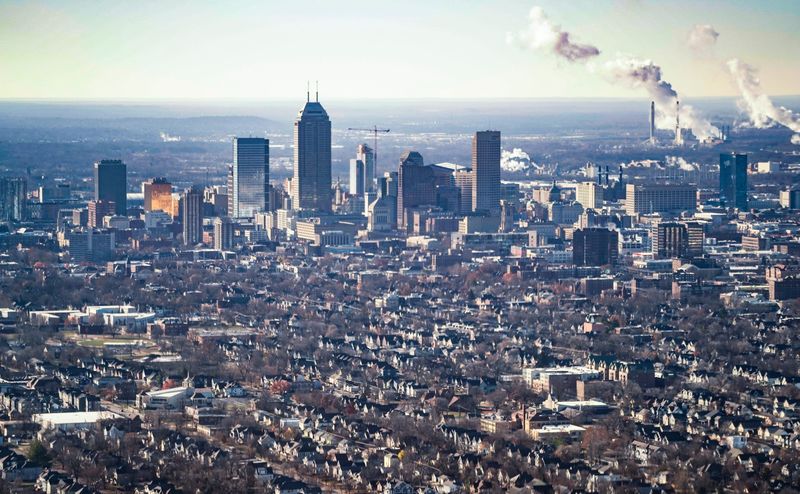
In a district that includes downtown Indianapolis and surrounding neighborhoods, one of these Democrats is likely to be the city’s next voice in the Indiana Senate. IndyStar asked each candidate the same series of questions to help voters understand their top priorities and their approach to political leadership.

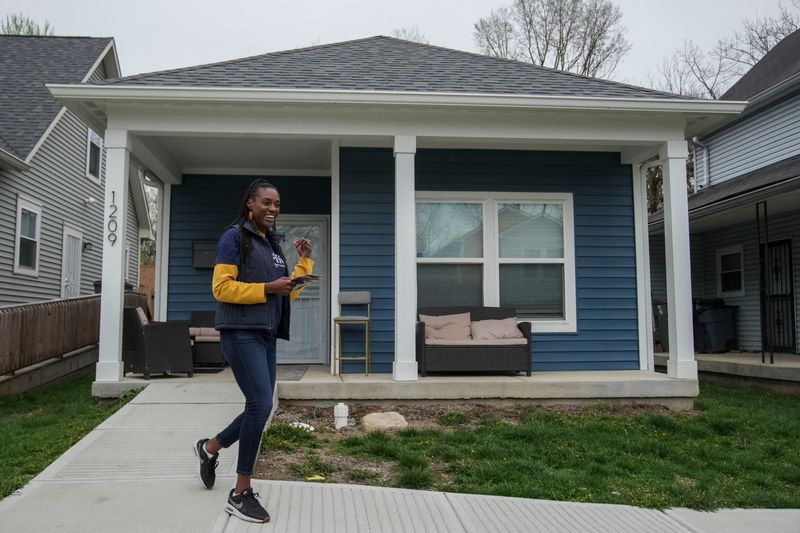
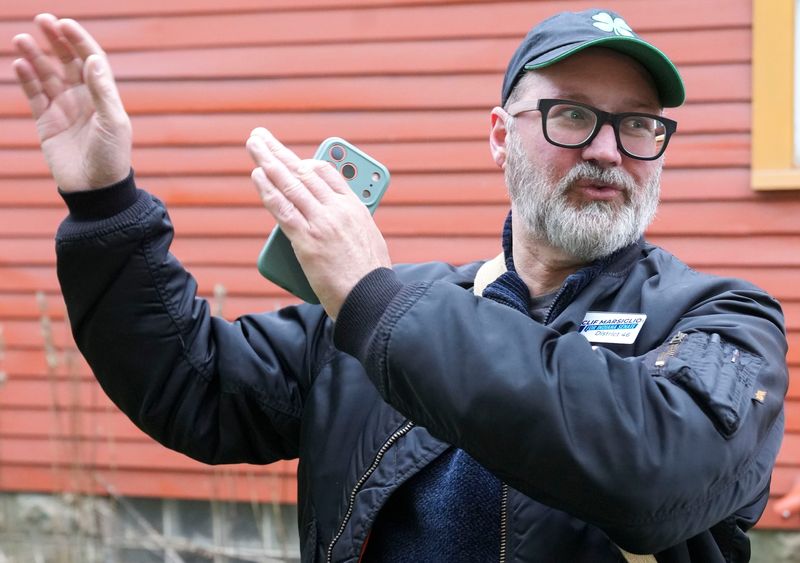
The candidates are Sam Glynn, a Marion County Treasurer’s Office employee; Allissa Impink, an Indianapolis Pubic Schools board member and women’s nonprofit leader; and Clif Marsiglio, a longtime community activist who works in education.
Here are the candidates’ written responses, edited for style:
What blend of professional background and personal experiences sets you apart from your competition as a candidate for Senate District 46?
Sam Glynn: I have worked for seven years at a grocery store, and that sets me apart because I worked for my constituents, talked to them, and saw their struggles. It’s heartbreaking seeing people struggling to make ends meet head on every day, and I did it through the pandemic where I saw what anger and desperation does to people. I don’t have connections or experience, I decided to run because I wanted there to be a voice in our government that understood what Hoosiers actually need, not just a state sandwich.
Allissa Impink: My life has been dedicated to supporting young people and families in Indianapolis as a child welfare supervisor, a teacher, a nonprofit leader and a community advocate. I was elected to serve as a commissioner for the IPS Board in 2024 and I currently serve as Community Engagement Director with a leading nonprofit that supports women and girls in Indiana through research, education and advocacy. I previously served as neighborhood president for my neighborhood, Fletcher Place.
What ties all of this together is how I lead: I listen first, I bring people to the table, and I follow through on my commitments. Whether navigating tough policy decisions, advocating for families, or building coalitions, I lead with clarity, accountability and a deep commitment to the people I serve. Because of my experience across sectors and systems, I believe I’m the most prepared candidate to [effect] change.
Clif Marsiglio: I have lived in Indianapolis for 34 years and spent most of my career as an educator and administrator at Indiana University. My work in accreditation and program review has taught me how to hold large institutions to high standards of quality and transparency.
Locally, I’ve represented the [Near Eastside Community Organization], fought against predatory data centers in Martindale-Brightwood, and worked to improve pedestrian safety. I’m the only candidate who combines technical oversight experience with nearly 30 years of hands-on neighborhood advocacy. This mix of administrative skill and community commitment is what we need to stand up to the supermajority and make sure our state government puts District 46 residents first, not out-of-state corporations.
What are three key issues that you’ll work to address as a state senator?
Glynn: My three goals in office are: age and term limits for all elected and appointed officials in Indiana so that no one may appear on the ballot over the age of 67 and no one may be in the legislature for more than 20 years; raise the state minimum wage to $15.88 tying it to the supreme court pay at the same percentage as the legislature’s so that Hoosiers get a raise when the politicians do; and automatic voter registration for all Hoosiers.
Impink: We need to expand funding for public education. I do not support expanding public dollars for private school tuition. Diverting those funds takes resources away from the public schools most families rely on. The reality is the funding pie is already too small and being sliced too thin. In Indianapolis, we also have an oversaturated landscape of public schools. I will advocate for a moratorium on new charter school approvals until we ensure greater accountability, transparency, and alignment with community needs. Hoosiers also need access to safe, supportive reproductive health care. I will work to repeal Indiana’s abortion ban and expand Medicaid to include comprehensive postpartum care. Finally, our communities deserve stable housing options. I am committed to ensuring homelessness is not criminalized and that we invest in evidence-based solutions that connect people to housing, services, and long-term stability.
Marsiglio: First, I will fight for educational fairness and accountability. I want to repeal the “dollar law” so public tax dollars stay in fully public, democratically run schools.
Second, I will focus on stable housing and utility costs. We need statewide tenant protections and to stop big companies from controlling both rent and utility bills.
Third, I will defend local control. My team and I already stopped [Senate Bill 52], which would have taken away our local transit plans. I’ll keep pushing back against laws that override local decisions about safety and infrastructure. Indianapolis knows how to take care of itself, and I’ll make sure the Statehouse respects that.
Housing and utility costs have risen steeply since 2020. What state-level policies would you support to increase affordability without discouraging development?
Glynn: I am opposed to new data centers as they don’t create new jobs, pollute our air and water, and drive up electricity. I also believe that our energy bills shouldn’t be going up while the companies are seeing record profits. And these data centers discourage development, because that land could be used for parks, recreation centers or high-density housing. We should be investing in our cities instead of helping billionaires destroy the working class with artificial intelligence.
Impink: Housing instability directly impacts District 46, the most densely populated Senate district in the state. We cannot legislate homelessness away by making it illegal to exist in public spaces.
We don’t have to guess what works; we’re already doing it in Indianapolis. Through the Coalition for Homelessness Intervention and Prevention and the Streets to Home Indy initiative, we are using a housing-first model that connects people to stable housing and supportive services. At the Statehouse, my role is to scale solutions like this, and I will work with partners at the local level to do so.
That includes increasing housing supply by supporting the passage of local ordinances that would allow for accessory dwelling units in our neighborhoods. If we want safer, stronger communities, I will insist that we invest in housing and prevention, not criminalization.
Marsiglio: The real reason things are becoming less affordable is because of big corporations, not a lack of new development. I support statewide tenant protections, including letting renters use escrow if basic services like heat or water aren’t working. We also need to address utility companies merging together. The current situation, where companies like BlackRock own both rental homes and are buying up our utilities, is a big problem. I support policies that limit utility rate increases and stop global companies from controlling both housing and utilities. We need to put our neighbors ahead of out-of-state profits.
How would you work to improve Indianapolis Public Schools? What’s your stance on increasing funding to charter schools and private vouchers as educational alternatives?
Glynn: Public school is essential to creating growth and attracting talent to our state. Not only will it bring in companies who see potential, but families will be more likely to move here if they believe their children will be prepared for the future. I went to charter schools and got an amazing education, but I think that should influence our public education system, not replace it. I’m not for private vouchers, I would rather we consolidate school systems so that kids from Switzerland County get the same level of education as Hamilton.
Impink: I would overturn Indiana [House Enrolled Act 1423], which established the Indianapolis Public Education Corporation, and instead work to unify all public schools under Indianapolis Public Schools. We must right-size the district to align with the number of public schools serving students within IPS boundaries and ensure a more coordinated, accountable system. All publicly funded schools must be held to consistent standards for transparency, financial stewardship, and student outcomes. I would advocate for a moratorium on new charter school approvals in Indianapolis as we work to stabilize and strengthen the system we already have. I do not support the continued expansion of public dollars to fund private school tuition. When we divert those funds, we are taking resources away from the public system that most families rely on.
Marsiglio: With my background in accreditation and program review, I know that real improvement starts with strong financial practices. We need to stop the planned decline of IPS by getting rid of the “dollar law” and ending the forced sharing of property taxes with private operators.
I don’t support more funding for vouchers or charter schools. Real accountability means any school that gets public money should accept all students and be fully transparent, so no one can push out students just to boost test scores. Education shouldn’t be treated like a business when it’s a public right. By fully funding special education, transportation, and teacher pay in our public schools, we make sure every neighbor can get a high-quality, accountable education.
What policies would you support to reduce crime in Indianapolis?
Glynn: Crime is a byproduct of the system, not the cause of any one thing. We need to decriminalize drugs, improve education, invest in mental health care, provide free child care, make housing affordable, help the environment, guarantee vacation time, reduce utility costs and make groceries affordable. People turn to crime out of desperation, not because they want to. Crime happens in Indiana because its government has failed its people.
Impink: I would support expanding funding at the local level for the Clinician-Led Community Response, the Mobile Crisis Assistance Team, and the Crisis Intervention Team which launched in Indianapolis in 2023. These co-responder models pair trained clinicians with officers to respond to mental health crises in real time, reducing unnecessary arrest and allowing officers to focus on serious and violent crime. I would work to scale these programs statewide. When someone is in crisis, the right response is often care, not incarceration. I would support the investment in violence prevention strategies, youth employment programs, and reentry support so we interrupt cycles of harm before they begin.
Marsiglio: Everyone deserves to feel safe, and that means going beyond solely punitive measures. With my master’s in community psychology and years of neighborhood work, I’ve already helped make change. I led efforts for Clinician-Led Response Teams and helped pass the laws needed to start them. These teams send trained professionals to handle mental health crises, so police can focus on violent crime.
I’ll keep supporting policies that address the real causes of instability, like housing and food access. We also need to invest in safer streets, better lighting, and Vision Zero projects to prevent traffic deaths. Real safety comes from meeting people’s basic needs and protecting neighborhoods from harmful state interference.
Indiana is governed by a Republican supermajority, and the state increasingly overrules more progressive policies in Democrat-led cities. How would you ensure the concerns of largely Democratic communities like those in Senate District 46 aren’t drowned out?
Glynn: I wish I could say I would magically get through to the Republicans, but I can’t promise that. My goal as a politician would be to always fight for Hoosiers, make sure that all bills put forward help everyone in this state and not just one party or 1% of people, and to make this state something worth being proud of. If Republicans can get behind that then we can work together, otherwise I won’t support them if they don’t support us.
Impink: I’ve spent my career working in spaces where people don’t always agree, but still have to come together to get things done. Whether it was partnering with families through the Department of Child Services, collaborating with care conference teams as a special education classroom teacher, or now serving on the IPS school board, I’ve learned that progress requires both clarity in your values and a willingness to build relationships.
I’m an effective leader because I know how to move work forward in those environments. I listen, I build trust and I stay focused on outcomes. Working across the aisle won’t be about changing who I am; it’s about being disciplined enough to find alignment where it exists and strong enough to stand firm where it doesn’t.
Marsiglio: I won’t use being in the minority as an excuse to do nothing. With only ten Democrats in a 50-member chamber, we need to move from talk to real action and work across the aisle. My plan is to build coalitions with Republicans whose districts also suffer from cuts to public schools and utility monopolies. We can show them that these harmful policies hurt their communities too, and we can do this without giving up our values. I also believe we have to deliver real results to inspire voters. My office will focus on getting wins that show neighbors their vote matters at every level. We succeed by being the most prepared and by organizing around clear, measurable goals.
What are Indianapolis’ greatest challenges over the next five to 10 years?
Glynn: The greatest challenge Indianapolis faces is the Indiana state government. Republicans didn’t start cracking down on the city until it started consistently voting blue. By making it worse they have a scapegoat to point at. They intentionally stifle growth and then bemoan the problems their corruption causes. If Indianapolis was given the same freedom to grow as Carmel was it would be a world class city.
Impink: Indianapolis’ greatest challenge over the next five to 10 years is whether we are willing to confront the reality that quality of life in our city is still largely determined by your zip code. While Indianapolis is often recognized for its affordability, it’s not equitable across our city. As our city grows, we have to be intentional about who benefits from that growth.
The opportunity in front of us is to align our investments with resident-led solutions already happening in neighborhoods, whether that’s improving housing access, strengthening public education by funding it appropriately and not funding private education, or addressing public health disparities. I see my role as ensuring that state policy supports these local efforts so that no matter where you live in Indianapolis, you have a fair shot at safety, stability and opportunity.
Marsiglio: Our biggest challenge is that local wealth keeps getting pulled away. In the next 10 years, we have to stop billions in public tax dollars from going to private companies, whether through school vouchers or long-term tax breaks for data centers that don’t create local jobs. We’re also facing a monopoly on basic needs. If we don’t pass tenant protections and stop utility companies from merging, housing instability will become a permanent problem.
We also need to invest in projects like the Blue Line and Vision Zero to keep Indianapolis walkable and connected. If we don’t protect our public institutions and neighborhoods now, the next decade will be shaped by corporate interests instead of the people who live here.
Email Indianapolis City Hall Reporter Jordan Smith at JTSmith@indystar.com. Follow him on X @jordantsmith09 and Bluesky @jordanaccidentally.bsky.social.
This article originally appeared on Indianapolis Star: Q&A: Where the Indy Senate candidates stand on education, housing and crime
Reporting by Jordan Smith, Indianapolis Star / Indianapolis Star
USA TODAY Network via Reuters Connect