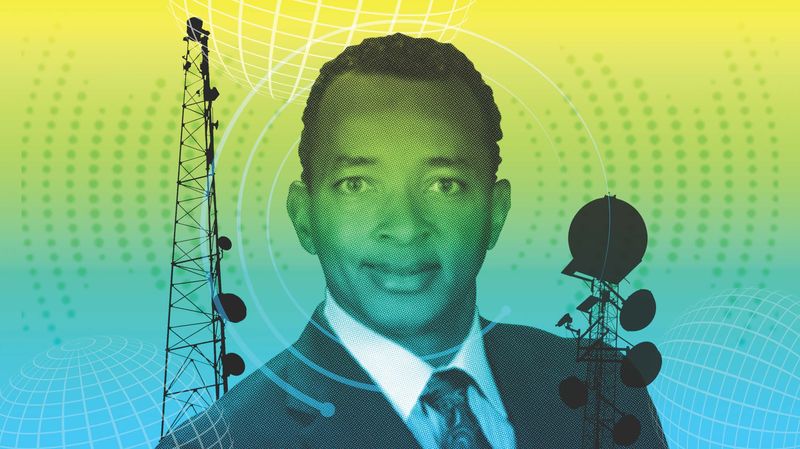
If Indianapolis has a media mogul, it’s DuJuan McCoy.

Born and raised in Indianapolis, McCoy and his Circle City Broadcasting recently acquired WRTV (Channel 6), the city’s ABC affiliate. He now controls three local TV stations, more than any other owner in Indianapolis.
The acquisition was not without controversy. The day the deal closed, he laid off about 60 employees, including many well-known local media personalities.
“I just need to be able to hire people on my terms and under my policies and my procedures,” McCoy said in April on the “Leaders and Legends” podcast. “Just because you were employed at a company I purchased does not guarantee you immediate employment with me.”
The layoffs — and McCoy’s unapologetic response to the outcry — are characteristic of his approach to business. He’s hard-charging, charismatic and polarizing. Obstacles seem to motivate him.
He doesn’t take “no” for an answer.
What all of this means for Indianapolis’s media landscape remains to be seen, but nobody will play a bigger role in shaping it.
Critics say he made his way to the top by cutting costs, making cosmetic improvements, and at times, bending the rules — an accusation McCoy denies. If his past is any indication, the criticism will only serve as a launching pad for his future ambitions.
“He’s not a quitter,” said his longtime Texas attorney Bruse Loyd. “He’s a starter and he’s a finisher.”
One analyst compared McCoy to Byron Allen, the national mogul behind a sprawling media empire that includes The Weather Channel, TheGrio, local broadcast stations in several states and now a majority stake in BuzzFeed.
McCoy, who sold a collection of stations to Allen in 2019, has employed a similar strategy, purchasing distressed or undervalued properties and increasing their value. McCoy has done this again and again, using the profit from smaller deals to leverage larger ones.
“I want to be the media guy for the state of Indiana,” McCoy said on the podcast, which operates under Circle City Broadcasting’s podcast network.
McCoy has touted the value of local ownership, but even that has generated controversy, since his primary residence for years has been in an exclusive community north of Houston, Texas.
McCoy did not respond to multiple interview requests for this story. His attorney eventually told IndyStar to stop trying to contact his client. If he wants to discuss his approach to business, he’ll do it on one of his own platforms, his attorney said.
On his terms.
‘Make it the way you want it’
McCoy grew up in Haughville, the son of a hospital business manager and a State Farm agent.
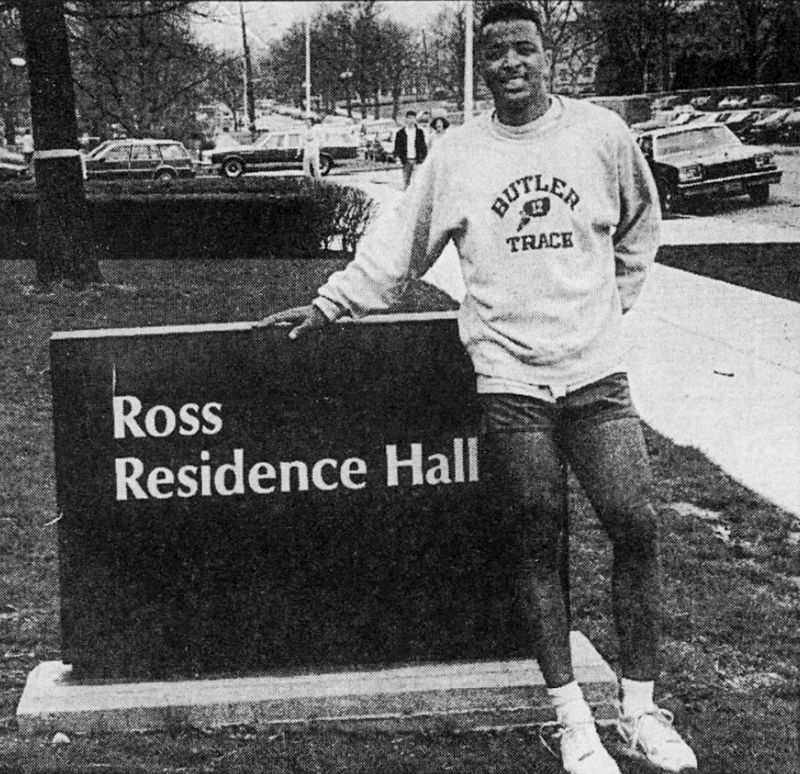
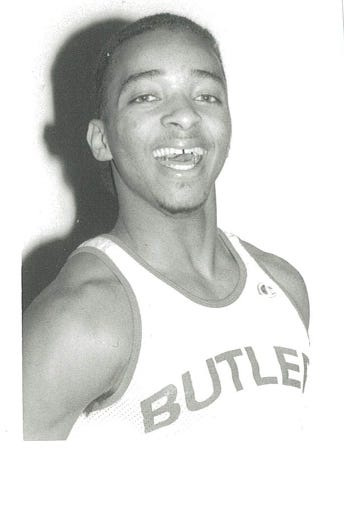
In his youth, he excelled in academics and track and field at Ben Davis High School and later at Butler University, where he pursued a degree in business administration.
The university didn’t initially award his athleticism. McCoy walked on to the men’s track team during his freshman year. He became a star sprinter, racking up records in the 50-yard dash and wins in the Midwestern Collegiate Conference. In 1987, he was named the team’s most valuable performer.
“School is just like life,” he told The Indianapolis News. “You have to make it the way you want it.”
After college, he accepted an account executive position at WTTV in Indianapolis.
Jay Souers, a one-time account executive at WTTV, remembers McCoy as a “big-hearted guy” who wasn’t short on confidence. He said McCoy didn’t like to hear “no,” and had a “motor and energy that doesn’t turn off.” Souers’ father, late WTTV director of sales Bernie Souers, hired McCoy after reading about his athletic achievements.
McCoy’s sales resume grew with stints at stations in North Carolina and Ohio. In December 2005, he became vice president and general sales manager at KRIV Fox 26 and KTXH Channel 20 in Houston.
One-and-a-half years later, he would be fired and escorted out of the office.
The ordeal thrust him into a legal fight against his former employer, broadcast behemoth Fox Television Stations, which he sued for breach of contract and defamation. He also filed defamation lawsuits against his former boss and colleagues.
According to the lawsuits, McCoy was fired after being accused of directing a subordinate to fraudulently book advertising revenue to create the appearance of improved sales performance. Colleagues also accused him of an illicit affair with a different subordinate.
The allegations were repeated to then-Fox Television Stations Chairman Roger Ailes and CEO Jack Abernethy, who, according to court documents, thought McCoy showed potential at Fox, but felt the company could no longer employ him because of a lapse in judgment.
In the lawsuits, McCoy denied directing the improper ad booking, noting he was on vacation at the time. He said the affair was a false rumor.
McCoy told a Texas court the false accusation exposed him to humiliation, ridicule and financial injury of more than $1.2 million. The lawsuit against Fox was settled for an undisclosed amount. The two defamation suits were dismissed.
From fired to owner
Such an experience may have soured the average person on a career in TV, but not McCoy.
If Fox wouldn’t have him, he would just buy his own station.
Amid the turmoil, McCoy enrolled in the Broadcast Leadership Training program at the National Association of Broadcasters: a 10-month, MBA-style course based in Washington, D.C. for aspiring station owners. The course taught participants how to make deals and allowed them to network with key players in the industry.
McCoy made his first media buy before he even finished the course — a feat that amazed some of his peers. “He’s been a leader from the get-go,” said Mayela Rojas Sánchez, a 2008 alum who went through the program with him.
“DuJuan is a man of action,” said Loyd, who represented McCoy in the lawsuits. “He does not sit on his hands and wait for things to happen.”
It’s unclear if the settlement helped McCoy make his first media buy.
“If he had it in his mind that he wanted to buy television stations, and he had the means to do so ― which after we settle these lawsuits he had the means to do so ― then he will do it,” Loyd said.
Buy low, sell high
McCoy launched Bayou City Broadcasting in late 2007 to acquire seven small stations in Texas from Sage Broadcasting at the beginning of the next year.
The deal netted him two full power stations in Abilene and San Angelo, as well as five low power stations. The cost: $3 million. He used a $2 million Small Business Administration loan to help finance the deal.
It gave him the distinction of being the nation’s only Black owner and operator of a station affiliated with Fox, the company he was suing, according to the Minority Media and Telecommunications Council. It also made him the first Black owner and operator of a network-affiliated station in Texas.
McCoy demonstrated vision, but the former salesman had a bit of a learning curve when it came to content.
Stacie Vest, a long-time employee of San Angelo’s Fox affiliate, witnessed the transition firsthand.
McCoy negotiated a deal to simulcast a nightly newscast from San Antonio, a city roughly three and a half hours away, trade publications noted. Vest recalled that he implemented a short news segment filled with aggregated online news about other communities that had little relevance for the station’s audience.
“A 10-minute newscast is not news. That’s just let me touch on the iceberg of three topics and be done,” she said. “If you’re gonna give me a newscast, I wanna know the weather. I want to know sports. I want to know what’s going on in my neck of the woods, not in Houston.”
Meanwhile, he looked for ways to cut costs and boost sales.
“If it cost money DuJuan didn’t want to do it,” said Vest, whose job included supervising copy and attending departmental meetings.
She said he tightly managed the budget and didn’t always invest where needed. The station’s offices needed work, for example, but he didn’t spend the money, she said.
McCoy had a Jekyll and Hyde disposition, Vest said. One moment, he was full of positivity. The next, he was angry.
“His whole demeanor changed. The way he walked changed. Sometimes the way he talked changed a little bit,” she said. “There’s days that he was just perfect and great, and then there’s other days that you just want to hide under your desk.”
McCoy sold all seven stations to London Broadcasting in 2012 for roughly $18.2 million ― about six times what he paid.
It would become the blueprint for how McCoy would move through the industry. Buy low. Sell high.
It was only the beginning.
Expanding his reach
McCoy began looking for affiliates of the Big Four — CBS, NBC, FOX or ABC — with ratings lower than their competitors, but in markets bigger than those of the Texas stations he sold, he said in a 2014 interview with TVNewsCheck. Lower ranked stations tended to be less costly to acquire.
At the time, the Federal Communications Commission, which regulates broadcast television, was encouraging minority ownership and Nexstar Media Group was looking to spin off smaller stations as it sought bigger ones.
In 2014, Nexstar agreed to sell the Fox and CBS affiliates in Evansville to McCoy’s company for $18.6 million. Two years later, McCoy purchased the Fox and NBC affiliates in Lafayette, Louisiana, for $40 million― also from Nexstar.
Evansville’s WEVV had been without news since 2001. McCoy added a 30-minute newscast anchored by a four-person team.
Chief meteorologist Chad Evans equated McCoy to a basketball coach who motivated employees to embrace social media and invested in top of the line weather graphics and visualizations.
“I remember walking in on my first day and you don’t expect to see the CEO at the station to greet you, and I walked in and there he is shaking my hand…,” Evans said. “He seemed to truly care about the product, care about the community.”
The investment paid off. In July 2019, he sold Bayou City Broadcasting and its stations to Byron Allen’s company, Allen Media Broadcasting, for $165 million.
New market, another fight
Flush with cash, McCoy again parlayed his success to move into a bigger market — one he knew well.
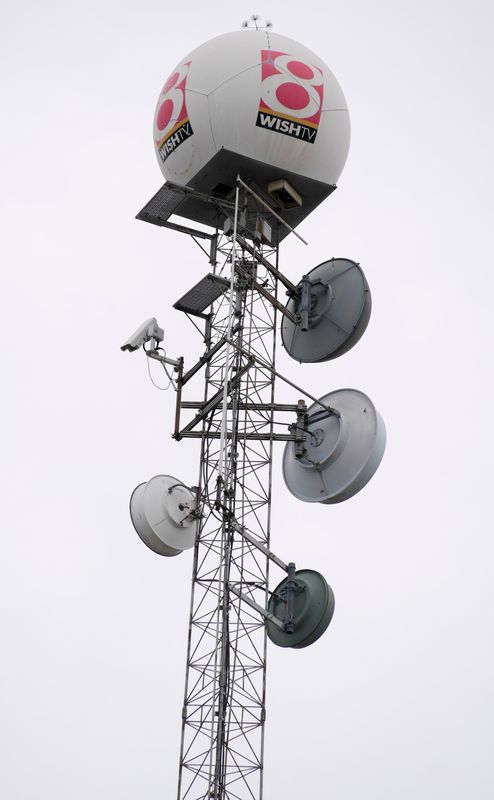
In September 2019, McCoy formed a new company, Circle City Broadcasting, and purchased WISH-TV (Channel 8) and WNDY-TV (Channel 23) for $42.5 million from Nexstar.
The buy gave him entry to a Top 25 market for the first time.
McCoy walked into a new venture with confidence, former staffers said.
Douglas Fish, a maintenance engineer at the station from 2019 to 2021, said McCoy hosted a town hall after the purchase became official and made big promises.
“The quote everyone remembers is, ‘Daddy’s got money,'” Fish said. “DuJuan came in and was all happy, excited, telling everyone, ‘Oh, we’re going to take over the market.'”
But McCoy faced significant hurdles.
Among McCoy’s first ideas was the Multicultural News Network, a CNN-like operation, but it never materialized.
Then, in 2020, he found himself in another fight with corporate giants.
AT&T U-verse and Dish Network refused to pay McCoy’s company lucrative retransmission consent fees, even though they paid the fees to Nexstar for the same stations.
The move outraged McCoy, who yanked the stations from the satellite providers and accused them of discrimination.
McCoy sued and launched an aggressive PR campaign against the companies, personally appearing on his own stations to appeal to viewers and encourage them to cancel their satellite subscriptions.
“This is an unfair business practice, in my opinion, blatant discrimination against small business owners like me,” wrote McCoy in a briefing posted on WISH-TV’s website.
The companies denied that accusation. AT&T said it would only pay the fees to companies with a big four network affiliation.
McCoy lost in court, but as in his past conflicts, he didn’t merely walk away. If he needed a big four network to get the retransmission fees, then he’d just have to go get one.
Layoffs at WRTV stir controversy
In 2025, an opportunity emerged. E.W. Scripps Co. was looking to sell WRTV, its Indianapolis ABC affiliate, and they called to gauge McCoy’s interest.
They quickly agreed on an $83 million purchase price, McCoy said on the “Leaders and Legends” podcast. But it wasn’t a done deal.
FCC rules restrict owners from having more than two stations in the same market. Circle City Broadcasting needed to get around that rule if it wanted to own a third Indianapolis station.
Although the FCC under Trump has been more receptive to media consolidation, not everyone was on board.
“Unchecked broadcast media consolidation is one of my deepest concerns at the Commission,” said Anna Gomez, the sole Democrat on the commission, in a statement to IndyStar. “When ownership changes hands, the first thing that often suffers is the newsroom, and that means the communities those stations serve lose a critical source of local information.”
But McCoy argued that the lowest-ranked of his stations, WNDY, would suffer financially if he was forced to divest, potentially reducing competition.
He also emphasized that the market would benefit from local ownership.
Ultimately, the FCC granted a waiver allowing McCoy’s company to own all three stations.
The sale closed on the afternoon of March 31, and hours later, Circle City human resources personnel laid off most of the 60-plus staffers at the station. Former employees told IndyStar they met with HR one-by-one during WRTV’s evening broadcasts, and all but four were cut. McCoy was not present.
The layoffs ignited a community uproar, but if the backlash fazed McCoy, he didn’t show it.
“When businesses merge, they have a right to synergize and not duplicate bodies,” McCoy said during his April 9 podcast appearance. “I don’t need two directors of sales. I don’t need as many producers as they had. I don’t need engineers because I’m running it in the same facility as WISH-TV.”
WISH personnel now helm WRTV broadcasts, which air under dual WRTV/WISH branding. Station polo shirts feature both Channel 6 and Channel 8 logos.
When the Circle City deal was announced, WRTV staffers like Bob Sulecki immediately feared newsroom cutbacks due to redundancies.
“Crud, we’re going to be part of a duopoly now,” Sulecki, who spent 21 years at the station as an engineer, said. “That probably doesn’t bode well for us.”
Like his introductory town hall at WISH, McCoy was upbeat and confident, Sulecki said, downplaying layoff concerns and indicating he would run two separate newsrooms.
McCoy told the staff he “got rid of 20 positions to make room for you guys,” Sulecki said, seemingly referring to the departures of WISH staff last year following a dispute over a new non-compete agreement that McCoy insisted they sign.
Sulecki said McCoy promised everyone would get an interview, but when the company offered Sulecki a position, it came with a 25% pay cut from his original salary. He declined the offer.
McCoy touts value of local ownership. He lives in Texas.
McCoy’s emphasis on local ownership also has become the subject of chatter.
When he entered into the Central Indiana market, he branded Circle City Broadcasting as locally owned and operated, emphasizing his deep Indianapolis roots. “Words cannot express how overjoyed I am to be able to come full circle and own WISH and WNDY in my hometown of Indianapolis!” McCoy said in a 2019 statement. “This is a dream come true for me.”
His company’s website touts Circle City as “Indiana’s only locally owned and operated broadcast and digital news media network.”
“I have a reputational stake here. This is my hometown. And I’m going to deliver the goods,” he said on the April podcast, later adding: “I am a journalistic guy and I’m a local content creator.”
He’s far less vocal about Texas, where he and his family have resided for more than 20 years. That’s where he’s registered to vote and where he parks his private jet ― a multiengine Hawker 850 XP with executive seating registered to DuJuan and Only Media LLC.
He resides in a sprawling 10,000-plus square foot mansion with six bedrooms and eight bathrooms, estimated to be worth $4.4 million. The home sits on a golf course and faces a lake in the Carlton Woods Creekside subdivision of The Woodlands ― a symbol of the success and wealth he’s amassed.
Loyd, his attorney, emphasized that McCoy is an Indiana guy and carries out his business in Indianapolis, the headquarters of Circle City Broadcasting. He said McCoy didn’t want to disrupt his family’s lives in Texas, but “did want to make sure that Indianapolis was a place he spent most of business time.”
Public records show that McCoy purchased a Lockerbie Terrace condo in downtown Indianapolis as a second home.
The future of Indy TV
Beyond the staff reductions, McCoy has added a morning show and reinstated weekend newscasts since taking over WRTV.
While broadcast TV faces challenges, the FCC’s support for consolidation could continue to give McCoy more opportunities.
Another major consolidation is possible as two of the nation’s largest broadcast station owners, Nexstar and Tegna, pursue a $6.2 billion merger.
In Indianapolis, those companies own NBC affiliate WTHR, CBS affiliate WTTV (CBS4), and Fox affiliate WXIN (FOX59).
The deal as it stands would require the divestiture of several stations across the country, including WTHR within two years.
In recent interviews, McCoy has indicated that he plans to focus on growing his Indianapolis stations.
But with another shakeup on the horizon, possibilities abound for someone like McCoy.
Contact IndyStar investigative reporter Alexandria Burris at aburris@indystar..com. Follow her on X, formerly Twitter, at @allyburris.
Contact IndyStar Pop Culture Reporter Heather Bushman at hbushman@indystar.com. Follow her on X @hmb_1013.
This article originally appeared on Indianapolis Star: ‘On my terms’: How DuJuan McCoy expanded his grip on Indy TV
Reporting by Alexandria Burris and Heather Bushman, Indianapolis Star / Indianapolis Star
USA TODAY Network via Reuters Connect


By Alexandria Burris and Heather Bushman, Indianapolis Star | USA TODAY Network