A quarter of Marion County residents say that gun violence has affected them or their neighborhoods, with gun-related deaths heavily skewed toward younger Black men.
Persistent mental health struggles, expensive medical bills and violent crime are among the top public health issues facing the Indianapolis area, according to the Marion County Public Health Department’s newly released 2025 community health assessment — the first conducted since before the COVID-19 pandemic. The 224-page report follows surveys of more than 4,500 Marion County residents from September 2024 to May 2025, as well as input from dozens of area health providers.

The overview comes at a difficult time for Indiana’s local health departments, in a state that consistently ranks near the bottom for public health spending. A historic investment announced in 2023 was slashed by 70% last year because of budget shortfalls.
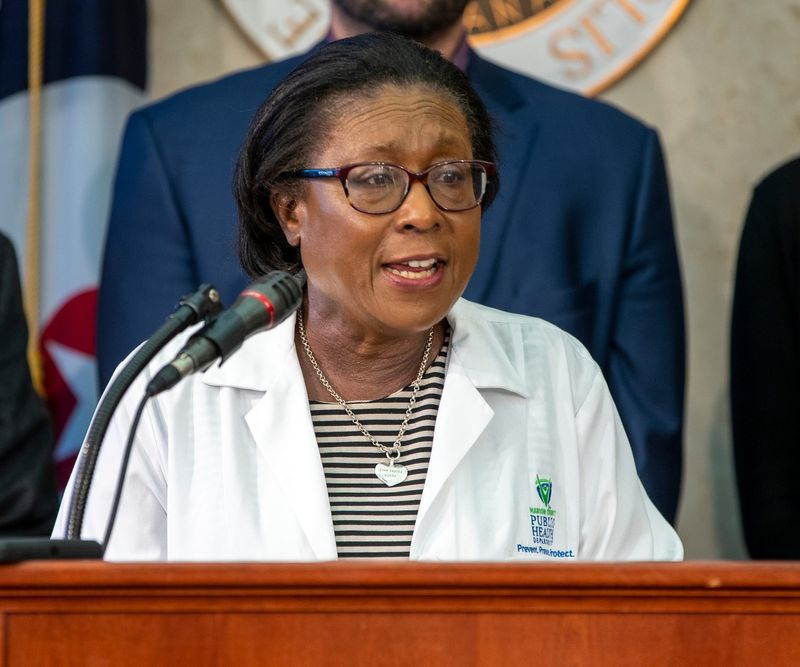
In Marion County, where many health issues like infant mortality rates are among the worst in the state, funding will fall from over $22 million to about $6 million, according to MCPHD Director Virginia Caine. She expects that to lead to less education and preventive care, which will likely increase the county’s medical expenses down the road.
Here are five key takeaways from the 2025 report:
Top five causes of death in Marion County differ by race
The leading causes of death among Marion County residents differ based on race, according to the report, with more Black and Hispanic residents dying from homicides.
Here are the top five causes of death in Marion County overall in 2024, listed by the number of deaths per 100,000 people:
The order of that list is identical among White residents, who make up about half of the county’s population. But homicides were the No. 4 leading cause of death in 2024 among both African American residents, who comprise almost 30% of the county, and Latinos, who make up about 14%.
Among Latinos, the leading cause of death that year was “accidents,” a category that includes traffic deaths and falls.
Gun violence plagues young Black men
Marion County’s gun-related homicide rate of 19 deaths per 100,000 people was nearly three times higher than the statewide and nationwide rates from 2018 to 2023. A quarter of Marion County residents say that gun violence has affected them, their friends or family, or their neighborhood.
From 2018 to 2024, gun-related deaths clustered within a few demographics:
Suicide rates increase, plaguing men most
Suicide rates in Marion County increased 10% from 2018 to 2024, with most of the jump occurring in the final year.
Men were roughly four times more likely to die by suicide than women from 2018-2024, county data shows. White residents took their own lives at far higher rates than Black or Hispanic residents.
One in four Marion County residents reported that they have been diagnosed with depression, and one in five reported symptoms of anxiety. Poor mental health is increasingly common among young people, with nearly one in four Indiana high schoolers reporting in 2023 that they had formed a suicide plan.
“We have to — as parents, as colleagues on the job — recognize the symptoms and the signs that someone may be seriously considering suicide,” Caine said. “We don’t pay attention to the quiet ones. It’s the ones that are acting out that we observe and know that there’s a problem.”
Housing listed as top public health issue
Housing was named among the top five public health issues facing Marion County residents, the first time that a so-called social determinant of health has made that list, Caine said. Studies show the conditions in neighborhoods, including economic stability, education and housing, contribute to worse health outcomes among lower-income residents.
Home values and rents have ballooned over the last decade, leaving more residents struggling to cover the cost of living. In Marion County in 2023, 40% of calls made to Indiana 211 — a free service designed to connect people with health and human services resources — were related to housing.
Danita Hoskin, president of the Crown Hill Neighborhood Association, said that she was disturbed to learn recently that her neighborhood’s life expectancy is more than 15 years shorter than for those who live north of 38th Street, according to the Polis Center at Indiana University Indianapolis. Crown Hill suffers from higher rates of poverty and violent crime.
Health care costs deter people from seeking care
Many Marion County residents say they’re skipping doctor’s appointments and prescription medications because they can’t afford the cost.
One in three county residents said they had a medical bill that they couldn’t pay in full. And one in five residents said they hadn’t seen a health care professional in the past year because they couldn’t foot the bill.
Read the full 2025 Marion County Health Assessment
To read the full report, visit https://marionhealth.org/cha2025/.
Email Indianapolis City Hall Reporter Jordan Smith at JTSmith@usatodayco.com. Follow him on X @jordantsmith09 and Bluesky @jordanaccidentally.bsky.social.
This article originally appeared on Indianapolis Star: New report outlines Marion County’s top causes of death. See 5 key findings
Reporting by Jordan Smith, Indianapolis Star / Indianapolis Star
USA TODAY Network via Reuters Connect