This story has been updated because an earlier version contained an inaccurary.
People are heading outdoors to enjoy the warmer weather, taking bike rides, hikes and recreating in parks — and everyone should take precautions to prevent tick bites.

Monroe County had the largest number of cases of tick-related ehrlichiosis in Indiana, for three of the past five years. In 2025, Monroe County reported 18 human cases of ehrlichiosis, which is transmitted by the lone star tick.
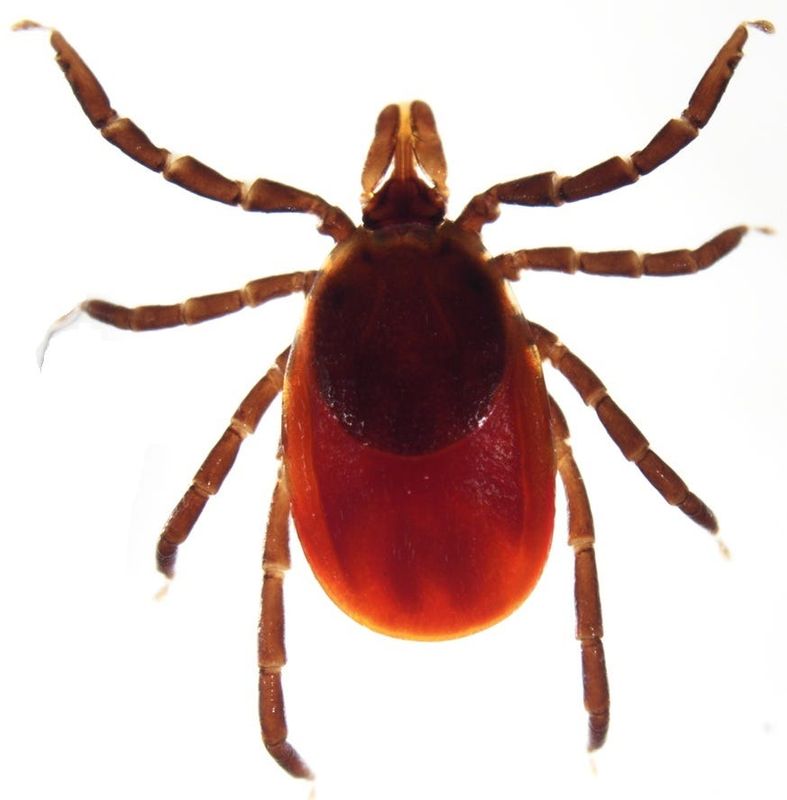
This year, in March, two Bloomington residents reported finding blacklegged ticks on Monroe County Health Department’s online citizen tick reporting survey. Blacklegged ticks can transmit Lyme and other diseases.
“Since we’ve had such an up and down spring (with temperatures), ticks are out,” said Dr. Robert Adams, emergency medicine specialist at IU Health Bloomington.
In the next two weeks, Adams expects people who’ve been outdoors will notice and remove ticks, prompting a surge at doctor’s offices, urgent care facilities and the emergency room. In the past couple years Adams said medical staff are seeing more people with tick bites and related illnesses because without severe winters killing off ticks, there are more of them and they emerge earlier in the year.
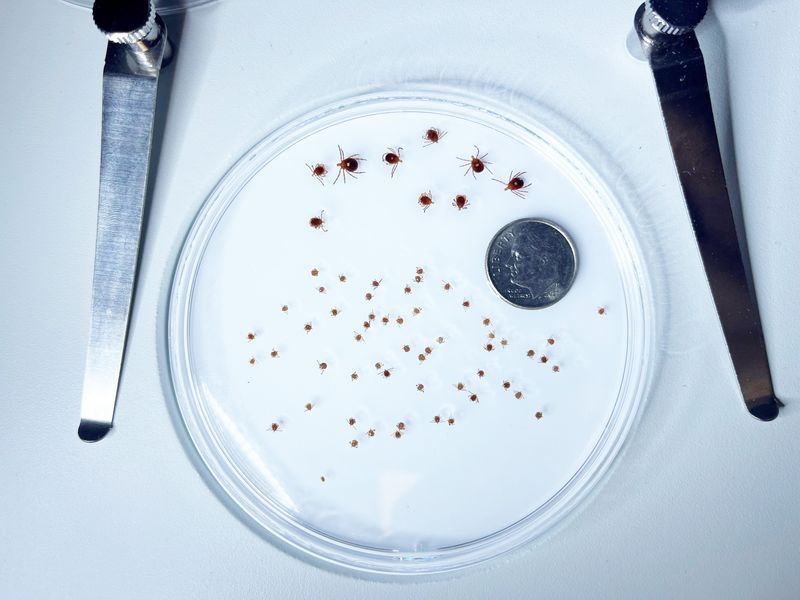
What makes it more difficult to detect ticks in the spring is that it’s the larval and nymph stages of ticks that are currently active — and they are much harder to see since they are small, some about the size of a poppy seed.
“If you get into a nest of the babies, it almost looks like freckles,” Adams said. “It can be harder to remove because they are so tiny.”
But even the small, first-stage ticks have been known to transmit diseases to people.
What ticks have been found in Monroe County
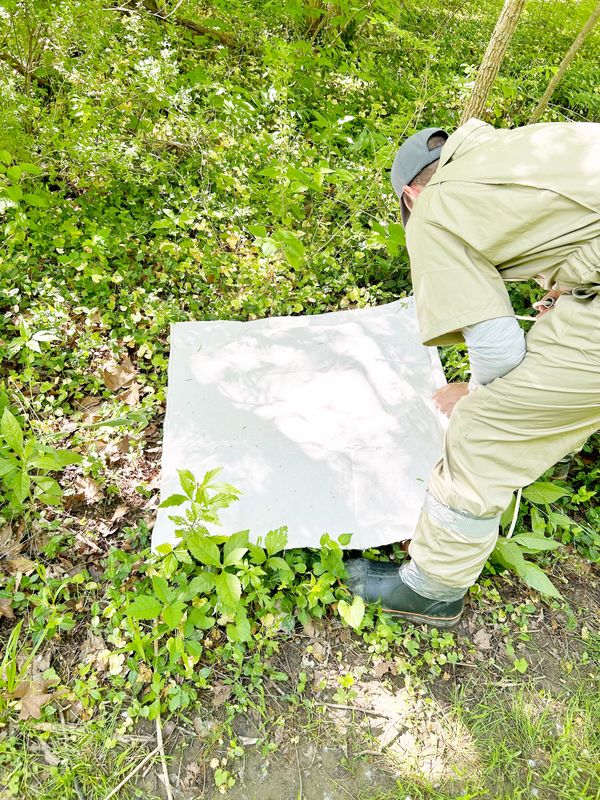
Kody Clark, environmental health specialist with the Monroe County Health Department, has done tick collection each summer since 2024 to track the number and species of ticks in the county. Using a drag cloth, Clark went to seven area parks and preserves in June and July of 2025, finding 574 ticks. Clark received permission to use the drag cloth at Amy Peninsula Nature Preserve, Beanblossom Bottoms Nature Preserve, Flatwoods Park, Karst Farm Park, Leonard Springs Nature Preserve, Riddle Point Park and Winslow Woods park. He found more lone star tick nymphs (412) than any other type.
Clark pointed out that he uses public parks because they have easy access, with parking and trails. Finding the ticks in those locations doesn’t mean people should avoid visiting those locations, he said, adding, “Ticks can be found anywhere with vegetation, and people can be bitten at their own property where they spend most of their time.”
He encourages people to use tick prevention practices everywhere they might be exposed to ticks.
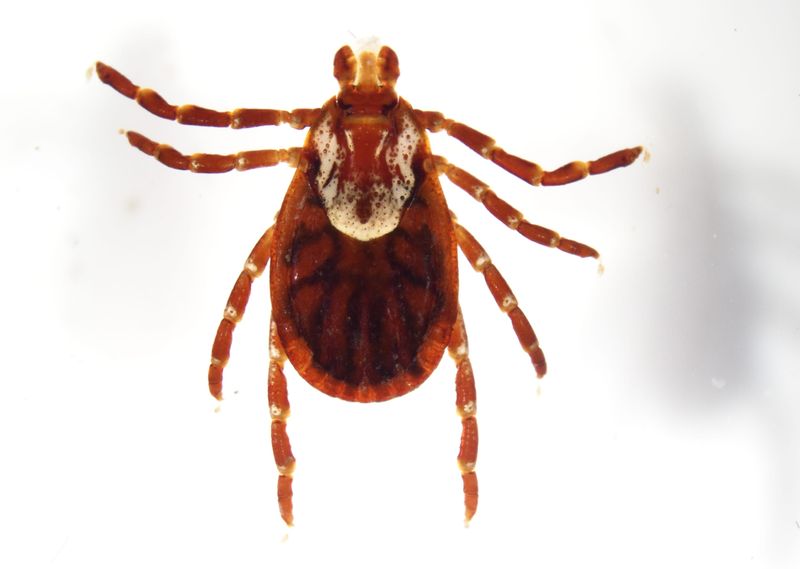
The 2025 Citizen Tick Reporting Survey in Monroe County had a total of 70 reports, with 142 ticks, Clark shared in an email. Of those, there were 100 lone star ticks and 42 American dog ticks. A total of 46 lone star ticks were found on people’s skin, 31 on pets, two outside on vegetation, 15 on clothing, and six in other locations. The American dog ticks found included 15 on people’s skin, six on pets, 15 inside houses, three on equipment/gear and three on clothing.
To add information to the Monroe County tick reporting survey online page, go to https://tinyurl.com/36xhke7m. More tick information from the county health department can be found online at https://tinyurl.com/3ujkv2w7.
Ways to prevent ticks near your home
While people often believe they pick up ticks while away from their homes, ticks may be waiting in people’s yards or gardens to hitch a ride and get a meal.
If a residence backs up to woods, there are almost certainly ticks in the area. With modifications, people can lessen the chance of having ticks in their area, said Lee Green, senior medical entomologist at the Indiana Department of Health. The first essential action is to keep your grass mowed. Also removing leaf litter and creating physical barriers, such as a fence, between the woods and a yard helps.
“With ticks, when they dehydrate, that’s an issue,” Green said. “Ticks can’t drink, so they have to be in a high humidity environment.”
The high humidity area doesn’t have to be large, Green explained, so even small areas in a yard can be a good habitat for ticks. To keep a wooded or other area separate from a yard, Green said people can use a 3-foot-wide barrier of gravel or mulch. Ticks can’t cross that extensive of a low-humidity area. The barrier also is a physical reminder that the area beyond may have ticks, Green said. Also, if a person, pet or wildlife cross from the woods into the yard, they may carry ticks.
Green said anyone living in an area with high tick populations can use chemical treatments at intervals, especially when tick populations are peaking, to keep them at bay. Before Memorial Day and in the fall, Green said to be on the lookout for blacklegged ticks. From late April and into May, it’s time to look for lone star ticks.
Ways to keep ticks off when you’re outdoors
Before heading outdoors, people can reduce the chance of later finding ticks by using insect repellant with DEET or a similar compound. Some other options people use include applying picaridin (20%) or oil of lemon eucalyptus to their skin.
Also, people who work outdoors or plan to be out in high-tick areas can spray permethrin on their clothes and shoes or wear permethrin-treated clothes. The permethrin lasts through several washings and can be sprayed on tools as well.
For more information, check out the Centers for Disease Control and Prevention website at www.cdc.gov/ticks/prevention/index.html.
What to do if you find a tick
If you do find a tick crawling on your arm or embedded in your leg, don’t panic. Dr. Adams says the chance of having a tick-borne illness is low, with only about 350 cases of tick-borne illnesses in Indiana each year.
He recommends people remove the tick. If it’s embedded, he said using a good pair of tweezers, gripping it as close to the skin as possible and gently pulling is the best extraction method.
Even if part of the head is left behind, Adams said the likelihood of having the tick transmit a disease is low. He recommends washing the site to remove potential bacteria and watching the area. Your body will work to push out the head, he said. If a secondary skin infection develops, then people should talk to a doctor to get antibiotics.
If someone develops a bull’s eye rash, then they need to see a doctor.
In the emergency room, Adams said people come in not feeling well, with systems of a virus (achy and feverish, possibly with an upset stomach). It can be difficult to determine if it is a virus or a tick bite, Adams said, especially since normally the tick is no longer present.
Adams recalls that last year, one person went to see a primary care doctor with viral systems. It was only three days later that the classic bull’s eye rash developed and they received antibiotics.
Some suggestions after you find a tick include keeping the tick in a bottle or on piece of tape so you know what species it is. After removing the tick, wash the area on your skin where it was found thoroughly. Experts also suggest that if you’re returning from an area you suspect has ticks that you put all your clothes in a hot dryer for 20 minutes and take a shower to remove any crawling on your skin or in your hair.
It’s a good idea to have a family member or friend check the areas of your body you can’t see, including the back of your neck and knees. If people do a daily tick check, it lessens the chance of any illnesses, Adams said. He explained that ticks generally have to be attached to a person for 48 hours before most tick-borne illnesses can be transmitted.
New viruses and illnesses transmitted by ticks
Last summer was the first time a person was officially documented with heartland virus in Indiana, according Green. Heartland virus is a relatively new tick-borne virus transmitted by lone star ticks. It was found in Clark County, which is just north of Louisville, along the Ohio River.
It, like most other illnesses transmitted by ticks, is a bacterium, Green explained. One exception is babesiosis, which is a parasite transmitted by ticks. It’s been found in St. Joseph County County and along Lake Michigan and potentially in the Indiana Dunes area.
Another fairly new complication people may face after being bitten by a tick is alpha-gal syndrome. People may have no idea they have alpha-gal until they have an allergic reaction after eating red meat.
“There’s definitely an uptick of alpha-gal from some of these lone star ticks,” Adams said. He explained the allergy symptoms can include hives, itching or difficulty breathing. In some cases, people have to be rushed to receive emergency care.
With lone star ticks more common in southern Indiana, Adams said it’s something people need to be aware of. Once someone has alpha-gal syndrome and the reactions, they will continue to experience them any time they eat meat. For some people they can still eat poultry; others have to quit eating all meat except seafood.
Adams believes some people with a weaker case of alpha-gal may experience only gastrointestinal issues and not understand they have alpha-gal syndrome.
Anyone who has symptoms can have a blood test to determine if it’s alpha-gal.
Ticks found in Indiana and the diseases they transmit
Indiana has six ticks that spread diseases and illnesses to people. Each of them has more than one pathogen that they can spread.
The American dog tick spreads Rocky Mountain spotted fever and tularemia.
The black-legged tick spreads Lyme disease, anaplasmosis, babesiosis and Powassan virus.
The brown dog tick spreads Rocky Mountain spotted fever. This tick is usually associated with dogs and can often be found in kennels and places with a large number of dogs. This tick can live its complete life indoors, sometimes living in cracks in concrete.
The Gulf coast tick spreads Rickettsioses, which are bacterial infections that include Rocky Mountain spotted fever.
The lone star tick spreads ehrlichiosis, tularemia, Bourbon virus and southern tick-associated rash illness. The tick also transmits alpha-gal syndrome.
The Asian longhorned tick has only been found in four southern Indiana counties and there are no reports of any diseases transmitted to people by this tick. However, it is a concern for cattle and other livestock.
This article originally appeared on The Herald-Times: It’s tick season in Indiana. What you need to know.
Reporting by Carol Kugler, The Herald-Times / The Herald-Times
USA TODAY Network via Reuters Connect