Indiana University Bloomington is a beautiful school with an incredible campus. The school’s Sample Gates, limestone architecture and well-kept trails make it an amazing place to walk.
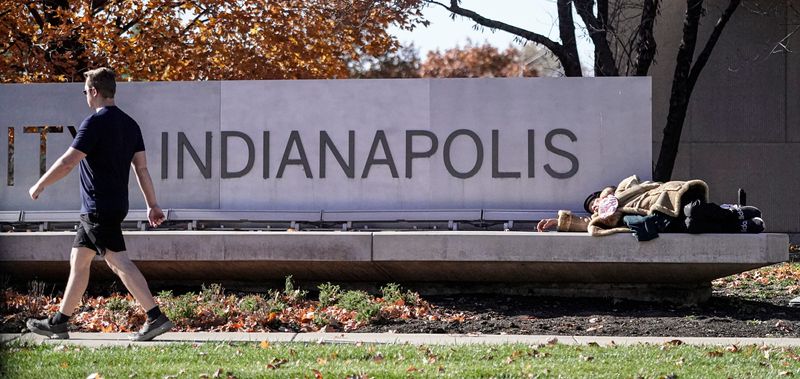
IU Indianapolis, on the other hand, is a concrete jungle. It is a nice place to work, but not much else.

The university system is prioritizing growth in Indianapolis for good reason. The campus is better suited to meet the challenges higher education faces today. For that reason, it should become the university’s flagship campus.
Higher education used to be about creating good, well-rounded citizens and leaders. Now, state leaders are demanding more and offering fewer resources in return. That is because the conservative vision for higher education is intimately tied to the market.
Higher education institutions need to act more like a business, meet workforce needs and help grow the state’s economy and tax base. Indianapolis is much better suited to that vision than Bloomington.
IU Indianapolis benefits from a strong local economy
Bloomington was always intended to be a college town. President James Madison selected the township as the site for a seminary in 1816. The state authorized the site in 1820, and construction began in 1822. Bloomington’s economy was built around the university and is dependent on it.
IU started offering classes in Indianapolis in 1891. Its Indianapolis campus later merged with Purdue to become IUPUI in 1969. While hailed as an opportunity to make one “great state university” by then-Mayor Richard Lugar, the move cemented the campus’ inferiority to Bloomington and West Lafayette. It further removed incentives for either university to invest in the campus proportionally to its full potential.
Since IUPUI separated into IU Indianapolis and Purdue in Indianapolis, IU has capitalized on the city’s advantages (more so than Purdue, as Interim President Mitch Daniels noted in a recent interview: “I think we’ve been a little slow out of the blocks on this”).
The most obvious advantage is population density. Indiana universities are facing greater scrutiny for accepting a large number of out-of-state and international students and hiring staff members requiring H-1B visa sponsorship. A greater local population to draw from and a more robust local transit system means those issues are more easily addressed.
IUPUI attracted mostly in-state students, many of whom commuted to campus. More than 90% remained in Indiana after graduation, and about 75% stayed in central Indiana.
The Indianapolis campus lacks the usual animosity between locals, or townies, and students, because they are more often one and the same. There’s also a larger body of local professionals to draw from as adjunct professors.
The second advantage is Indianapolis’ independently strong economy. That has enabled the university to make vital partnerships with companies including Eli Lilly and Zimmer Biomet, along with nonprofits including the 16 Tech Innovation District and local hospitals. Those partnerships lead to jobs and internships for students.
The local economy doesn’t lean as heavily on IU, but the two strengthen each other.
The third advantage is the unique government structure that has long supported the local economy. The consolidated city-county government creates countless efficiencies and transfers extraordinary powers to a single executive to set a vision for future growth and economic development. That gives the university a strong partner and resource, and one person to hold accountable instead of several competing municipal and county bodies that might have different ideas about what the campus’ future should look like.
IU also draws on a broader, countywide local tax base that is often reinvested downtown (sometimes to the detriment of the surrounding townships).
IU is already prioritizing Indianapolis
Since splitting with Purdue University, IU Indianapolis has become an R1 research university. It is building a $60 million expansion to the Science and Engineering Lab building and received $138 million from the Lilly Endowment toward IU LAB, the Launch Accelerator for the Biosciences, and is building a new 448-bed residence hall and a $110 million arena.
IU Indianapolis’ agreement with Indianapolis Public Schools granting automatic admission to students with a 3.0 GPA or higher comes as Indiana’s new high school diploma provides a pathway to automatic admission for every student. IU Indianapolis, again, is best suited to capitalize on this degree program because it already enrolls mostly in-state students and has a large population of students within commuting distance.
That likely means the campus will experience major enrollment growth in the next few years.
A new budget model grants campuses more flexibility, and IU sits in excellent financial health compared with peers in part because of its ability to find revenue sources other than student tuition and fees.
IU is also collaborating well with state officials on both culture issues and economic issues, which is exactly what it should be doing if it wants continued access to mostly state-funded athletic facilities among other benefits. It is also pursuing larger research grants and keeping a greater portion of grant funds in a push for centralization.
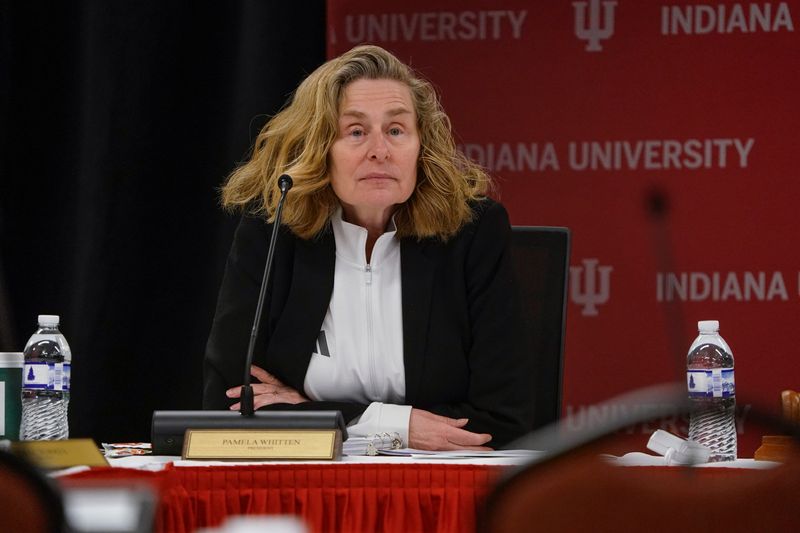
Where better to centralize than the geographic center of the state? IU President Pamela Whitten already lives in Indianapolis part-time. Bloomington recently got its first chancellor in decades. David Reingold is well suited to managing the day-to-day affairs of the campus. Whitten should move to Indianapolis full time.
The infrastructure, resources and work-based learning opportunities available in Indianapolis are simply not in the realm of possibility at IU Bloomington. Bloomington would be better suited as a feeder school for first- and second-year students while students finish their degrees in Indianapolis.
IU should double down on investing in Indianapolis and go a step further by making its intentions known. IU Indianapolis should be the university system’s flagship campus. While the university is at it, maybe it could invest in making the campus just as beautiful as Bloomington so students can get the best of both worlds.
Contact Jacob Stewart at 317-444-4683 or jacob.stewart@indystar.com. Follow him on X, Instagram, Facebook and TikTok.
This article originally appeared on Indianapolis Star: Indianapolis should be IU’s flagship campus. Sorry, Bloomington. | Opinion
Reporting by Jacob Stewart, Indianapolis Star / Indianapolis Star
USA TODAY Network via Reuters Connect
By Jacob Stewart, Indianapolis Star | USA TODAY Network