America woke up Tuesday morning a nation bewildered and unsettled. Its exit the night before deflated what for weeks had seemed like an ever-expanding sense of wonder at the success of its first home-soil Men’s World Cup in 32 years.
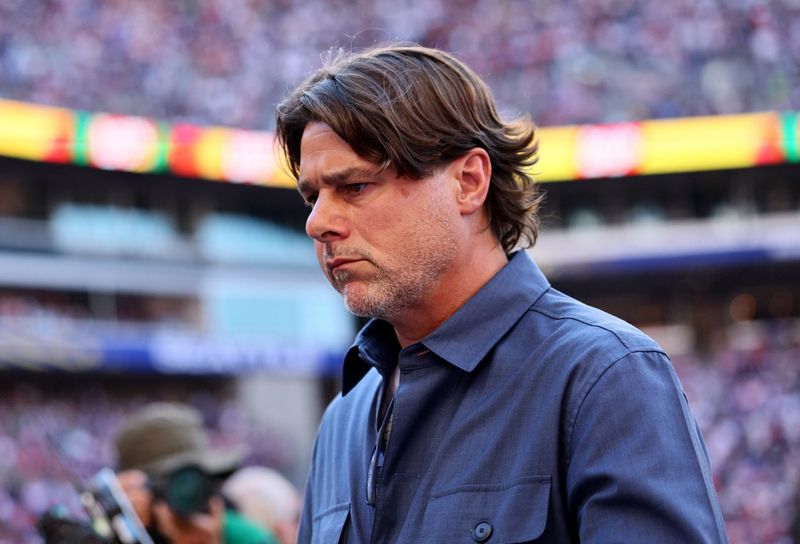
A 4-1 defeat to Belgium on Monday night in Seattle, one riddled with individual errors and far from the precise, often exhilarating soccer Mauricio Pochettino’s team had played in the competition to that point, tapped an uncomfortably perfunctory period onto the end of the story of what for a time looked like perhaps the greatest World Cup run in this nation’s history.

Whether longtime, diehard fans, or newcomers dazzled by the scenes both on- and off-pitch this last month, Americans were left jarred by the nature of their country’s exit. Perhaps more accurately, they were shaken by the wider experience.
This team excited so much, in part because — built around what is widely recognized as a golden generation in soccer in this country — the U.S. outperformed almost all expectations it had laid before into the competition. Until it suddenly, and violently, did not.
Buy USMNT merch!
Mauricio Pochettino came with pedigree, but delivered little to USMNT before World Cup
The sidecar attached to the Harley-Davidson that had become Pochettino’s relatively stable first XI these last five matches was the uncomfortable truth that, until this point, the former Tottenham, Paris Saint-Germain and Chelsea manager’s tenure had failed to promise much.
When Pochettino was hired in 2024, it was seen as a minor coup. After instability at the top of its coaching pyramid following the 2022 World Cup, here came the most credentialed manager in the United States’ modern history. Pochettino led Spurs to a Champions League final and PSG to a Ligue 1 title. He was at one point widely considered among the top 7-10 managers in the world.
Taking the U.S. job certainly represented an opportunity for him to further burnish his resume. But it also suggested America was becoming more ambitious in and serious about the sport itself.
Yet the highlight of Pochettino’s tenure until the beginning of the tournament last month might have been in his hiring itself.
In truth, the U.S. Men’s National Team had yet to impress at the expected level for most of his time in charge. There were injuries to key players at inopportune times. The uproar around the Gold Cup in 2025, which some American stars opted out of or missed through club commitments. Uninspiring warm-up games including, perhaps tellingly, a 5-2 loss to Belgium in March. All this lent to Pochettino’s pre-World Cup tenure the distinct sense of a failure to launch.
The United States, which like any host nation was automatically qualified into the 2026 World Cup, sometimes seemed more like it was simply attending the tournament, rather than building into it.
Then, the games began.
How American belief grew as USMNT advanced in World Cup
Paraguay was meant to be a difficult first test for the Americans.
Among the smaller nations in CONMEBOL, South America’s federation, it nonetheless posted an impressive defensive record through its qualifying campaign, and carried a threat through established internationals like Julio Enciso and Miguel Almiron.
Yet every moment Paraguay opened up on matchday one, the United States set upon its visitor in packs, resembling some of Pochettino’s best Tottenham teams.
Over his five years in north London, Pochettino turned Spurs into one of the best pressing outfits in the world. Under the Argentine manager, Tottenham at times became almost unplayable, its organized, intense press smothering opponents to the point of breaking.
Teams would endure, 15-, 20-, 25-minute spells when it seemed as though they could barely breathe, much less fight back. Pochettino carried Spurs deep into multiple Premier League title races, and he guided the club to its first Champions League Final in 2019 behind these principles, ones the United States displayed in abundance in unpacking Paraguay 4-1.
A business-like 2-0 win over Australia clinched the group. Losing to Turkey could be dismissed, given the dead-rubber nature of the game, and despite Folarin Balogun’s red card in the 64th minute against Bosnia and Herzegovina, the United States calmly and professionally put to bed another 2-0 win in the round of 32.
The win marked the country’s first victory in a World Cup knockout-stage game since 2002 against Mexico. It also marked America’s first win against a European opponent in the competition since a group-stage victory over Portugal in the same tournament, and just the nation’s second knockout-round win ever.
All of which seemed to signal something new heading into Monday night:
For the first time in a long time, America expected.
How good will was undone in deflating USMNT loss vs Belgium
Which made both the performance and the result so difficult to digest.
There was precious little of the poise and precision Pochettino’s team displayed through its first four games in the tournament.
Belgium sat deep early, unwilling to open itself up to America’s dangerous press. And when the Europeans could get on the ball and build play, they made it count. Their first goal came from poor back-post marking, their second a header U.S. captain Tim Ream should have contested more robustly than he did.
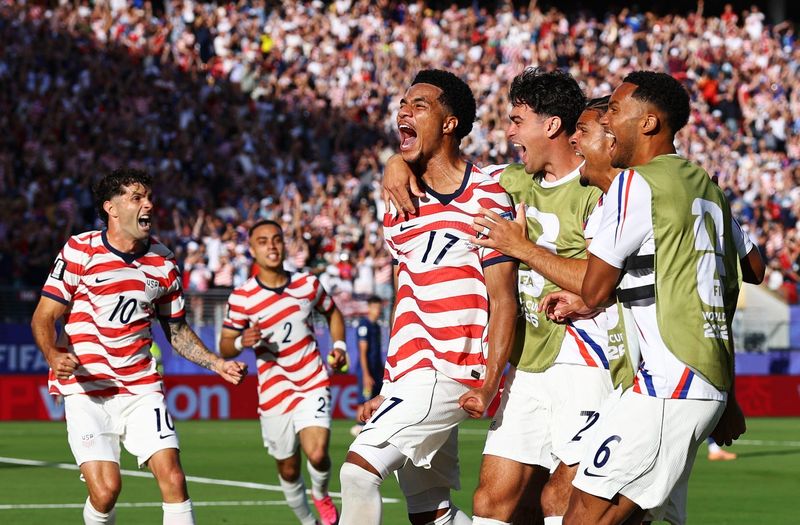
It was a double blow that it came just two minutes after the United States equalized through Malik Tillman’s free kick. Yet even that told a certain story.
As the game wore on, the Americans seemed to generate pockets of pressure, but nothing sustained. They only attempted two shots on target, going 51 minutes between Tillman’s goal and Balogun’s saved effort late in the second half.
Christian Pulisic limped off with an injury midway through the second half, and eventually, more mistakes — most damagingly a moment of costly indecision from goalkeeper Matt Freese — led to defeat by an ugly 4-1 score line.
In the aftermath, Fox cameras captured players slumped in seats, bent over on the turf and staring thousands of yards beyond the Lumen Field seats, wondering like so many millions of their countrymen how things had gone so wrong so quickly, and so completely.
USMNT golden generation delivered dreams, that were shattered
In footage released by the U.S. men’s team before the tournament, Pochettino spoke to his players of “touch(ing) the moon,” presumably a nod to the kinds of remarkable achievements littered throughout America’s history.
For a moment, it seemed as though his team might. Yes, the misfires early in Pochettino’s tenure had dampened expectations around this World Cup. But with so many of its most important players plying their trade in the world’s biggest leagues and, crucially, mixing so well together now, it seemed like America had finally found its soccer moment.
When the U.S. faced Belgium in 2014 World Cup, in Brazil, it was a recognized underdog. Yet now, against an aging and unbalanced Belgian side, the Americans were justifiable favorites, and fans bought in accordingly.
The last time the United States hosted the World Cup, in 1994, proved a watershed moment for the sport in this country. The U.S. outperformed expectations then, defeating Colombia and advancing past the group phase. That success paved the road for, among other things, the successful entrenchment of the MLS, and the development of the generation that would defeat Mexico and Portugal in the World Cup eight years later.
It seemed as though the U.S. was building toward a similar moment here in 2026 until, abruptly and rather painfully, it wasn’t anymore.
Which is what made this defeat sting more than most in living memory. The road to this World Cup had been at times rocky, and if performances here had mimicked or followed that build-up, then perhaps this last month could have been met with a disappointed shrug.
Instead, that golden generation found an approximation of its best at just the right moment, and for just the right length of time, to convince its country it was about to deliver something remarkable. Something historic.
For the first time in its history, on this stage and at this scale, the U.S. Men’s National Team gave its country reason to dream big dreams. When it delivered something less than those dreams, the resulting thud left that country processing a toxic blend of anger, frustration and disappointment we’ve arguably never known in soccer.
Perhaps, in time, even that itself will represent progress. On Tuesday morning, though, it felt like little more than an unwelcome hangover.
This article originally appeared on Indianapolis Star: How USMNT’s golden generation brought dreams, belief that were shattered vs Belgium
Reporting by Zach Osterman, Indianapolis Star / Indianapolis Star
USA TODAY Network via Reuters Connect
By Zach Osterman, Indianapolis Star | USA TODAY Network