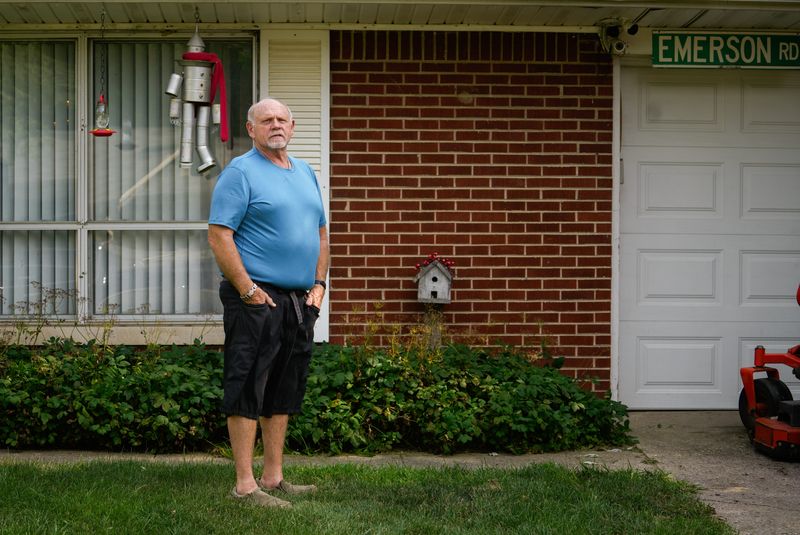
He has four months to make up his mind, but Tim Cortrecht, a Noblesville father, is already thinking about how he’ll vote on the school referendum that will appear on his ballot in November.
“They haven’t sold me yet on voting in favor of it,” Cortrecht told IndyStar in early July. “They’ve given me plenty of reasons not to vote against it, but I’m still waiting to get some information from the district.”

Cortrecht, a homeowner, who has lived in Noblesville since 2017, has three children in Noblesville Schools and family members who work in education. But he’s cognizant of inflation and the rising property values that have increased taxes for some Indiana residents.
Cortrecht will help decide if a new referendum proposal for Noblesville Schools gets approved this fall amid a historic year for school referendums in Indiana.
More Hoosiers than ever will be voting on school ballot measures: 37 school districts, including five Marion County districts and five districts in Hamilton County, will ask voters to approve operating referendums in a political climate where property taxes are top-of-mind.
That’s three times as many operating referendums than any other election in the last decade. School officials are pointing to Senate Enrolled Act 1, a 2025 property tax overhaul, and a legislative change that limits when referendums can be on ballots as the reasons for the influx.
“Do I want to run a referendum? No,” John Atha, superintendent of Westfield Washington Schools, told IndyStar. “It’s divisive. It pits people against each other inside our community, outside our community, including neighbors and maybe even family members.”
With the election a few months away, school officials must convince community members to raise their own taxes at a time when many Hoosiers struggle to afford housing, groceries and gas. They will also face opposition efforts from anti-referendum Facebook pages and political leaders like Indiana Lt. Gov. Micah Beckwith, who lives in Hamilton County. And, an offshoot of a national group that helped defeat a school referendum last year in Fort Wayne plans to be involved again this year.
Meanwhile school officials are sounding the alarm on the high stakes for their districts. Without the funding from the referendums, some districts could face dramatic cuts in services, unpaid bills and even state takeover. Smaller schools with tight budgets could face the most significant cuts. For example, the School City of Whiting in the state’s northwest corner will have to cut up to 10% of its staff if its referendum fails, superintendent David Verta said.
But even Hamilton County schools, located in the state’s wealthiest county, will see significant impacts on education quality without successful referendums, districts say. School officials there often talk about how they get fewer dollars from the state per student compared to other districts, which means the referendum dollars are even more important. Plus, enrollment at some Hamilton County schools has dropped, which impacts school funding and led to one district eliminating nearly 60 positions earlier this year.
What’s at stake?
For more than 45 years, Charlie Demler has lived in his house in downtown Carmel. It’s the home he raised his children in, and now he has grandchildren living there. But Demler has grown frustrated as Carmel grows vertically around him, and the value of his home has increased, pushing his property tax bill up.
If the Carmel Clay Schools referendum is approved in the fall, that may be the final straw for Demler. He sees the school district spending money on a natatorium that opened in late 2024 and wonders why school officials are asking for more money from the community.Even though construction of new school facilities is paid for through a different funding mechanism than things like teacher salaries, Demler thinks there’s more Carmel Clay Schools should do besides asking residents to approve a new referendum. And he’s already started to talk with a real estate agent about selling his home.
“We have a great school district, but they seem to spend money on what I would consider to be frivolous things,” Demler said. “Everyone has had to tighten their belt, and the schools should do the same. This may be what makes it too expensive for me to stay in my home.”
On the other hand, there’s Central Indiana residents like Jazzy O’Brien, who has lived in Noblesville for 15 years and has a child entering middle school in Noblesville Schools. Officials in her child’s district have warned that their operating referendum, which expires at the end of 2026, generates about $25 million annually.
The district is asking voters to approve a higher rate to bring in a comparable amount of money due to the impact of the 2025 property tax legislation that reduced the amount of revenue schools projected to bring in via property taxes each year. If Noblesville’s referendum fails, the district will see significant staff and service reductions and increased class sizes, officials there have said. That could mean less STEM programming and less mental health support for students.
For O’Brien, there’s no question she will be voting yes on the referendum.
“Nobody wants to pay more taxes,” O’Brien said. “But it’s important that our public schools are fully funded. People move to communities for their public schools, and the quality of the schools impacts everyone’s home values directly.”
And she points to figures from the school district that show the impact on taxpayers would be minimal. Over the eight-year referendum period, the owner of a $350,000 Noblesville home would see an increase of about $2.30 per month over what they pay in taxes for the current school referendum. The district could charge a rate that would push that figure higher if the referendum passes, but says it has no plans to.
“I’m willing to give up that money easily if that means that my child can have the same education that he is currently getting,” O’Brien told IndyStar. “The impact is much larger if the referendum doesn’t pass and we don’t pay for this.”
O’Brien has joined a collection of parents, community members and business leaders who are working together in hopes of helping to pass the referendum, called Strong Schools Noblesville. But there’s also a website encouraging Noblesville residents to vote down the referendum. The site, which says it was started by an unnamed Noblesville resident, is critical of the way the school district has presented information on the referendum. Efforts by IndyStar to set up an interview with the person behind the website were unsuccessful before publication of this article.
Indianapolis schools seeking referendums
The referendum process is playing out differently in Indianapolis’ urban core, where an intricate system of charter and traditional public schools all stand to gain – or lose – if voters approve a tax increase.
The referendum rate was set by the Indianapolis Public Education Corporation, a newly created body that oversees operations for both Indianapolis Public Schools and participating charter schools in IPS boundaries. Because charter schools will now get a slice of the referendum pie, the pitch could get a boost at the ballot box and has already enjoyed broad support.
But it would come at a cost. The proposed rate is nearly double the current rate and would cost the average Indianapolis homeowner an additional $100 per year. Likewise, a failure to pass any operating referendum would be catastrophic for IPS. Superintendent Aleesia Johnson has said previously that state takeover would be likely in such a scenario.
Four other Indianapolis school districts – Wayne, Decatur, Washington and Beech Grove – are also pursuing referendums.
‘The quality of education goes down’
It’s important for Hoosiers to understand why so many schools are putting referendums on the ballot this year, said Daniel Hile, the Noblesville superintendent and president of the Indiana Association of Public School Superintendents.
Some districts have never had a referendum and some, like Noblesville Schools, have referendums that are expiring. There are also districts, like Hamilton Southeastern Schools, where voters will be asked to replace their existing referendums with referendums that have a higher maximum rate.
“It’s important to point out that that we wouldn’t be having this conversation today if not for the impacts of Senate Enrolled Act 1 on our budget,” Matt Kegley, superintendent of Hamilton Southeastern Schools, told IndyStar. “We certainly have taken steps to make some budget cuts initially already. We’d be happy to continue along at our rate voters passed in 2023, except for the implications of Senate Enrolled Act 1.”
The district estimates that it would take in about $45 million less than planned for over the final six years of its current referendum due to the 2025 property tax legislation.
The median homeowner in the Hamilton Southeastern Schools is projected to see a $3 per month increase to their 2027 tax bill if the district’s referendum is passed, according to the district. There are other factors besides the property tax legislative changes impacting some school budgets in Central Indiana, such as declining enrollment in elementary schools.
“We’ve taken some really important steps this year to right class sizes, particularly in our lower grades, in response to declining enrollment,” Kegley said. “But we worked really hard not to reduce or eliminate our programs. My concern is without the new referendum, we’d have to reevaluate some of our programs and determine if they would continue.”
Hamilton Southeastern Schools may have to eliminate some staff positions, and it would be more difficult to retain teachers by offering raises without the dollars from the new referendum, he added. The referendum dollars would support school safety measures and student behavioral health services, including having therapists available for students, Kegley said.
Westfield Washington Schools is also putting forward a ballot measure before its current referendum expires. According to the district’s calculations, property owners of a median-valued home in the district would pay at most about $40 more in taxes each month in 2027 due to the increase.
Dollars from the new Westfield Washington Schools referendum would be used for student safety and security measures, salaries for teachers, support staff, school counselors and social workers, transportation and academic programs.
Atha, the superintendent of Westfield Washington Schools, said some school bus routes would the first areas he’d look to cut if the referendum does not pass.
“We’d probably have to look at reducing costs on custodial and put off maintenance on some of our facilities. And then we would leave positions unfilled if staff members leave,” he added. “Over the long haul, the quality of education goes down. There would be fewer adults per student and our staff wouldn’t have enough hours in the day to keep up with what they currently do for our students.”
Carmel Clay Schools will be asking voters to approve a new operating referendum, even though its current operating referendum would run through 2031. The school district’s safety referendum expires next year. Jon Shapiro, president of the Carmel Clay School Board, said district leaders elected to have only one referendum for voters to decide on, instead of separate operating and school safety referendums.
That means voters in the Carmel school district will be asked to approve a new referendum maximum rate that’s almost double the current rate. Without the new referendum, Carmel Clay Schools’ budget will have to be cut significantly due to declining revenues caused by Senate Enrolled Act 1, the district says.
“You’re talking about minimally a $3 million cut in expenses in year one,” Shapiro said. “You’re talking about hundreds of employees who could be impacted. And that’s not even talking about services and programs that would have to be cut to generate that amount of revenue savings.”
‘The worst time to raise taxes on Hoosiers’
On a sunny July evening, about 50 community members filed into a coworking space to listen to school officials and leaders of Advance HSE, a political action committee, talk about their plans to push for Hamilton Southeastern Schools’ referendum.
They plan to be everywhere – high school football games, the Geist Half Marathon and other school and community events – to talk with voters.
“I grew up in a rural community in Illinois and didn’t have the opportunities that my kids have,” Laura Cole, chair of the group, told IndyStar. “I’ve seen just how incredible the schools are here. The opportunities our kids get are world class. I want to make sure that we protect that.”
But there are also groups concerned about affordability issues and the impact that school referendum rate increases could have on taxpayers.
“Really what it comes down to for us is Americans are facing an affordability crisis right now,” said Cody White, of the Americans for Prosperity Indiana chapter. “People are struggling to make ends meet. Whether it’s property taxes, income taxes or whatever, this is the worst time to raise taxes on Hoosiers.”
White’s organization helped defeat the Northwest Allen County Schools district referendum last year, and plans to get involved in more of the elections this year, including in Noblesville.
“We are going to look where people are motivated to fight these things,” White said.
He’s sympathetic to the argument that Senate Enrolled Act 1 shifted a lot of funding responsibilities to school districts, but everyone in the state is having to trim their budget and so should schools, White said.
“Even a small increase a month on your potential mortgage makes a difference on whether you are going to put an offer in on a house,” said White, who is currently renting but is looking to buy a house in Central Indiana.
And there’s existing homeowners who are opposed to the school referendums because of concerns about tax increases. Brian Penley, who lives just outside the Westfield city limit on State Route 38, built his house 30 years ago. The 66-year-old works for Chrysler in Kokomo and worries that even a small tax increase could push his retirement further back.
“These referendums give the schools too much power,” Penley said. “We want to see the kids do good, but the schools need to show us that they can manage money without being extravagant.”
For voters who are still weighing the options, like Cortrecht, the Noblesville father, and for those who have already made up their minds, Election Day is Nov. 3.
“I want to give the school as much money as they need, but they’ve got to tell me that they’re doing a good job with the money they already have and why they need more money to make everything work,” Cortrecht said.
Contact Jake Allen at jake.allen@indystar.com. Follow him on X, formerly Twitter, @Jake_Allen19. Click here to get Hamilton County news sent straight to your inbox and subscribe to the IndyStar North newsletter.
Contact breaking politics reporter Marissa Meador at mmeador@indystar.com or find her on X at @marissa_meador.
This article originally appeared on Indianapolis Star: Higher taxes or school cuts? Hoosiers will have to choose in a historic referendum year
Reporting by Jake Allen and Marissa Meador, Indianapolis Star / Indianapolis Star
USA TODAY Network via Reuters Connect



By Jake Allen and Marissa Meador, Indianapolis Star | USA TODAY Network