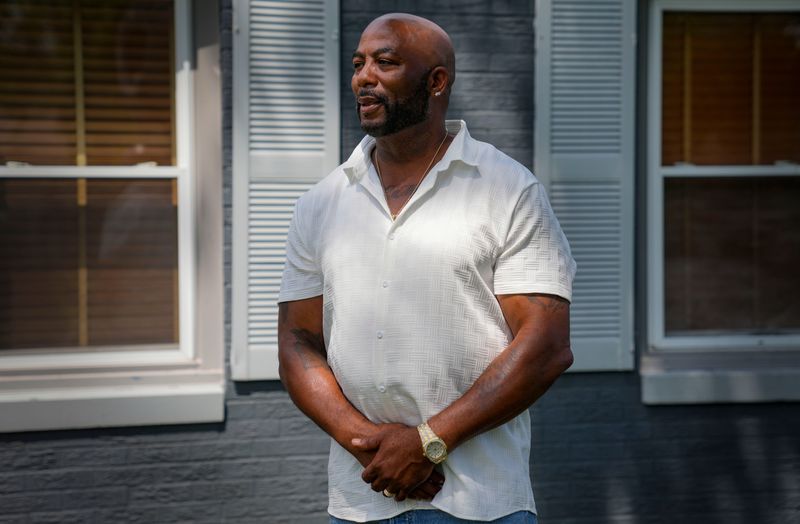
Anthony Bailey wakes up at 2 a.m. everyday. By 3 a.m. he’s at work, driving a bus in Indianapolis. He normally works 13-hour days. Some days, he doesn’t get home until 7 p.m. But he loves his job and the idea that he gets to work.
On his days off, he mows the lawn at his cousin’s northeast-side house, where he lives. He also cuts hair, a trade he learned in federal prison, where he spent 27 years for participating in an armed bank robbery and carjacking in 1997.

To Bailey’s attorneys, he is a success story. He reformed himself in prison, obtaining his GED and receiving trade certificates. He stayed out of trouble and kept a “model behavior,” as one judge noted in court filings. In 2024, a federal judge cut his sentence short, recognizing the 60-year punishment he received is “unusually long.”
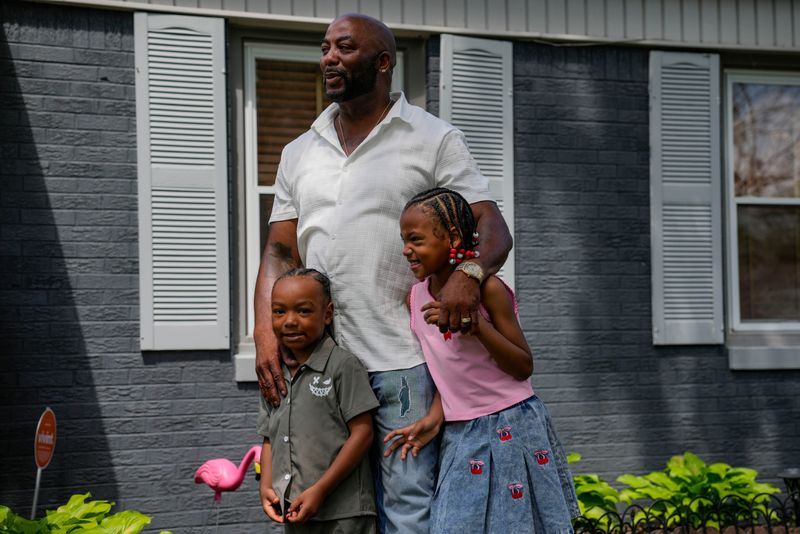
In the two years since, Bailey has found and kept a job he loves. He drives a bus for IndyGo, which began a program a few years ago to hire people with criminal background. He reconnected with his family, and has gotten to know his grandchildren and great grandchildren. When he’s not working, he plays with his grandkids in the park or takes them to get ice cream.
But he knows it could all end soon.
Bailey faces the real possibility of going back to prison, not because he committed another crime, but because — as far as the legal system is concerned — he should not have been released. Federal prosecutors in Indianapolis intend to seek a court order to send Bailey back to prison. Bailey’s attorneys said this meant another 25 years in prison. At 61, they said that’s essentially a death sentence.
His case is not uncommon. Bailey is one of thousands defendants who were sent to prison because of a federal firearms law that critics say led to draconian sentences that disproportionately affected Black men. Congress seemed to recognize this as a problem. In 2018, it passed a sweeping legislation that reforms federal sentencing laws. President Donald Trump signed the First Step Act that year, calling it a “landmark criminal justice reform” that gives people a “second chance at life.”
But last May, the U.S. Supreme Court ruled, in a case involving another man convicted under the same firearm statute, that the new reforms are not retroactive. Meaning they don’t apply to those who were sentenced before the law passed in 2018.
The U.S. Attorney’s Office in Indianapolis declined to comment but referred to 2024 court filings opposing Bailey’s request for compassionate release. Federal prosecutors argued that Bailey has not presented “extraordinary and compelling” reasons to cut his sentence short and that changes in the law do not justify compassionate release. They argued that Bailey has not shown “he no longer poses a risk to public safety.”
U.S. District Judge Richard Young disagreed and granted Bailey’s request to be released. In his ruling, Young noted a 30-year disparity between the sentence Bailey received in 1998 and what he would’ve received had he been convicted today of the same crimes.
To go back to prison would be “unjust,” Bailey said, and would upend the new life he’d created.
“It would tear down the foundation that I’d built,” he said.
The crimes and the punishment
The crimes happened in the fall of 1997, when Bailey was in his 30s.
According to court records, he and two other men went to a National City Bank of Indiana branch in Chesterfield, just outside of Anderson in Madison County and robbed employees at gunpoint. They fled, one of whom escaped in a UPS van the three men stole from a driver and the other drove away in a red Oldsmobile Toronado. The men later abandoned the vehicles and hid inside a house. They held a family at gunpoint, eventually forcing the father to drive them to Indianapolis, while the mother and their teenage daughter were tied up in the house, according to court records.
The gun was never discharged, and nobody had serious physical injuries. But federal prosecutors noted the lasting emotional trauma on the family, who feared for their lives. For months, the daughter — who found an armed Bailey hiding inside her bedroom closet — was too scared to keep that closet door closed, according to court filings.
He was convicted of six charges, including one count of armed bank robbery, two counts of carjacking and three counts of using a firearm during a crime of violence. He was sentenced to a little over 60 years in prison.
Federal sentencing law at that time required severe mandatory minimum sentences when a gun is used during a violent crime. The sentences must be served consecutively, meaning defendants must first serve the time they received for the underlying violent crimes, before they can serve the sentence for the firearms charges, which are also served consecutively.
Bailey spent most of his nearly three decades in prison at the Federal Correctional Institute in Terre Haute. He earned his GED. He cleaned the kitchen and cut hair. He obtained a license to operate a forklift and a certificate in construction. He kept a clean disciplinary record. In two decades, he received just one infraction, according to court records. He also mentored young men.
“I have seen myself in them as a young man,” he said.
Bailey tried multiple times to cut his sentence short through compassionate release. His early requests were all denied. He made his last request in November 2023. In 2024, as he was cutting hair, his case manager came to talk to him. By then, Bailey had been transferred to the federal prison in Pekin, Illinois.
“They just granted your motion,” Bailey recalled his case manager telling him.
“I’m like, ‘Man, stop playing,” Bailey responded.
Bailey said he did not believe it until he saw the court ruling with his own eyes.
He was released shortly after and promptly went to a McDonald’s to get French fries.
‘Pure purpose’ is imprisonment
The First Step Act of 2018 eliminated consecutive mandatory minimum sentences for federal firearm offenses. If Bailey had been sentenced today for the same crimes, he would’ve received 21 years of mandatory imprisonment. Six years less than what he’s already served.
For context, those convicted of murder in the federal system received an average sentence of 274 months or almost 23 years. In Indiana, murder is punishable by up to 65 years in prison, and defendants can serve half of that with good behavior.
In his ruling granting compassionate release, Young, the federal district judge, acknowledged that Bailey committed “serious crimes.”
“However, he is now nearly 60 years old and represents that he has completed numerous programs during his incarceration, which have had a positive effect on his character,” Young wrote in 2024, also citing the First Step Act. “The Court further finds that Mr. Bailey poses no danger to the community.”
Federal prosecutors appealed Young’s ruling. But the appeal had been on hold pending a consequential U.S. Supreme Court case that centered around another defendant convicted of the same firearms charges and under the same sentencing law that was undone by the First Step Act.
In a 6-3 opinion, the Supreme Court ruled in May that the reforms are not retroactive, meaning those who were convicted of the firearms charges before 2018 — people like Bailey — cannot use the First Step Act to seek compassionate release.
Earlier this month, Bob Wood, an assistant U.S. attorney in Indianapolis, informed Bailey’s attorneys of plans to request the federal appeals court to reverse Young’s decision to release Bailey.
Bailey has stayed largely positive, although he worries about not being with his family. He has two children, eight grandchildren and five great grandchildren. Some of their names are tattooed on his left arm.
Federal prosecutors, in their 2024 court filings opposing compassionate release, said Bailey was sentenced for a “heinous crime” that left lasting trauma on his victims. They also noted his criminal history, which included robbery, auto theft and battery on a police officer.
But Maryam Kanna, one of Bailey’s attorneys, said sending him back to prison “undercuts” the notion that the criminal justice system is supposed to correct and rehabilitate. It sends the message that “even if I work really hard to get an education, to learn skills that I can use as a productive member of society, I could still go back in.”
“He’s been out for two years. He’s shown that he is not a danger to society,” Kanna said. “The only purpose of them taking any action other than dismissing this case is to send him back to prison. That is the pure purpose.”
Contact IndyStar reporter Kristine Phillips at (317) 444-3026 or at kphillips@indystar.com.
This article originally appeared on Indianapolis Star: He rebuilt a life after 27 years. Prosecutors want him back in prison.
Reporting by Kristine Phillips, Indianapolis Star / Indianapolis Star
USA TODAY Network via Reuters Connect

By Kristine Phillips, Indianapolis Star | USA TODAY Network