After Iayanna Fluharty’s son started day care at Gifted and Talented Academy, she noticed him signing “all done” in American Sign Language at meals and walking with more confidence. Fluharty said skill development like this made the center’s cost worth it.
She worries his growth would become more of an unknown if standards for child care are loosened, becoming more like “babysitting,” in her eyes, rather than preparation for K-12 education.

“How can you teach a child what you never really fully learned yourself?” Fluharty asked.
Indiana child care providers would no longer be required to have bachelor’s degrees, speak in a pleasant tone of voice to children or recognize child individuality and privacy, under changes being pushed by Gov. Mike Braun’s administration.
The changes are among more than 30 deregulations proposed by the Family and Social Services Administration’s Office of Early Childhood and Out-of-School Learning in coordination with Braun. The office says the adjustments would lower the cost of care, but providers say they’ll only lower quality. IndyStar spoke with parents who echoed those concerns.
Both the office and Braun declined interview requests, but in recent months, Braun has made early learning affordability a priority. In addition to advocating for deregulation, he’s also pushing for lawmakers to dump more money into child care vouchers for low-income families and a return to higher reimbursement rates for providers when the 2027 legislative session starts in January.
“Affordable, accessible child care is essential for Hoosiers to go to work, improve their lives, and build stronger communities,” Braun said in a June 4 statement announcing the proposed regulation changes. “By reducing administrative burdens and unnecessary expenses, Indiana is empowering child care businesses to grow and innovate.”
Justin Davis, vice president of Indiana Child Care Business Alliance and president of LeafSpring school at Geist, said the regulatory changes would be a step in the wrong direction for Indiana.
“If I set that standard for my family and then lower that standard, I’m lowering the quality of the product and education that you get at the LeafSpring school,” Davis said. “You don’t step backwards in education. You’re supposed to leap forwards.”
Omar Khan, president at The Weston School and of the Indiana Child Care Business Alliance, said the 75 centers he represents are opposed to most of the regulatory changes. He said he supports Braun’s new push for more voucher dollars after the reimbursement rate for the Child Care and Development Fund, a state-administered federal program, was cut in 2025. But without stabilizing the fund, he said changing regulations will have no impact on affordability.
The state currently loses over $4 billion annually from lost productivity and tax revenue due to a lack of affordable child care options, according to a 2024 U.S. Chamber of Commerce Foundation study.
From educators to “babysitters”
Most of the provider outcry at a July 6 public hearing and in interviews focused on changes slashing minimum staff qualifications. All 16 of the providers who spoke at the first hearing for the rule changes opposed them. The Family and Social Services Administration did not respond to an IndyStar request for copies of written comment submitted before the public hearing.
Under the new regulations, child care providers would no longer be considered “professionals.” Directors would no longer need a bachelor’s degree. Instead, they would need a Child Development Associate credential and two years of experience, or a general associate’s degree. Caregivers would no longer need a high school diploma, and lead caregivers would need a high school diploma rather than an advanced degree. Volunteers could count towards child-staff ratios if they are at least 18 years old and can read and write.
Khan said he has found degrees make a difference in staff quality. Research backs him up. A 2017 review from the Campbell Collaboration found teacher qualification is positively correlated with education quality.
“Those people need to have a certain amount of standards to be able to read [and] do things effectively for the children in the classroom,” Khan said. “By eliminating a high school or GED equivalent for a teacher, what does that say about the importance of child care in Indiana?”
Hanan Osman, executive director of the Indiana Association for the Education of Young Children, which advocates for quality learning on behalf of 2,800 educators and offers professional development, said the state’s changes would decrease kindergarten readiness and undermine decades of efforts to qualify teachers. She said the proposed changes would replace early educators with “babysitters.”
Rather than eliminate qualifications, Osman advocated for creating pathways to CDAs while working. She also noted the cost of re-hiring educators not committed to their roles long-term. The current average wage for a caregiver in Indiana is under $14 an hour.
“The only saving [from the proposed changes] is going to be on paying respectful wages for the workforce,” Osman said.
Davis admitted that it is difficult to find qualified teachers while hiring. However, he said, continuing low wages while lowering the minimum qualifications will mean qualified applicants go to higher-paying K-12 schools, leaving early childhood centers with fewer applicants.
“It is difficult to run a facility and run it well,” Davis said. “When the state’s telling us to hire less qualified teachers, it’s a smack in the face when we’re trying to provide high-quality education to all of our families.”
Braun said concerns from educators were a “nuance of somebody trying to protect their own turf.” What staff are “getting done” during a day, the governor said, should be prioritized.
“Adjusting a title, if in fact that’s happening, should not insult somebody if the intention is to maybe get them to do better at what they’re doing and not be worried about the title,” Braun told IndyStar at a press conference on July 21.
The minimum child-staff ratio would also be increased but the details on the exact numbers are still being discussed. Davis said rather than expand the ratio, it would make more sense to slightly lower the square feet of space required per child because of how centers are built.
A potential reduction of play and literacy
Despite Braun’s pitch of affordability, Osman said changes lowering education standards won’t save money. Caregivers would no longer need to “recognize each child as an individual whose personal privacy, choice of activities, and cultural, ethnic, and religious backgrounds are respected” or “work to increase understanding of cultural, ethnic, and other differences.” Khan worries this will set Indiana’s child development behind other states.
“If we can bridge gaps in communication by understanding culture, I think that that’s a great win for everybody and a great win for the world,” Khan said. “Or do we want to isolate ourselves and say, ‘No, we’re just going to do this in Indiana, and we don’t want to know or see or hear about anybody else anywhere else,’ knowing that the world is becoming more and more of a global economy?”
Centers wouldn’t need to provide social skill learning, caregiver interaction during activities, dramatic play, drawing, copying and spelling and extended literacy. They’d also no longer face educational equipment minimums. The current regulation requires enough supplies to ensure that children don’t get into fights over sharing.
Good child care centers will continue to follow educational standards regardless, Khan said, but he worries new centers now will have lower qualities.
“Parents are going to see that and say, ‘No, it doesn’t make sense for me to pay for that. I’d rather stay home and watch my child,'” Khan said. “And then you have that person out of the workforce, which does not move Indiana forward.”
Braun said on July 21 that he’d look at the proposed rules to make sure they weren’t lowering education quality. However, he didn’t mention any specific changes his administration plans to make.
In response to a question of the motivation behind reducing education requirements, the Office of Early Childhood and Out-of-School Learning simply said, “the rule revisions are to reduce regulatory burden and are tied to health and safety requirements.”
Sanitary and safety proposed changes
The office proposes reducing sanitary requirements for water play areas and changing tables (allowing diaper changing on any designated clean surface). Instead of cots lifted a few inches from the ground, children could nap in sleeping bags on a carpeted floor. The providers IndyStar spoke with all said regardless of regulations, they would continue using cots, because they say it is healthier and safer. Additionally, they said removing equipment minimums wouldn’t save money for already operating centers.
The office also proposes allowing outside food, with an added requirement for allergy plans and training. Ill students isolated from the group would no longer need to be supervised.
The proposed changes also remove any requirement for many face-to-face interactions with toddlers and infants, “pleasant, soothing voices,” frequent eye contact, regular hugs and affection and talking and singing to infants. Ashanti Ordone, CEO of Gifted and Talented Academy, built her business, currently educating 500 children, around a “nurturing, family-like environment.” As children arrive every morning they receive hugs. She said removing that expectation would be a “travesty” and shows the state doesn’t value any level of education.
“The first five years of a child’s life are the most critical for their development for the rest of their life, and it’s important to me and to us at Gifted and Talented Academy that children know that they are loved, that they are seen, that they are valued,” Ordone said. “The hierarchy of needs is that children have to feel safe and they need to feel secure in order for them to be able to learn.”
The office also proposed a requirement for intruder drills every six months, along with existing requirements for natural disaster drills. Davis said about half of the practices under ICBA, all locations of child care center chains, already practice these drills and the rest are working towards them.
Indiana’s child care affordability crisis
Caroline Flott agrees with Braun that something needs to be done to make day care more affordable.
When Flott, the mother of an 11-month-old, applied in May to receive a voucher from the Child Care and Development Fund, she was told she made too much. So she had to settle for a day care that wasn’t her first choice but used a sliding scale payment. Still, tuition is as much as about half of her mortgage. She worries if the standards are lowered, finding quality affordable care would be even more challenging.
“I want the best people possible to look after my children,” Flott said. “I don’t want them to just have anybody and everybody get into those positions.”
While providers and parents IndyStar spoke with pushed back on the regulation changes, they all had a different solution for Indiana’s day care affordability woes: Increasing investment in the Child Care and Development Fund.
Indiana’s reimbursement rate to providers who serve low-income families was cut by up to 35% by the Office of Early Childhood and Out-of-School Learning in 2025 after Covid-era relief grants ended. The state also froze new enrollment in funding vouchers, leaving 31,000 low-income children on a stagnant waitlist back in September 2025 for subsidies to help cover tuition ranging from $200 to $400 a week.
In April there was some relief. Braun added $200 million to CCDF funding to increase enrollment by taking about 14,000 children off the waitlist. He’s asking legislators to pass additional funding in the 2027 budget session and said he has agreement from Statehouse leadership.
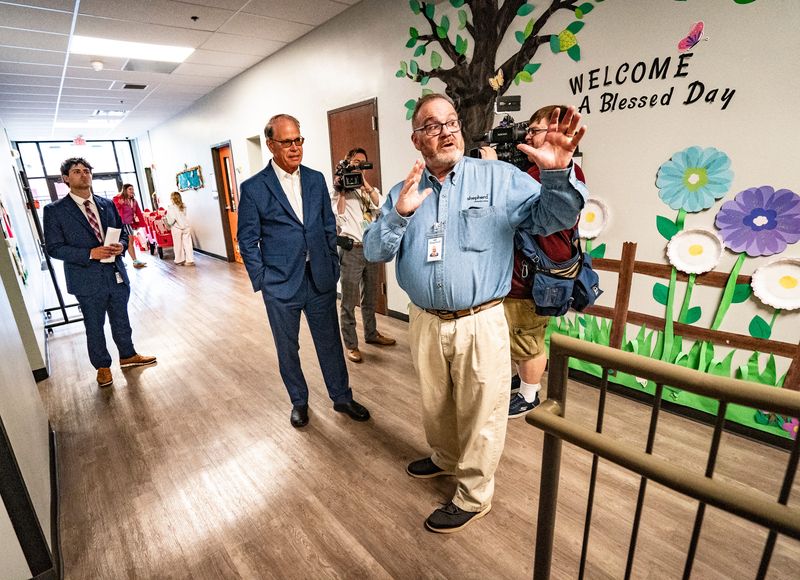
“I visited some child care centers that are already busting at the seams,” Braun said on July 21. “Clearly, with the amount of reserves that we’ve got, that gives us a lot of options other states wouldn’t have in terms of how we will devote it to [child care] and to other programs.”
Ordone said the CCDF cuts in September 2025 almost closed her four centers when enrollment cut in half. About 300 child care centers closed in the last year, and more than 200 of them attributed the closures to funding cuts.
What’s next for the proposed rule changes
Providers said some of the changes would be beneficial, such as allowing caregivers to start during background checks to reduce delays, guidance for trainings more aligned with federal rules and documentation changes.
Another round of public hearing on the proposed regulation will be scheduled for an undetermined date. The Office of Early Childhood and Out-of-School Learning may make adjustments to its proposed changes based on the first public hearing. The Office of the Attorney General and the governor’s office both have to review and approve the rule changes once finalized.
Braun said he would reevaluate the rule changes to make sure they weren’t stopping Indiana from expanding child care enrollment, in response to a question about concerns over quality. He also said he would be asking businesses to take on the costs of their employees’ child care. The exact details of this are unclear.
“If you’re going to do it at a high quality, you got to be concerned with how much money you’re spending and also that it’s getting to the right places,” Braun said.
Download the free IndyStar app and turn on notifications to get breaking news and sports alerts.
Lucy Tobier is the politics reporting intern for the Indianapolis Star. She can be reached at lucy.tobier@indystar.com or on X at @TobierLucy
This article originally appeared on Indianapolis Star: Gov. Braun wants to tackle child care affordability. Will loosening standards help?
Reporting by Lucy Tobier, Indianapolis Star / Indianapolis Star
USA TODAY Network via Reuters Connect
By Lucy Tobier, Indianapolis Star | USA TODAY Network