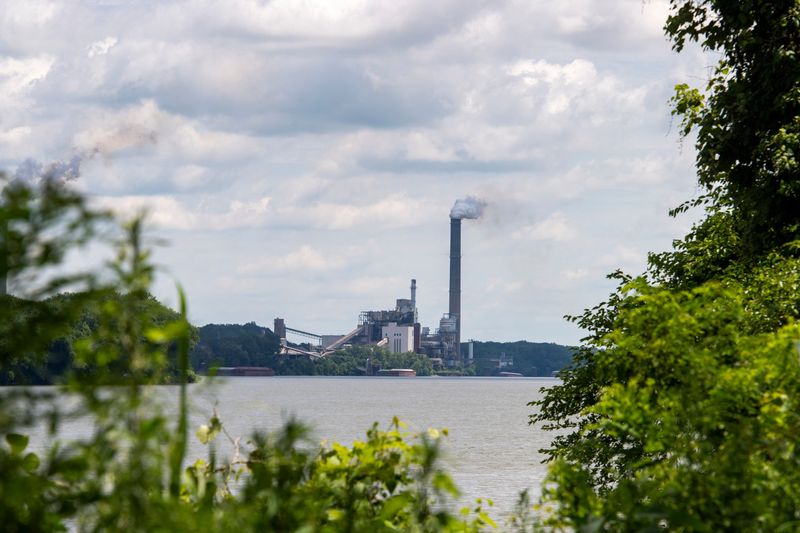
The federal administration’s push to revive coal power in the United States has sparked pushback not just from environmental activists but also from at least one of the companies that owns a coal plant targeted by the government.
Since May 2025, the U.S. Department of Energy has wielded emergency power to keep five coal plants across the country up and running, including two in Indiana.

In December, the DOE ordered two Indiana coal plants to stay online past their scheduled retirement, which had been planned for and previously approved by regional authorities. Litigation erupted in response to the federal interference, which environmental and consumer advocacy groups argue was illegal, unjustified and unnecessary.
A letter surfaced during discovery of one lawsuit revealed a utility company’s dissatisfaction with the DOE orders as well.
In a letter dated Feb. 17, 2026, Michael Roeder, the Indiana president of CenterPoint Energy, which owns one of the targeted coal plants in Warrick County, pled with U.S. Secretary of Energy Chris Wright in February to let the emergency order expire at the end of its 90 day term. The DOE had other ideas.
On the day the order was set to expire, the agency told CenterPoint to keep F.B. Culley Unit 2 operational — despite Roeder’s explanation that the coal plant is “inefficient,” “increasingly unreliable” and riddled with mechanical issues that could cost ratepayers millions.
Discord over the details
The DOE used the Federal Power Act, designed for emergencies, to supersede utility, state and regional grid planning that had approved shutting down Culley’s coal unit at the end of 2025. The emergency in question, the DOE said, was a looming energy reliability crisis.
The second round of orders, issued about a month after CenterPoint’s letter, said Culley played a critical role in responding to the winter storm that swept through Indiana in late January.
The Feb. letter from CenterPoint, however, painted a different picture of Culley’s usefulness. Roeder detailed how after the DOE initially ordered the plant online past its scheduled shut-down date, Culley Unit 2 saw weeks of limited use due to maintenance needs and outages due to equipment issues.
The unit is now facing an increased risk of catastrophic mechanical failure, Roeder said in the letter.
“Safe and reliable operation beyond March 2026 hinges on major and costly interventions,” he added. “Extending the life of Unit 2 is neither practical nor financially responsible.”
As of February, the unit needed an acid cleaning of its boiler, tube replacements and a turbine overhaul — all of which could cost ratepayers anywhere between $14 to $18 million and leave the plant inoperable for 10 weeks, according to Roeder.
Roeder’s letter leaves little doubt that it’s time to take the coal plants off line, environmental activists say.
“This letter shows that even utilities like CenterPoint admit that there is no grid emergency and that coal plants are too unreliable, expensive, and polluting to continue operating,” Ben Inskeep, program director of the local consumer advocacy group Citizens Action Coalition, which is involved in litigation against the DOE, said in a statement.
The federal orders keeping Culley and a NIPSCO coal plant in Jasper County online are next set to expire on June 21, 2026 though the DOE could issue a third emergency decree.
IndyStar’s environmental reporting is made possible through the generous support of the nonprofit Nina Mason Pulliam Charitable Trust.
Sophie Hartley is an IndyStar environment reporter. You can reach her at sophie.hartley@indystar.com or on X at @sophienhartley.
This article originally appeared on Indianapolis Star: Feds delay coal plant closure despite utility’s plea to shut it down
Reporting by Sophie Hartley, Indianapolis Star / Indianapolis Star
USA TODAY Network via Reuters Connect