Dozens of school districts are weighing whether to ask taxpayers for more money as the impacts of Gov. Mike Braun’s property tax reform continue to ripple across the state.
Some in Central Indiana, like Fishers, Noblesville, Westfield and Zionsville, have already moved forward with putting a referendum on voters’ ballots in the fall. Others, like Indianapolis Public Schools, are still working out the details.

When all is said and done, as many as 50 to 55 school districts across the Hoosier state could pursue referendums to plug funding gaps, said Terry Spradlin, executive director of the Indiana School Boards Association. That’s a dramatic increase from the six to 12 the state would see during a typical May or November election, Spradlin said, though some of the bump can be attributed to legislative changes dictating which elections can have a referendum on the ballot.
The flood of school referendums comes as districts continue to feel the effects of Senate Enrolled Act 1, a 2025 property tax overhaul that reduced a key funding source for schools, and prepare to split property tax revenue with charter schools. The problem has been compounded by nosediving enrollment across the country, driven by school choice expansion and declining birth rates, which is only further crunching revenue as fixed expenses like fuel, facilities and utilities rise.
The stakes for some districts are incredibly high: dramatic cuts in services, unpaid bills and even state takeover. And schools are likely to face resistance to their efforts, too, like schools who sought referendums last year did.
Voters likely to see referendum for IPS, charter schools
The funding situation is particularly dire for Indianapolis Public Schools, which is already experiencing a $40 million deficit.
The district’s operating referendum is currently 19.6 cents per $100 of property assessed value, but because revenue must now be shared with charter schools, the rate would have to significantly increase to put IPS in a good financial position, Superintendent Aleesia Johnson said at a meeting of the Indianapolis Public Education Corporation, the new board created to oversee both IPS and charter schools in its boundaries, on May 28.
Increasing the rate to 28.3 cents per $100 of property assessed value, for example, would still put the district in fiscal distress and a high likelihood of state takeover, Johnson said. That could lead to the displacement of 27,000 students, massive layoffs and the elimination of transportation services and innovation school agreements, according to a presentation presented at the IPEC meeting.
But IPS’ preferred rate of 55 cents, according to the same presentation, would cost homeowners with a home value of $200,000 an additional $25.49 per month.
The consequences of not passing a referendum could be severe for districts beyond just IPS. In a survey conducted by the IPEC, school district leaders said that absent a referendum, some schools will not have enough to pay their bills or afford transportation.
Which other Central Indiana districts will have referendums?
Central Indiana districts are taking different approaches to the referendum question.
Brownsburg Community School Corporation has opted to reduce expenses and secure a funding deal with town officials to delay having to put a referendum on the ballot this fall. Officials with Mooresville Schools have also said they are not pursuing a referendum this year.
But for the dozens of other districts that will seek a referendum, the burden of filling the gap will fall to taxpayers.
“Revenue constraints are a primary reason that [school districts are] moving forward with referendums,” Spradlin told IndyStar. “Districts are not trying to be expansive. They’re just trying to maintain services, maintain reasonable class sizes, maintain a highly qualified teacher workforce and pay teachers adequately.”
School officials in districts where the decision has already been made to move forward with referendums are making similar pitches to voters, who will decide on the referendums during the Nov. 3 election.
“The referendum question will ask voters to renew and extend the community investment that has helped sustain academic excellence, manageable class sizes, and student support throughout the district for more than a decade,” Zionsville Community Schools said in a news release sent to families in the district.
The Zionsville Community Schools Board of School Trustees voted unanimously on June 8 to approve a resolution placing an operating referendum question on November ballots. The district’s current operating referendum, approved by 76% of voters in 2019, expires in December 2027. This year’s proposal would increase the maximum levy from roughly 24 to 41 cents per $100 of assessed property value.
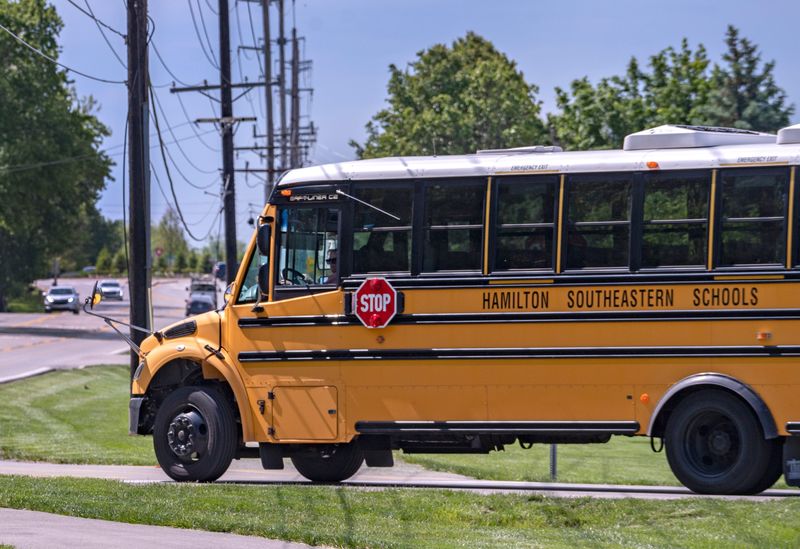
Officials in Hamilton Southeastern Schools also approved a resolution to propose a replacement to the district’s current operating referendum. HSE’s proposal includes a maximum rate of 36 cents per $100 of assessed property value over an eight-year term, opening the door to an increase in the current rate of just under 20 cents.
“In response to Senate Enrolled Act 1, the Board has referred this measure to voters,” Tiffany Pascoe, president of the HSE Board of School Trustees, said in a statement. “This referendum would help sustain the district’s long-term financial outlook, and preserve the programs, services and resources that support student success. The decision now rests with our community.”
HSE pointed to recent cost reductions through staffing position eliminations and operational efficiencies as evidence of its commitment to fiscal responsibility.
In neighboring Noblesville Schools, referendums have provided additional operational funding for the last 16 years. If a new referendum is not approved, about $25 million per year in funding — which is about 20% of the district’s operating budget—, will expire at the end of 2026, Noblesville Schools officials say.
“Referendum funding is central to being able to deliver the types of services our community expects for students,” said Dan Hile, superintendent of Noblesville Schools. “For example, things like offering top STEM (science, technology, engineering, math) programming, career and workforce development training, recruiting and retaining strong teachers, school safety, mental health services, extracurricular opportunities, and small class sizes.”
The current referendum rate in Noblesville is 36 cents, and the new proposed maximum rate is 57 cents. Noblesville school officials point to the impacts on revenue from Senate Enrolled Act 1 as justification for the higher proposed rate.
The Westfield Washington Schools Board of School Trustees, on June 9, also voted unanimously to adopt a resolution to place an operating referendum on the ballot in November, while officials in Carmel are still deciding if they should ask voters to weigh a referendum this year.
The deadline for school boards to make a decision on having a referendums and send their ballot questions to the state Department of Local Government Finance is July 22.
Referendum resistance likely
Some school referendums are expected to face opposition in the fall, similar to the Avon Community School Corporation referendum that Indiana Lt. Gov. Micah Beckwith publicly opposed in 2025. Avon’s referendum was approved by voters despite the opposition.
But another district that faced opposition, Northwest Allen County Schools, could be a cautionary tale to the schools seeking more funding this year. NACS faced an advertising and boots-on-the-ground campaign against the referendum from a local chapter of the powerful political advocacy group Americans for Prosperity, which one referendum organizer credited as one of the reasons the proposal failed.
“School systems believe they are entitled to unlimited amounts of your money,” conservative talk show host Rob Kendall said on a June 11 episode of The Rob Kendall Show. “They believe it’s a birthright. Because of the property tax bill, other than changing when schools can go for referendums, there’s nothing that stops them. There’s no punishment if they lose.”
Kendall, on his show, said he may assist in trying to defeat some school referendums on the ballots in November. Spradlin, of the Indiana School Boards Association, said he isn’t expecting everybody to be in favor of the referendums.
“We would hope our politicians, elected officials, special interest groups all see that value and what’s at stake,” Spradlin told IndyStar. “We’re still the schools of choice. We’re still educating more than 92% of all kids in Indiana and over a million students. And we’re an anchor institution for communities.”
Contact Jake Allen at jake.allen@indystar.com. Follow him on X, formerly Twitter, @Jake_Allen19. Click here to get Hamilton County news sent straight to your inbox and subscribe to the IndyStar North newsletter.
Contact breaking politics reporter Marissa Meador at mmeador@indystar.com or find her on X at @marissa_meador.
This article originally appeared on Indianapolis Star: Expect a flood of school referendums this year. Here’s what local schools are doing
Reporting by Jake Allen and Marissa Meador, Indianapolis Star / Indianapolis Star
USA TODAY Network via Reuters Connect
By Jake Allen and Marissa Meador, Indianapolis Star | USA TODAY Network