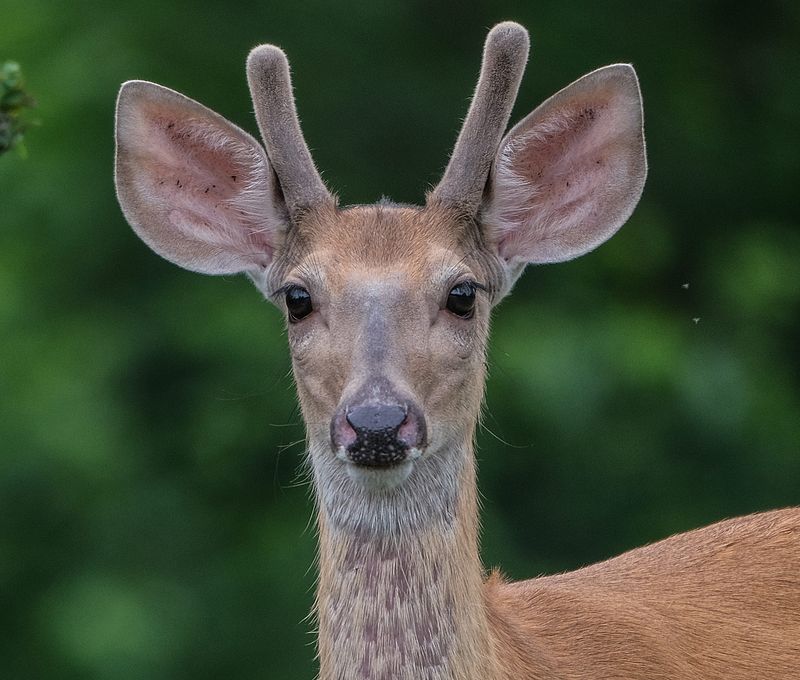
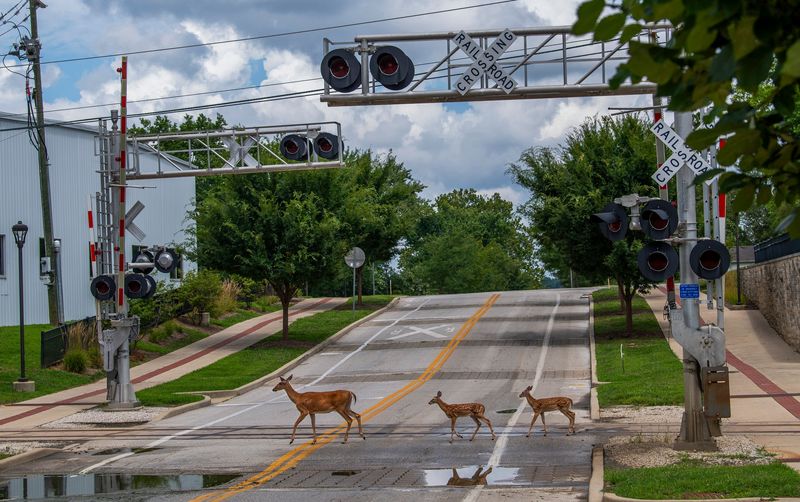
Take extra caution when driving on state and county roads this season. Deer vehicle collisions peak this time of year in Indiana, with forested counties in south-central Indiana seeing some of the most accidents.
According to the Indiana Department of Natural Resources (DNR), deer vehicle collisions peak between September and December, as deer mating season begins and bucks cross the road with more frequency — and abandon.

In all, there were 16,951 deer-vehicle collisions reported to the DNR in 2023.
What’s more, several factors put south-central Indiana at risk for more frequent deer-vehicle collisions, from densely forested areas to a concentration of parks and nature reserves that keeps the deer population high.
Where are deer crashes most common in Indiana?
Deer crashes occur throughout Indiana, but some of the areas where crashes are most commonly reported include the wooded regions of southern Indiana and the northeastern corner of the state near Michigan, according to the DNR’s latest annual white-tailed deer report, which includes data about when and where deer-vehicle collisions occur.
According to the DNR, eight of the 20 counties where deer-vehicle collisions are most common are in southern Indiana. Just east of Monroe County, Brown County had the third most deer-vehicle collisions per billion miles traveled, with 132 collisions reported in 2023. Neighboring Orange, Greene and Lawrence counties also have among the highest crash rates in the state.
Where do deer-vehicle collisions happen in Bloomington and Monroe County?
The DNR report doesn’t get super specific about where in a county a deer-vehicle collision occurs, but the city of Bloomington’s traffic crash map includes data about crashes involving animals or objects in the road.
While that leaves some ambiguity about if a crash involved a deer (or an animal at all), it still gives a good idea of the areas where accidents are most likely.
Unsurprisingly, the areas where crashes are most common are semi-rural, most frequently on state or county roads. Areas with high concentrations of accidents include the I-69 and Ind. 36 juncture, the area north of Bloomington off Ind. 46, and the Ind. 45-46 Bypass.
The highest semi-urban setting where crashes occur is on the Ind. 45-46 Bypass, around the northeast side of Indiana University’s campus and the Pfau golf course. The bypass intersections on Seventh and 17th streets have some of the largest clusters of accident reports.
How can I avoid hitting a deer?
Here are a few tips from the DNR for avoiding deer-vehicle collisions:
Unfortunately, hitting a deer is sometimes inevitable due to timing or distance. Here’s what the DNR recommends if you have hit, or are imminently going to hit a deer:
Reach Brian Rosenzweig at brian@heraldt.com. Follow him on X/Twitter at @brianwritesnews.
This article originally appeared on The Herald-Times: Deer-vehicle collisions in Indiana peak in November. What to know.
Reporting by Brian Rosenzweig, The Herald-Times / The Herald-Times
USA TODAY Network via Reuters Connect