A Trump-backed state senate candidate is still fighting to win a tight election by making an unusual legal claim that voters’ social media posts exposed that they voted illegally under an obscure state law.
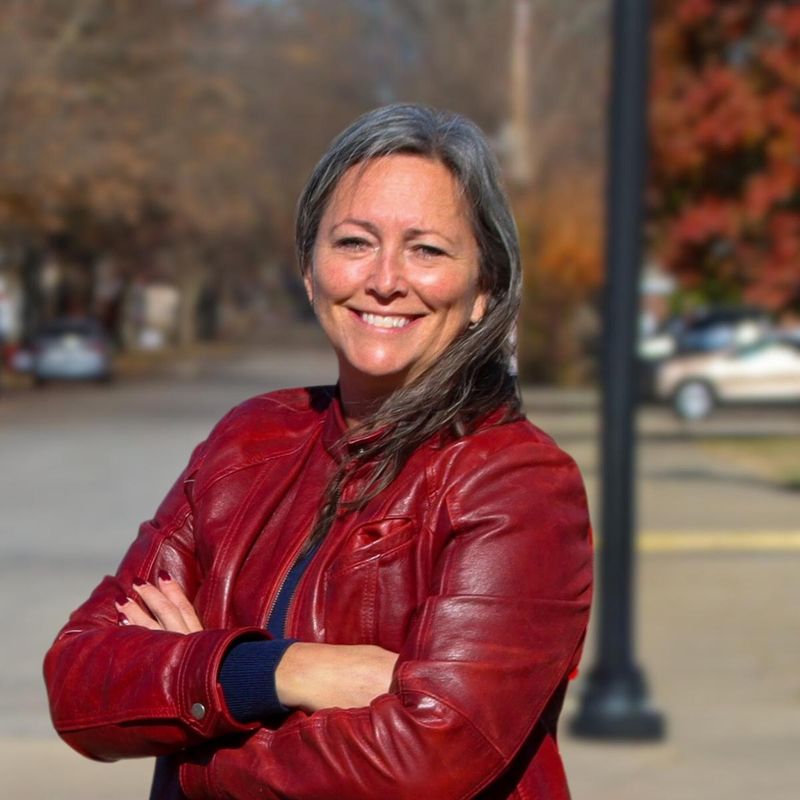
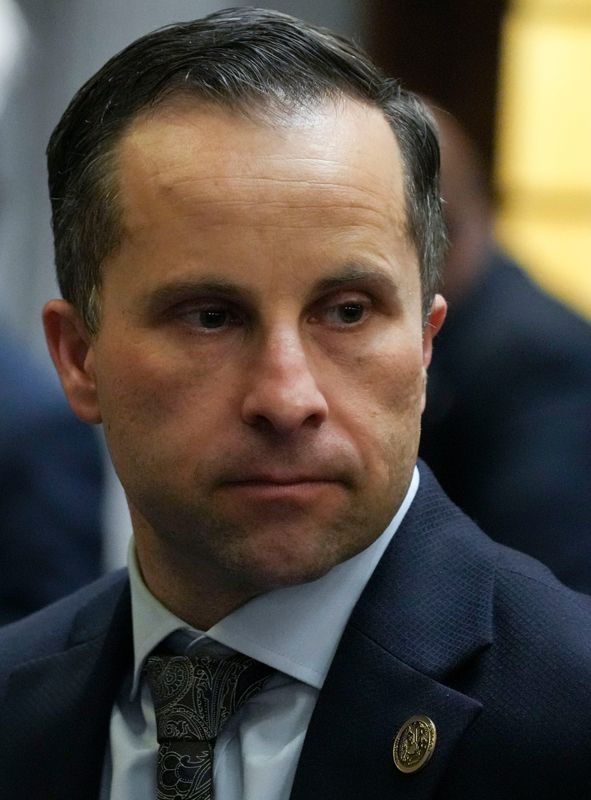
Republican Paula Copenhaver was one of many primary challengers seeking to defeat Indiana senators who defied U.S. President Donald Trump’s demand to redraw Indiana’s congressional district boundaries to favor Republicans. She was vying to unseat incumbent state Sen. Spencer Deery of West Lafayette, but lost by three votes in the May 5 primary.

In her request for a recount, Copenhaver argues that social media posts and interviews with a journalist prove that several Democratic voters wrongfully crossed over to the Republican primary, swinging the election in Deery’s favor. The crossover voting warrants investigation, she claims.
Her argument hinges on a largely unenforced Indiana law that many voters, advocates and experts say they have never heard of. Her method of challenging voters in a recount is likely a first in Indiana and appears to conflict with the state’s enforcement interpretation.
“It’s unprecedented to challenge voters the way Copenhaver is, even wanting to comb through their social media,” said Amy Courtney of voter advocacy group MADVoters in an email. “The real question is whether we want a government spending time and energy monitoring our social media statements and inspecting our private votes.”
One of the affected voters was Noemi Ybarra, who lives in Tippecanoe County. Copenhaver initially challenged her vote, but suspended the challenge after it became clear that Ybarra lived outside of the senate district.
Ybarra said on Facebook that she thought about potentially pulling a Republican Party ballot, but she didn’t end up doing so. She only learned her vote was challenged when a local journalist reached out.
“If they want to police what I say on social media, they’re going to waste a lot of time,” she said. “It’s a foolish thing to be going looking at people’s social media posts, true or not, and then kind of generate some legal thing to invalidate votes.”
Some Indiana Republicans, including Lt. Gov. Micah Beckwith, are pushing to require voters to register with a party to vote in a primary election. This effort to “close” primaries follows multiple pushes over past elections to cross party lines in primary elections. Legislation is expected to be filed next session, though similar bills failed in recent years.
Copenhaver: Voters tried to ‘game the system’
The Copenhaver campaign’s argument is centered on a decades-old Indiana law requiring voters to have voted for the majority of a party’s candidates in the last general election to be eligible to vote in a primary. If they didn’t vote in the last general election, the law says the voter should pledge their intention to vote for most of the party’s candidates in the next one.
Several voters tried to “game the system” unlawfully, Copenhaver’s petition says. The recount petition argues the public comments of 11 voters prove they did not comply with the law and that their ballots shouldn’t be counted. She paused her challenge of three other voters she identified through social media, including Ybarra, after learning they did not live in the district.
“The presumption of legality is overcome by the evidence of the identified voters publicly disclosing that they unlawfully requested Republican ballots by crossing party lines and voting in Indiana State Senate District 23’s Republican Primary despite lacking the Republican affiliation required by Ind. Code,” one of Copenhaver’s legal filings reads.
As far as the Indiana Secretary of State’s office knows, Copenhaver’s challenge is the first of its kind, said Lindsey Eaton, a spokeswoman for the office.
However, Copenhaver may not have standing to challenge voters after the fact.
The law’s enforcement mechanism relies on voters challenging each other when at the polls. Matthew Kochevar, Indiana Election Division co-general counsel, said in an email that a challenge has to be made before the voter has completed signing the pollbook and been given their ballot. The challenged voter would then fill out an affidavit declaring how they voted at the last general election or their intentions for the next one.
He didn’t have any data, but Kochevar said challenges under this statute are pretty rare. He said he’s only seen a single-digit number of such challenges in his nearly 12 years working for the election division.
IndyStar reached out to Copenhaver, but did not receive a response.
A number of election and state government experts and advocates told IndyStar the law was so obscure they’d never heard of it or seen it be enforced. People often change their minds, Indiana University law professor Cynthia Baker said, and enforcing this law could potentially be awkward and labor-intensive.
“I was unfamiliar with this statute and surprised to learn it exists, considering how common it is for voters to select a primary ballot for the ‘other’ party,” Courtney said. “We even saw billboards encouraging Democrats to vote in the 2024 Republican primary. The billboards didn’t spark a discussion about this statute, so it seems unfamiliar to most people.”
What did voters say on social media?
The petition and other filings challenge voters who posted on Facebook or spoke with Lafayette-based journalist Dave Bangert for a story. The comments targeted in the challenges involved crossing party lines to vote in the Republican primary. Many explicitly mentioned doing so to vote against Copenhaver.
Her legal filing asks the Indiana Recount Commission to subpoena these voters for further questioning on their voting history, candidate selections and eligibility. Since they made their votes and their ballot choice public, the petition arguea that they have lost their right to ballot secrecy.
Some of the flagged comments include:
Copenhaver’s attempts to invalidate votes using social media comments are “ridiculous and desperate,” Ybarra said. It makes her want to take a Republican ballot next time.
Ybarra recalled a number of people she knows who have voted in the Republican primary because that was the only ballot with multiple candidate options. Voting in a Republican primary is also where people can actually have a say in who leads a community, she said, since gerrymandering has made general elections in many areas shoo-ins for Republicans.
If subpoenaed, she said she would likely not give up information about who she voted for.
“My answer is none ya,” she said. “I’d probably show up in court and I would just tell them what actually happened and not tell them who I voted for or who I intended to vote for because it’s really none of their business.”
Deery’s campaign also had strong words for Copenhaver’s argument. His campaign’s attorney, Samantha DeWester, said in a statement that the challenge targets First Amendment-protected speech and is a case of “sore-loser syndrome.”
“We vote anonymously in Indiana, and to insinuate that voters should be deposed or that votes should be tossed is insane, illegal, and unprecedented,” she said. “This is nothing more than a fishing expedition at the expense of voter trust and election integrity.”
What’s the timeline for a recount?
The recount process is expected to take over a month before reaching a conclusion.
So far, a director has been appointed to coordinate the district’s recount proceedings, Eaton said, and the Indiana State Police have overseen the impoundment of election equipment and materials in the counties where recounts are being held.
The Indiana Recount Commission will hold a public hearing likely during the week of June 15-19 to deliberate and decide on Copenhaver’s argument, other motions and pre-recount matters.
The public recount will begin the week after and go through July 3 or longer if necessary. The commission will then hold public meetings in early July to go over the recount reports, hear challenges from candidates and make final decisions.
The USA TODAY Network – Indiana’s coverage of First Amendment issues is funded through a collaboration between the Freedom Forum and Journalism Funding Partners.
Have a story to tell? Reach Cate Charron by email at ccharron@indystar.com, on X at @CateCharron or Signal at @cate.charron.28.
This article originally appeared on Indianapolis Star: Can a social media post nullify your vote? Indiana recount tests obscure law
Reporting by Cate Charron, Indianapolis Star / Indianapolis Star
USA TODAY Network via Reuters Connect