Over the years writing this column, I’ve occasionally faced criticism for focusing too much on the gas boom.

I’m totally guilty of this. The gas boom era, roughly 1886 to 1910, is a fascinating study because of how dramatically it transformed Muncie within a generation. The boom permanently altered the landscape, culture and socioeconomics of not only Muncie, but also nearby Anderson, Tipton, Noblesville, Kokomo, Marion, Hartford City, Portland and many other small towns in between.
Most cities in East Central Indiana had begun industrializing in the two decades before the boom. New railroads, investment capital and post-Civil War technologies had expanded manufacturing capacity.
The railroads also compressed time and space, connecting Muncie to the East Coast in about a day. Trains lowered shipping costs for incoming raw materials and trade goods, while widening the market for Delaware County industrial and agricultural products.
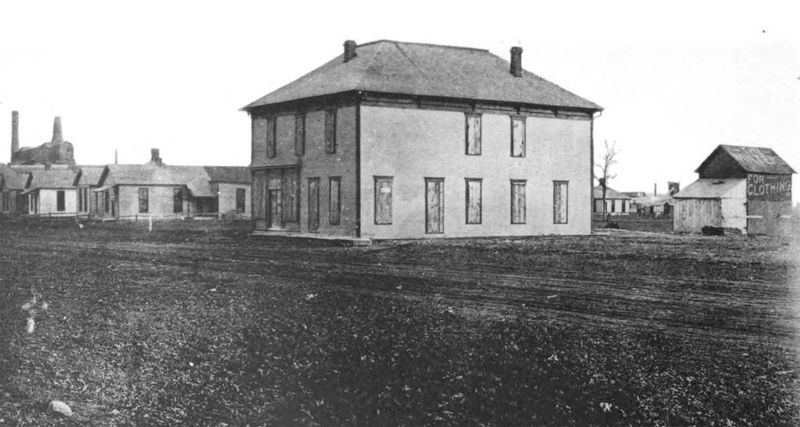
After prospectors near Eaton discovered the rich Trenton Gas and Oil Field in 1886, Muncie burst at the seams with new people and factories. Manufacturing plants sprung up near gas wells and railroads. New suburbs sprawled out into the Center Township countryside — housing for a growing population.
By 1910, Munsonians had transformed our little river town from a sleepy 1870s backwater into the Magic City of the 20th century.
At this same time, massive cultural change swept across American society. The 1890s alone were wild years as the Gilded Age gave way to the Progressive Era.
The decade was marked by fierce debates about gold- and silver-backed currency, speculative railroad bubbles, populism, culture wars over liquor and sex, vaudeville and kinetoscopes, United States imperialism, women’s suffrage, violent labor strikes and political unrest, global economic depression, vast income inequality, racial segregation, lynchings and domestic terror, rapid urbanization and yellow journalism. In 1893, historian Frederick Jackson Turner declared the “American Frontier” closed.
Adding to this, runaway technological “progress” transformed nearly every part of American life as telephones, electricity, scientific medicine, indoor plumbing, streetcars, typewriters, phonographs and bicycles became widespread.
These same forces revolutioning America in the 1890s also redefined gas boom-era Muncie.
The city’s population skewed young during the boom, reflecting the influx of new factory and clerical workers. The 1880 census recorded a mere 5,219 Munsonians and 22,926 Delaware County residents. By 1910, the population had risen to 24,005 and 51,414, respectively. Most new Munsonians came from rural Indiana and Ohio and the upper south.
To absorb the resulting baby boom, city and county officials opened several new schools: Avondale and Washington (1889), Jackson (1890), Blaine (1893), Lincoln (1895), Jefferson (1898), Garfield (1901), Roosevelt (1902), McKinley and West Longfellow (1906), Harrison (1909), Riley (1913) and Forest Park (1914). The original 1879 Muncie High School building was replaced by a new Central High School in 1915.
Muncie’s growing population reshaped local politics from rural to urban interests. Adding to the complexity, Indiana was a swing state in the 1890s, drawing national attention during general elections.
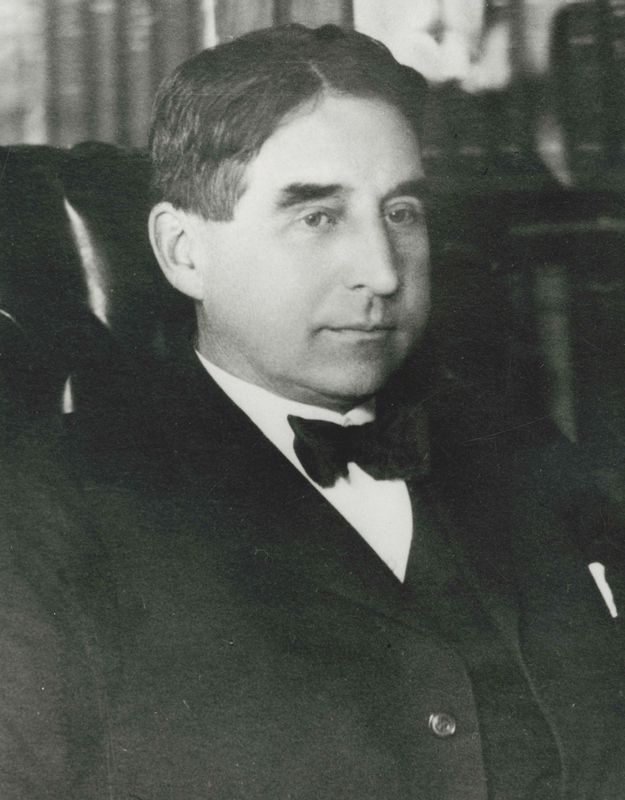
Like much of the Gilded Age, patronage and political machines dominated local, state and federal government. Beginning in the 1880s, political reformists at all levels pushed for change. In 1891, local Munsonian G.O.P. defectors joined Democrats to elect a reform-minded city council and Democratic Mayor Arthur Brady.
Brady was a young, well-known lawyer. His father, Thomas, was a famous Civil War colonel, publisher and diplomat. Arthur’s grandfather, John, was the first mayor of Muncie in 1865.
Brady’s term in office (1891 to 1895) was tumultuous as the city struggled to adapt its government during the boom.
For instance, Muncie’s new metropolitan police department was too small to effectively enforce alcohol, gambling and prostitution laws in the 1890s. The city earned a reputation as a wide-open town, a place where authorities turned a blind eye to vice.
Emerson’s 1893 city directory listed 53 saloons in Muncie. By 1899, there were 71. There’s no comprehensive record of brothels, but 1893 newspaper reports documented raids at Lulu Shoemaker’s on Willard, Mother Pierce’s on Vine and Kate Phinney’s on Liberty Street.
Vice aside, the decade buzzed with modernization. The 1893 Chicago World’s Fair showcased the era’s most forward-thinking ideas. Many prominent Munsonians attended, including Mayor Brady. The fair’s influence shaped Munsonian architecture, parks, public art and boulevards for decades.
When Brady returned here in late summer, he discovered the Magic City in distress. The Panic of 1893 had crashed financial markets, triggering a nationwide depression.
Munsonians escaped the worst of it, but not unscathed. After Citizens’ National Bank failed in August, prominent local businessmen publicly guaranteed deposits of up to $3 million to prevent a bank run. One was Hardin Roads, who helped launch Merchants National Bank that same year. Today, we know it as First Merchants Bank.
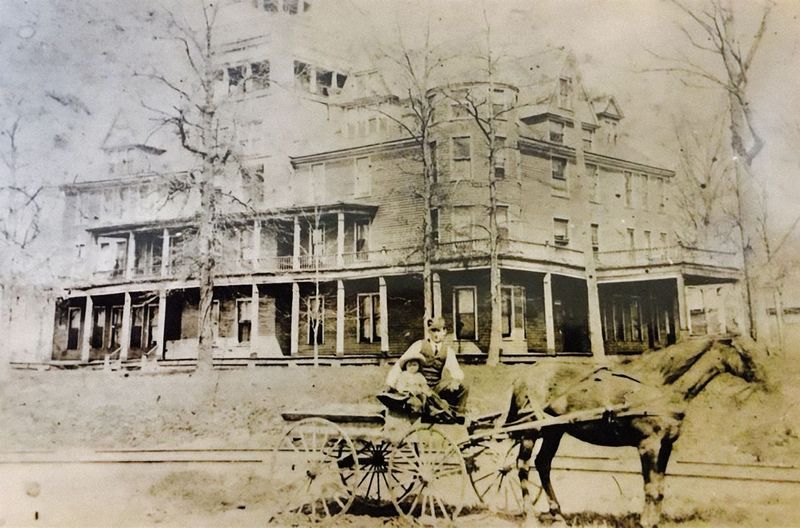
Citizens’ National wasn’t the only failure in 1893. The resort village of West Muncie in Mt. Pleasant Township also went bust. The previous fall, overleveraged developers had dammed Buck Creek, flooding a valley just south of Yorktown to create a resort known as “Lake Delaware.” Boosters even built a three-story hotel to welcome guests who never arrived.
To make matters worse, Munsonians faced a smallpox epidemic in 1893. The deadly infection spread through Avondale and Industry in late summer. Conditions became so severe that Indiana’s State Board of Health quarantined the entire city from Sept. 7 to Nov. 4. In all, 150 Munsonians were infected and 22 died.
However, it wasn’t all doom and gloom. Mayor Brady gave away his sister, Bessie, when she married glass jar manufacturer Frank Ball on All Saints’ Day in 1893. The Muncie Daily Herald called it “one of the prettiest events of the season.”
The marriage was historically significant because it helped cement Ball Brothers Glass Manufacturing in Muncie for most of the 20th century. 1893 was also the year gas pressure in the Trenton Field began to decline. By the early 1900s, the boom was fading and many manufacturers left in search of cheap energy elsewhere.
But the Balls stayed. In fact, the brothers moved all operations to Muncie by 1900, even as the gas dwindled. Four of the five Ball brothers ran the company, but Frank and Edmund were the principal proprietors. Frank’s marriage to Munsonian Elizabeth “Bessie” Brady and Edmund’s marriage to Hoosier Bertha Crosley in 1903 helped root the Ball family in Indiana in a way many other gas-boom industrialists never were.
So 130 years later, it’s hard not to draw comparisons between the 1890s and our own wild decade of the 2020s. The circumstances and players are different, but the pace of transformation and strain on public institutions is similar.
Perhaps there’s some comfort in knowing our ancestors lived through similar chaotic times. They may have emerged battle-worn and scarred, but no less determined to build a better future.
Chris Flook is a Delaware County Historical Society historian and senior lecturer of media at Ball State University.
This article originally appeared on Lafayette Journal & Courier: ByGone Muncie: 1893 was a wild year during boom times
Reporting by Chris Flook, Muncie Star Press / Lafayette Journal & Courier
USA TODAY Network via Reuters Connect