According to long-range forecasts from the Farmers’ Almanac, we are expecting to see a “scorcher of a summer” across the country this season, which could cause overheating phones and battery damage.
The recent heat index in Illinois is reaching dangerous levels, with many areas experiencing heat index values between 100-115 degrees Fahrenheit. Specifically, the National Weather Service is reporting heat index values between 105-110 degrees in many northern Illinois locations through Tuesday. Some areas in southern, west-central, and north-central Illinois are under an Extreme Heat Warning, with heat index values potentially reaching 115 degrees, according to the Peoria Journal Star.

Both the iPhone and Samsung’s Galaxy line of smartphones are built to operate from 32 degrees to 95 degrees Fahrenheit, reporting from the USA TODAY Network shows. Apple notes using your iPhone in very hot conditions “can permanently shorten battery life.”
Apps and games can also clunk up processing capabilities of your phone, causing it to heat up.
Apple also warns users to start their device within a specific temperature range: minus 4 degrees to 113 degrees Fahrenheit. Don’t leave your device in your car, the company warns, because temperatures in parked cars can exceed this range.
Here’s what to know about keeping your phone cool this summer:
What causes your phone to warm up?
Leaving your device in a car on a hot day, leaving in direct sunlight for an extended period of time and using certain features in hot conditions or direct sunlight for an extended period of time are all factors that contribute to a hot phone.
Charging your device can cause it to heat up a bit, too, whether wirelessly or via a cord.
How do I know whether my smartphone is heating up?
Your iPhone or Galaxy phone will give away signals that it’s starting to reach a point where they’re getting too hot.
Samsung notes that “access to certain features/functions may temporarily freeze as a means to protect the device” when it crosses heat thresholds.
On the iPhone, Apple said the device will make several adjustments, including slower charging, dimmer displays, and the flashlight and flash for photos are disabled.
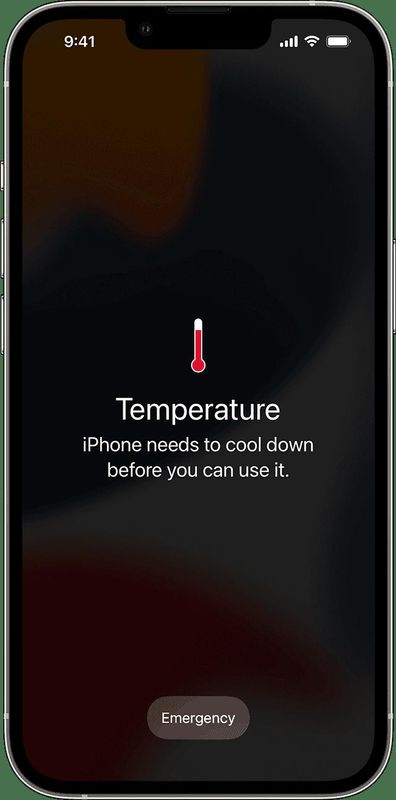
Once your phone gets too hot, it will display warnings that the device needs to cool down before you can use it again. Both iPhone and Galaxy models will still allow you to make emergency calls during that time.
“If the device overheats or reaches a certain temperature, a warning message will appear to prevent device failure, skin irritations and damages, and battery leakage,” Samsung says. “To lower the device’s temperature, the screen brightness and the performance speed will be limited and battery charging will stop. Running apps will be closed and all calling and other features will be limited, except for emergency calls, until the device cools down.
“If a second message appears due to a further increase of the device’s temperature, the device will turn off. Do not use the device until the device’s temperature drops below the specified level,” the company adds.
What should I do if my phone gets too hot?
If your device gets too hot, turn it off, move it to a cooler environment (away from direct sunlight), and allow it to cool down, according to Apple.
“iOS and iPadOS devices have built-in protections to prevent overheating. If the interior temperature of your device exceeds the normal operating range, your device will protect its internal components by attempting to regulate its temperature,” Apple says.
My phone shut down from the heat — now what?
Don’t panic. Most modern devices have safeguards, and automatic shutdowns are part of the plan. Take your smartphone out of your pocket and put it somewhere out of the sun as soon as possible.
Contributing: Linda Roy, Galesburg Register-Mail
This article originally appeared on Detroit Free Press: Recent Illinois heat indexes can have harsh affects on smartphones. Keep yours protected
Reporting by Jalen Williams and Amy Robinson, USA TODAY Network / Detroit Free Press
USA TODAY Network via Reuters Connect