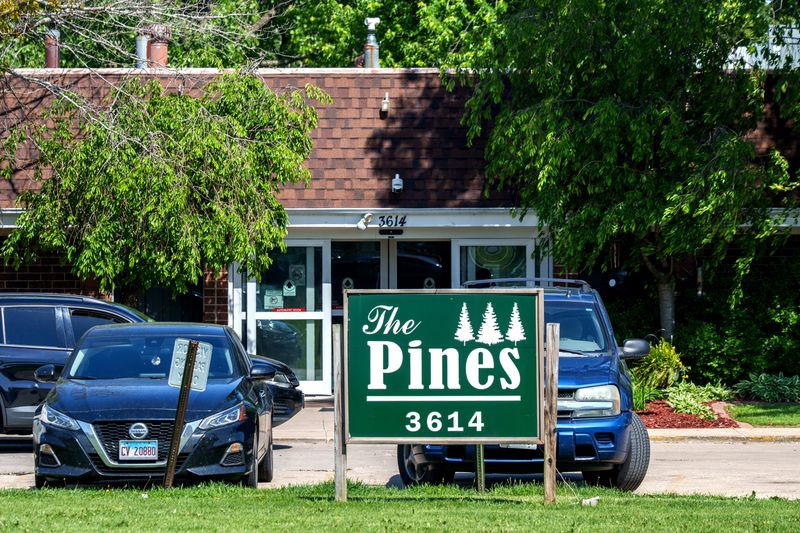
A Peoria nursing home received over $50,000 in fines from the Illinois Department of Public Health for three separate violations of state rules for resident care in the second half of 2025.
Sharon Health Care Pines received fines for not keeping residents safe and not ensuring residents weren’t subjected to abuse on three separate occasions in July 2025; for not intervening to prevent residents from eloping in August 2025; and for not ensuring that their infection preventionist was allocated at least 40 hours at the facility. For the abuse cases, Pines was fined $25,000 each, while the elopement and preventionist case saw it fined $2,200.

In the first abuse case, Pines is accused of failing to implement plans to assess abuse risk, to the point where a man suffered a hip injury that required surgery. According to a report from IDPH, the man had been involved in an altercation with another man on July 15, which led to him falling to the floor and struggling to get up.
He was sent to an emergency room for an evaluation, which led to the diagnosis of a broken femoral neck, a type of hip fracture, and surgery to repair it.
The report said the man had severe cognitive impairments and was diagnosed with schizophrenia, dementia, a mood disorder, involuntary muscle movements, hypertension and seizures. Pines provided his care plan, which showed that staff reported the man could be difficult to deal with, having a tendency to take food and drink off of people’s desks and trays.
The other man had been diagnosed with an intercranial injury, facial weakness stemming from a ischemic stroke, insomnia, depression, thrombosis and high cholesterol. His care plan said that he could be impulsive and aggressive, also not taking his medication because he felt he didn’t need it at times.
The pair crossed paths on July 15 at 8:45 a.m., with a certified nursing assistant saying that the man had taken his tray to the trash before turning around and grabbing the other man’s oatmeal. The other man then proceeded to push him to the floor before staff could intervene.
The home’s incident report largely matches up with this description, saying that the man lost his balance and fell to the ground. The other man told investigators with IDPH that he only pushed him because he had taken his oatmeal, not pushing him that hard.
Notes from the man’s visit to the emergency room said that he came complaining of hip pain, with X-rays of his left femur showing showing the fracture. He was admitted to the hospital’s orthopedic surgical unit.
Four days after the incident, investigators spoke with the other man again, who detailed how he was eating breakfast in the dining room when the man took his oatmeal. He tried to get the oatmeal back and pushed the man’s hands away, leading to the man losing his balance and falling.
A hospital liaison told investigators that same day that the man would need several weeks of physical therapy following the incident, saying that his condition had declined since he was hospitalized. They also said that the man had been ambulatory even before the fall, saying a mechanical lift was needed to transfer him.
Second incident at Peoria nursing home
In the second incident, a man reportedly put his hand to the back of another resident’s pants for several seconds on July 17, with a certified nursing assistant reporting it to administrators. The man suffered from an intercranial injury, anxiety, insomnia, a traumatic brain injury, antisocial personality disorder, bipolar disorder, explosive disorder and cognitive disorder, according to his medical records provided to IDPH.
The man was found to have severe cognitive impairments and displayed socially and sexually inappropriate behaviors, with inappropriate comments, attention-seeking behaviors and child-like behaviors at times.
A certified nursing assistant provided a statement that said that the two residents, who were roommates, had been holding hands, which he didn’t feel was inappropriate at the time. After he went to check on another resident, he went back to the room and saw the man’s hands down his roommate’s pants.
The nursing assistant confirmed this statement while speaking with IDPH investigators, saying that he separated the two after the incident, with the man moved to another unit at the facility. The statement and interview matched up with the facility’s incident report, which said that the pair were placed on 15-minute checks as a result of the incident.
IDPH’s report said that none of the medical records provided had any kind of abuse risk assessment or plan for care if they were abused. A staff member told IDPH on July 21 that abuse risk assessments had not been done due to the population of the facility. They did confirm that the incidents reported took place.
In the third incident, the facility was once again accused of failing to protect residents from physical abuse, leading to one of them suffering a hip injury that also required surgery. IDPH’s report said that on July 22, a man and another resident got involved in an altercation at the home’s smoking patio which led to the man being hospitalized with a fractured hip.
The man’s care plan showed that he suffered from daily delusions and responded to auditory hallucinations. Staff had noted that he could become agitated. The man suffered from schizophrenia, depression, dementia, muscle control issues, hypertension, a low platelet count, acid reflux, high levels of bad cholesterol, an enlarged prostate, bladder dysfunction and stage four chronic kidney disease.
However, he was alert and oriented to person, place and time.
According to the man’s progress notes, the man was lying on the patio after the altercation complaining of hip pain. He stated that his right hip hurt, although he was down on his left side near his wheelchair. He was sent to an emergency room for an evaluation.
At the emergency room, the man told physicians that he didn’t want to return to the home due to the other residents. Radiology reports showed a complex fracture of his left hip, which would require surgical repair.
The other man involved in the incident told staff that the man had been saying things to make him angry. The man’s care plan reported that he had behavioral problems, with a history of socially inappropriate behaviors. He was said to be verbally and physically aggressive, with a tendency to be intrusive and willing to destroy property.
He was also said to be delusional in terms of his thought process regarding his effects and the safety of himself and others. He suffered from encephalopathy, diverticulosis, mood disorder, a paraphilia, seizures, heart disease, chronic embolisms and thrombosis, alcohol abuse and obsessive compulsive disorder.
Two residents spoke about the incident to investigators, with one saying that they had noticed the pair bickering back and forth before the other dumped the man out of the wheelchair, causing the injuries. The other resident said that the man had been sitting in his wheelchair, yelling out while the other man was yelling back.
Another resident had to get in the middle of them and was punched in the face in the process. He told investigators that the man who fell from the wheelchair was yelling out in pain and couldn’t get up.
An administrative abuse coordinator told investigators that the incident was an impulsive one, with many of the residents suffering from traumatic brain injuries, differentiating it from abuse.
Fines for allowing residents to leave the premises
Pines was also cited for not implementing safety interventions on residents who were restricted from leaving the premises. It was also cited with not educating staff on identifying those on restricted passes and failing to assess residents after elopement.
IDPH’s report said that the first resident left the facility in a taxi on Aug. 24, 2025, before staff could stop her from getting out the front door. A nurse had to call the cab company in order to return the resident back to Pines.
An assessment of the woman provided to IDPH showed that due to her schizophrenia, she was not allowed to have unsupervised outside community passes. She also didn’t know the address of the facility or who to call if she got lost.
A psychiatric evaluation conducted two months prior to the incident showed that she experienced paranoia and struggled to take her medication. Her paranoia led to a hospital stay in February 2025, and she also had a history of delusions, such as believing her food had been poisoned. She also reported auditory hallucinations.
She was said to have a “scattered thought process” and had poor insight and judgment. She had been diagnosed with disorganized schizophrenia, bipolar disorder, delusional disorder, personality disorder and anxiety. She was considered independent but did require some ambulation.
Even two days after she left the home, her care plan did not include any safety interventions or documentation of her pass restriction, despite documentation that she wasn’t capable of unsupervised community access. That same day, she was observed by investigators saying that she remembered calling a taxi trying to leave the facility and go anywhere but the facility.
She said that it was too loud and there was too much going on, even asking investigators they could help get her out of the facility.
The next day, a social services director said that she had conducted the assessment showing the woman’s poor decision-making skills and poor awareness of safety. She said that the woman was paranoid and wouldn’t be able to ask for help or know who to call if she got lost.
A registered nurse told investigators that the woman had called the cab from her cellphone and left without staff supervision. The nurse had to contact the cab company to tell them that the woman was a resident, couldn’t pay for the ride and had to be returned.
The driver returned her to the facility. However, the incident wasn’t documented because the director of nursing said that she would chart the note, also saying there were staff shortages that day that led to a high workload.
A security officer told investigators that at 3 p.m. on Aug. 24, 2025, he found the woman on a cellphone outside the facility and did not consider it to be unusual. However, after he clocked in for his shift, he returned outside to see the woman entering the cab. He said that she didn’t have permission to leave, but she instructed the driver to drive away, so they left the facility.
He then informed staff of the elopement, saying that the front desk has a binder showing who has a pass and who doesn’t. Another security officer said that residents were required to check in with security and sign out before they leave the facility.
That security officer also told investigators that he was not familiar with the resident, noting that he typically works as a housekeeper and moonlights in security on occasion. He was unaware that the woman had left the home while he was on his shift.
The manager of the taxi service told investigators that the woman had called shortly after 2 p.m. to be picked up from the facility. The driver called her back without an answer, meaning that he didn’t go to pick her up. However, at 3:11 p.m., another call came in that was successful. By 3:15 p.m., she was picked up from the facility and returned between 3:35-3:45 p.m.
A certified nursing assistant told investigators that anyone who leaves without permission and returns is placed on a 15-minute check. This didn’t apply to the woman, even though she had been leaving and returning on a frequent basis.
Another CNA criticized the facility for not having good communication practices, saying that there were too many residents and no reasoning for why someone would be on a 15-minute check.
A third CNA said that she wasn’t aware of the elopement, but did say that the woman had expressed thoughts about wanting to leave. She said that the resident was new at the home and new residents were on a probationary period when it came to leaving the premises. In terms of staffing, she said that some days were better than others at Pines.
A registered nurse said that staffing was a major issue, as she felt they couldn’t monitor residents effectively due to staffing levels. She also said that if someone eloped, she would try and find them before calling police in addition to the nursing director, administrators and their doctor. If a resident was adamant about leaving, they would sign a form saying that they did so against medical advice and discharge themselves.
She also said there wasn’t any kind of protocol for elopement, saying that if there was, she wasn’t aware of it. She also admitted to doing checks of residents even for those on 15-minute checks, saying that some of the staff was “lazy.”
Another CNA told investigators that they could have monitored the woman if they had been aware of her elopement. They also said that standard procedure for elopements included an assessment of the resident, monitoring and documenting safety checks in their personal record. This CNA also criticized management for poor communication.
A licensed practical nurse told investigators that most things do not get passed on to those working on the next shift, saying that she was unaware of the woman’s elopement. While staff were expected to monitor those who violated their pass restrictions, she told investigators that no safety checks were found in the woman’s chart after her return.
The report said that three days after she had eloped, updated safety interventions had not been added to the patient’s record and still didn’t reflect her restricted status. That same day, a family member told investigators that three months prior to the elopement, she had left another senior living facility in a taxi and was found at a bus stop 48 miles away.
She said that the family had chosen to place her in long-term care because she could get increased supervision and monitoring.
Around that same time, she was reported to have entered the building following two other residents from the outside. Staff did not intervene in this despite her recorded issues, according to the report. The incident report showed that she had been standing in front of the building and had to be escorted back inside by staff, who notified her doctor, management and her family.
On Aug. 29, 2025, a registered nurse told investigators that she had been giving medications to residents in a common area when a vendor working on their heating and cooling unit told them that another resident had left through a propped-open door. The nurse then went outside to investigate, only to find that he had returned to the building when she was out.
On Sept. 3, the building administrator said that in light of the incident on Aug. 27, they had revised their policy for outside vendors, requiring that a staff member be present whenever a vendor is working anywhere outside the facility. The administrator also confirmed the resident had a restricted pass and couldn’t leave without supervision.
The resident told investigators that he didn’t remember leaving the facility.
A resident who walked out with him said that they did so to ensure that he didn’t leave the premises. They also called out for staff when he did this.
Finally, Sharon Health Care Pines was cited for not having their infection preventionist work 40 hours in a building of over 100 licensed beds. The report from IDPH said that such an act could have an impact on the 110 residents in the facility.
According to the report, the preventionist said on Aug. 27 that she went over to Sharon Health Willows, a sister facility, for half of a day. She said that she spends 30 hours a week on infection control.
The administrator at Pines confirmed the bed count of 110 in a long-term care application to the Centers for Medicare and Medicaid Services, dated Aug. 25, 2025.
Officials at Sharon Health Care Pines did not respond to phone requests for comment by the Journal Star.
This article originally appeared on Journal Star: Peoria nursing home receives over $50K in fines for 2025 violations
Reporting by Zach Roth, Peoria Journal Star / Journal Star
USA TODAY Network via Reuters Connect