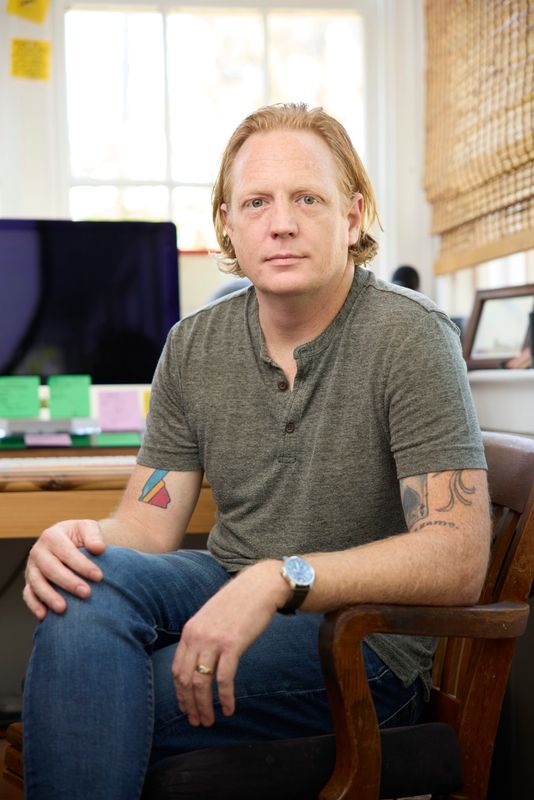
Make no mistake: Justin Glawe loves Peoria.
Even though his life has taken him far away from the city he called home for most of his life, he still carries a deep passion for the place where he was born and raised.

“I love it,” Glawe, 42, said. “I wish it wasn’t so far away from places. I wish I could take Peoria and move it closer to the ocean or something.”
Still, Glawe, a freelance journalist who worked for the Journal Star from 2010-11, says he has a “love/hate” relationship with Peoria, owing to the fact that it gets promoted as sort of a “Main Street USA” city when it has many of the same warts as so many other places.
“In 2010, the year that I started at the (Journal Star), we had 23 homicides, the most since 1988,” Glawe said. “For a city of 135,000 people, that’s a lot. What I saw from Peoria even before my time at the paper was, ‘This is a real city with all of its good, bad and ugly.’ That is a reflection of ‘Main Street USA’ in a way, but not this sanitized, Mayberry, Andy Griffith Main Street; a real place that’s complex and beautiful and ugly and all of those things at the same time.”
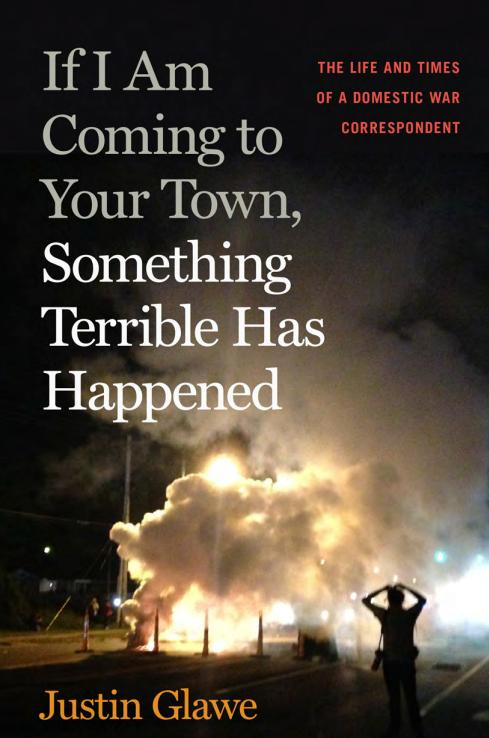
Glawe’s life – and struggles – are on full display in a new book to be released in June, “If I Am Coming To Your Town, Something Terrible Has Happened,” which spotlights his work as a freelance journalist writing about criminal justice issues and violence across the United States over the past decade-plus. His work as included the Ferguson, Missouri, riots following the death of Michael Brown; the 2017 mass shooting in Las Vegas that left 60 people dead; a massacre of police officers in Dallas in 2016; and the rioting after the death of George Floyd in Minneapolis.
It also shines a light on Glawe’s substance abuse issues and how he was able to fight them and come out clean on the other side. Glawe said that his battle with addiction taught him important lessons about controlling what he could and finding peace in that way.
“It was not very fun at times, but it was necessary,” Glawe said. “It had to happen, both writing the book and getting sober. That’s kind of the way I look at things now; some things just had to happen.”
Glawe, who nows lives in Georgia, got the idea to write the book over a decade ago when he was covering the water crisis in Flint, Michigan. While on the road from Chicago, he realized the work that he did dealt with some of the darkest aspects of American society, such as police brutality and serial killers. He also understood that some of what he was covering had historical significance that continues to resonate to this day.
“Pretty early on in my freelancing career, I thought and realized that the things I was doing and writing about and reporting on were not only interesting and historic, but that my view of looking at these things from the ground was a view that people never really get,” Glawe said. “It was something that some people might be interested to hear about.”
The book starts with his arrival in Ferguson in August 2014, shortly after the death of Michael Brown at the hands of a local police officer, and moves through the beginning stages of the Donald Trump presidency, hopping from police shootings to the tragedy in Las Vegas to issues at the U.S.-Mexico border. It also includes his experiences working in Peoria at the outset of his career.
Glawe saw the events in Ferguson as the jumping off point for the political era to come, defined by frequent partisan squabbling and conflict.
“In my mind, that event was a huge marker for where things would go in American politics,” Glawe said. “We were probably headed that way after two terms of (Barack) Obama. I think a lot of conservative and white Americans for a variety of reasons – not all of them having to do with Barack Obama’s race – were already headed in the direction of a more populist or isolationist leader for the Republican party. I think Ferguson poured gasoline on that sentiment.”
As a result, he feels that the way we speak about politics has devolved in the decade-plus since Trump began his political journey, with people not exactly waiting for all of the facts before going into their own partisan corners.
“Now, we live in this era where anytime something happens, whether it’s a police shooting or a pandemic or a plane crash, it’s immediately seized upon on both sides and put into a certain category depending on the culture war value of what that event can do for one side or another,” Glawe said. “That is the biggest difference between when I started out as a freelancer and now. If something like Ferguson happened now, we would not even wait for the facts to come out before people on both sides would be seizing on it and saying whatever.”
To that point, he said that the way people process information on social media has changed rapidly, to the point where something that may have taken months to divide people may only take a matter of hours today.
“If George Floyd happens right now, we’re probably talking three-to-six hours before everyone camps off into their culture war divides,” Glawe said.
Glawe’s time in Peoria, including his stint at the Journal Star, had a significant impact on him as a journalist, even if the stories he covered in his time as an intern didn’t quite rise to the same level as those he has done freelancing.
“I’d go and write about Octoberfest,” Glawe said. “I’d go and talk to people who went to Octoberfest, hang out for the day, we’d get a photo for the front page and then at night, I’d go and chase the scanner. I learned so much from the people there; I really can’t thank them enough.”
He got a first-hand glimpse of how issues affecting everyone in the country also affected people in Peoria, saying that he found a dichotomy between the lighter work he did at festivals and monster truck rallies with the harder news that would prepare him for his later work.
“What it showed me is how much even in a small place like Peoria, the issues that affect everyone in the country are there as well,” Glawe, a 2002 graduate of Richwoods High School, said. “None of this is really separate from anything else.”
When reflecting on the rocky road that led him to sobriety and understanding, Glawe admits that he may have been an alcoholic from the time he took his first drink. A career in journalism gave him a sense of purpose, even as he struggled to deal with the demons that affected him for so long.
“When I was in my mid-20s, I felt like a complete loser,” Glawe said. “A lot of people that I knew were finishing college and going to jobs, and I was cutting grass in Peoria and drinking and doing drugs. Into my mid-20s, I was still a screw-up until I weirdly found journalism. Writing and journalism gave me a sense of purpose in a way that made my drinking not seem so bad. For the first time in my life, I had a career.”
Glawe’s book is being published by the University of Georgia Press and can be purchased there and anywhere books are sold online, such as Amazon or Walmart.
This article originally appeared on Journal Star: Peoria native’s new book explores highs, lows of criminal justice journalism
Reporting by Zach Roth, Peoria Journal Star / Journal Star
USA TODAY Network via Reuters Connect