A crowded, competitive pool of candidates for one U.S. Senate seat in Illinois includes multiple U.S. House representatives and the current Lieutenant Governor of the state.
Longtime, current U.S. Sen. Dick Durbin, D-Illinois is not seeking re-election.

The SJ-R reached out to all of the Democratic and Republican candidates ahead of the Primary Election on March 17 to ask them a series of questions that we thought readers would want to know about.
Here’s what the Republican candidates said in their email responses.
We shared what the Democratic candidates said on March 9.
(Note: Answers have been edited for length and clarity.)
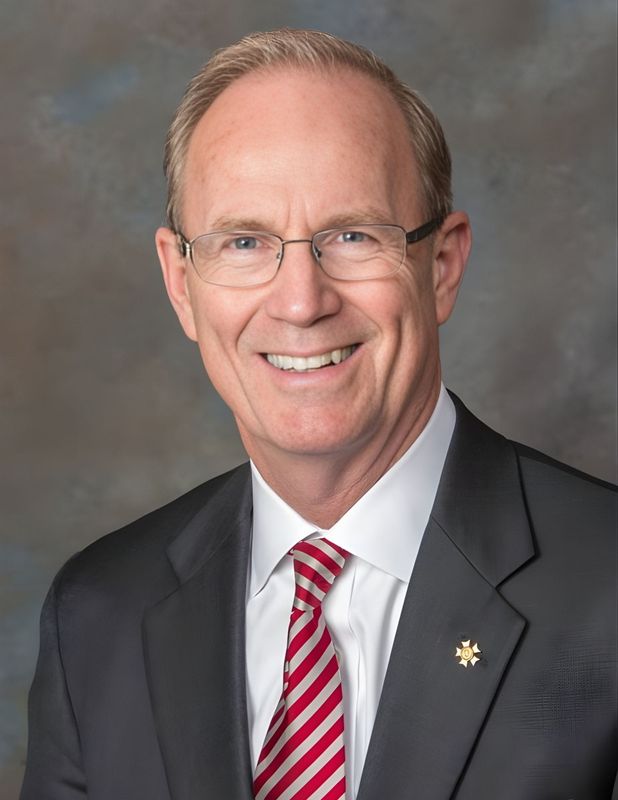
Don Tracy
Biography
Why are you running for this office?
I’m running for the United States Senate because working families and businesses in Illinois need strong leadership and common sense in Washington, not more career politicians pushing extreme agendas. I stand with working families who want to lower the cost of living, restore public safety in our neighborhoods, bring business and jobs back, and advance common sense solutions in Washington. I’m running to represent all of Illinois and to fight so every family can pursue their own American Dream.
The state of politics feels very divided. If elected, how would you try to work with people on the other side of the aisle?
I believe we can be firm in our principles while still working together where we have common ground. As someone who has spent decades practicing law and serving in leadership roles across Illinois, I’ve learned that results come from sitting down, listening, and negotiating in good faith. You don’t have to surrender your values to find practical solutions. In fact, strong leadership requires clarity about your principles and respect for others.
If elected, I will look for opportunities to work across the aisle on issues that directly impact everyday Illinoisans: lowering the cost of living, enhancing public safety, strengthening American manufacturing, and supporting our farmers. Those are common sense priorities that have bipartisan support.
Illinois, specifically the Chicago area, is home to several data centers. Companies are eyeing areas like downstate Illinois because land is cheaper, but the companies are getting pushback from residents. What do you think of the future of data centers in Illinois, and how would your role in congress play a part?
I am not opposed to innovation. But I am opposed to policies that drive up costs for seniors on fixed incomes, farmers running grain dryers, or small manufacturers trying to keep their doors open. If data centers are going to expand in Illinois, they must pay their fair share for infrastructure and energy demand. They should not receive sweetheart deals while families absorb higher rates. That said, as technology and artificial intelligence continue to grow, we need the infrastructure to support innovation, strengthen national security, and compete with China.
Illinois can lead in this sector, but only with common sense to balance growth with accountability, and by making sure every community has a seat at the table.
What is your stance on the presence of ICE agents in Illinois?
As a nation of laws, we have to enforce those laws. That includes federal immigration law. Federal agents have a lawful role in identifying and removing individuals who are in this country illegally, especially those who have committed violent crimes or pose a threat to public safety.
Unfortunately, sanctuary policies and massive resistance to cooperation with federal authorities (encouraged by career politicians with extreme agendas) have created chaos, and made our communities less safe.
Since the beginning, I have been one of the most vocal voice in Illinois for all parties to put aside partisan agendas and quests for social media likes, sit down together, and collaborate on a plan that makes our neighborhoods safe without subjecting entire communities to fear. If our leaders put politics aside, they could work together without creating such chaos, like the leaders in Memphis have done to great success.
This is not about politics. It’s about common sense. When violent offenders are in our communities illegally, local and federal law enforcement should be able to coordinate effectively. That protects legal immigrants, American citizens, and working families alike. We can be a compassionate nation and a nation that respects the rule of law at the same time.
As prices continue to increase on cost of living and groceries, what would you do to help put money back in the pockets of Illinois residents?
Illinois working families need relief. The sky-high cost of groceries, gas, utilities, health care, and housing has put the American Dream out of reach for too many everyday Illinoisans. In the U.S. Senate, my top priority will be lowering the cost of living through strong, common sense leadership. This includes reducing energy costs, reducing wasteful federal spending and keeping money in the pockets of working families.
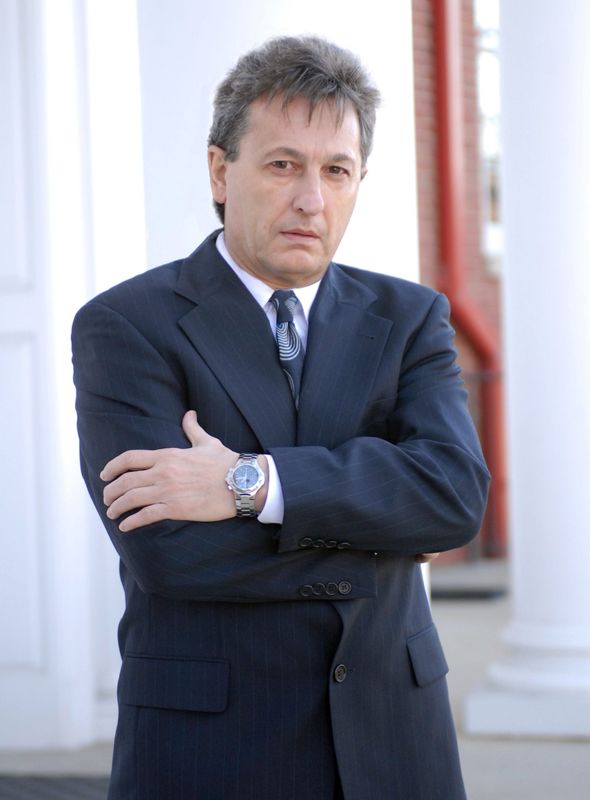
R. Cary Capparelli
Biography
Why are you running for this office?
I am running in the Republican primary for U.S. Senate from Illinois because the Republican establishment has failed its conservative base. There has not been a Republican elected to the U.S. Senate for over 15 years because the Republican establishment nominates candidates that mirror the Democrat policies. As proven, the Democrats will always win that battle. My candidacy offers Republican voters the choice that will differentiate from the Democrats.
The state of politics feels very divided. If elected, how would you try to work with people on the other side of the aisle?
No doubt, the state of politics is divided. The public deserves honest reporting to allow proper positions and decisions. As both a communications person and a geographer, it would be my objective to take and convey truthful positions so as both the public and those on the other side of the aisle know and understand facts regarding both domestic and foreign policies to allow for agreement for the benefit of allow.
Illinois, specifically the Chicago area, is home to several data centers. Companies are eyeing areas like downstate Illinois because land is cheaper, but the companies are getting pushback from residents. What do you think of the future of data centers in Illinois, and how would your role in congress play a part?
As companies are free to locate wherever, the public is also free to oppose accordingly. Each situation is individualized with the goal to reach mutual harmony. One obvious solution is for Chicago and surrounding areas to find economic ways for these companies to stay, locate, and relocate in Chicagoland. Illinois needs to find ways to energize all forms of industrialization and this would be part of my economic plan for the State.
What is your stance on the presence of ICE agents in Illinois?
President Trump was largely re-elected because of his immigration policies as the majority of Americans support deportation of illegal immigrants. Illegal means unlawful and ICE is simply doing and succeeding at its job since the majority of its arrests are of illegal immigrants. And some of those are violent criminals. Simply, those who want to be American citizens should follow the legal protocols rather than illegally entering the nation. A country is defined, in part, by its borders. And it’s the government’s responsibility to account for everyone in the country.
As prices continue to increase on cost of living and groceries, what would you do to help put money back in the pockets of Illinois residents?
First, the latest rising costs of food and energy started under the last administration and not under the present administration. As we see, costs are beginning to come under control again. As a United States Senator, I’d work with President Trump’s economist team, who understand such trends, to control prices in a free market (not government control).
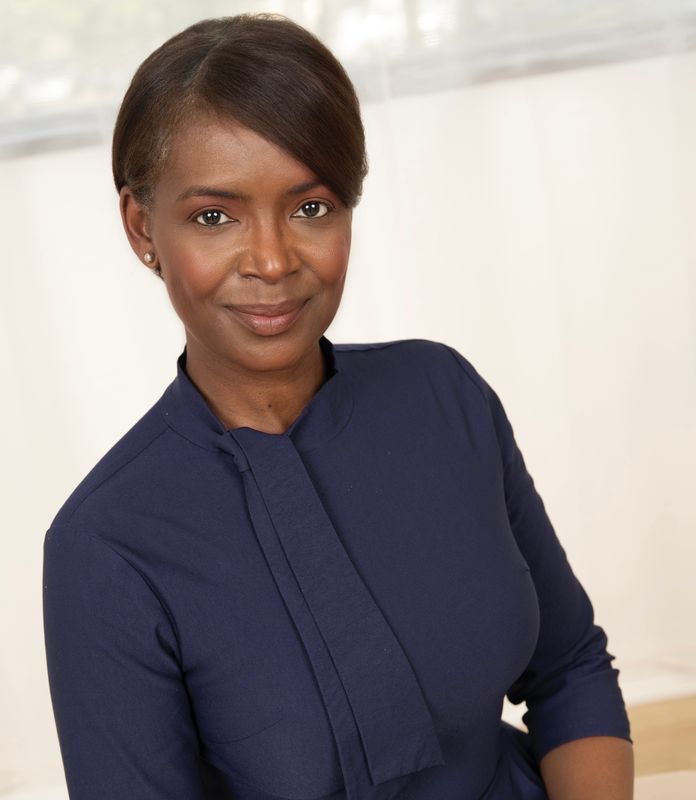
Pamela Denise Long
Biography
Why are you running for this office?
I’m running for office to bring real courage, competence, and solutions to problems that have lasted too long and have caused too much harm to Americans families. Upon being sworn into office I will immediately get to work redesigning our health care system including off ramps from the enhanced ACA subsides so that Illinoisans have health insurance policies that are affordable, guaranteed renewable, prioritize choice, include health savings accounts (HSAs) available to all and medical savings accounts (for seniors).
The state of politics feels very divided. If elected, how would you try to work with people on the other side of the aisle?
We have collective amnesia about who we are and how we came to be. We seem to have forgotten the purpose of our constitutional republic. The social contract that Americans submit to is based upon government providing for the common welfare and protecting inalienable rights of citizens. That’s solution focused. It’s not about personality and grievance. Inherently, that social contract requires not just a tolerance for different viewpoints, but a solicitation and even hunger for viewpoint diversity, informed free speech, and academic freedom. Accordingly, working across the aisle is a mandatory good and a necessary competence. I will personally meet with each of my other 534 legislative colleagues and their staff to build relationship with them, discuss my year-one priorities, and assess alignments of principle and values in their concerns/solutions.
Illinois, specifically the Chicago area, is home to several data centers. Companies are eyeing areas like downstate Illinois because land is cheaper, but the companies are getting pushback from residents. What do you think of the future of data centers in Illinois, and how would your role in congress play a part?
Citizens are pushing back against paying for the high utility costs related to data centers. Those who build or benefit from the centers must bear the costs rather than citizens who are already strapped with high tax bills and rising utility costs due to granted rate increases alongside green energy efforts that have not yet replaced clean coal or safe nuclear energy sources. In addition, Congress will need to act effectively and swiftly on AI in general. This includes regulating AI in a way that codifies it core role as a supplement rather than replacement of human potential.
What is your stance on the presence of ICE agents in Illinois?
Interior enforcement is a critical aspect of immigration policy and security. We are not abolishing ICE. I support ICE in doing the job of deporting those who are not supposed to be here, not limited to but especially those with an existing order of removal and/or criminal backgrounds. And I am confident that law enforcement at any level can be both humane and effective, be it community policing, worksite inspections, or border security operations.
As prices continue to increase on cost of living and groceries, what would you do to help put money back in the pockets of Illinois residents?
Our state relies heavily on taxation as a source of revenue. Pension liabilities are a prime reason for increases in property taxes. I will work with the governor of Illinois to offer federal expertise and technical assistance for money management strategies and identifying inefficiencies/opportunities with the structure of retirement programs. I will also work with state leaders to fund and maximize the economic growth potential of Illinois transportation infrastructure, research and development, biofuel, farm productivity/modernization, and steel infrastructure to produce more in the state as a means of revenue generation.
Casey Chlebek
Biography
Chlebek did not respond to emails.
Jimmy Lee Tillman, II
Biography
Tillman did not respond to emails.
Jeannie Evans
Biography
Evans did not respond to emails.
Tom Ackerman covers breaking news and trending news along with general news for the Springfield State Journal-Register. He can be reached at tackerman@usatodayco.com.
This article originally appeared on State Journal-Register: Meet the Republican candidates going for Dick Durbin’s US Senate seat
Reporting by Tom Ackerman, Springfield State Journal-Register / State Journal-Register
USA TODAY Network via Reuters Connect