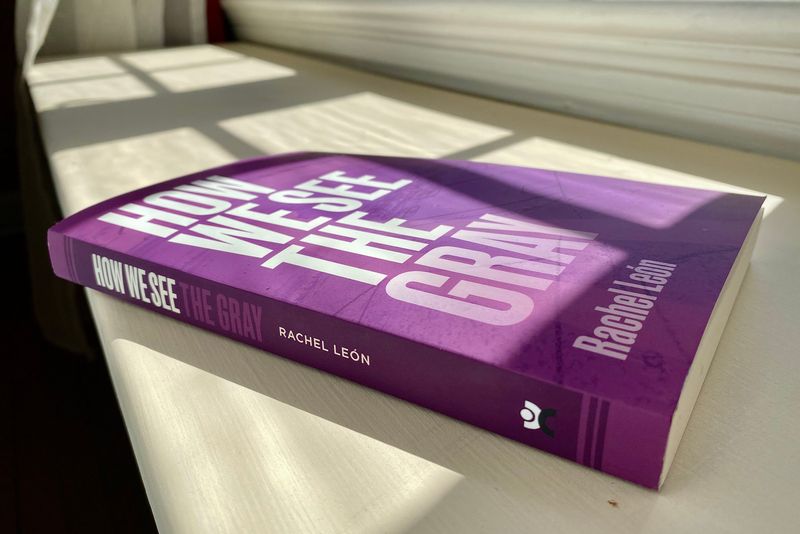
It’s been fifteen years since I began working on my debut novel, “How We See the Gray,” and this week, it’ll finally be published.
The story is centered around Meredith, a single parent working as a foster care case manager, whose drinking puts her preschooler in jeopardy — soon, she loses custody of her son and finds herself in a situation that mirrors her clients’. The novel deals with mistakes, second chances and trying to do better.

It took a long time to find a publisher willing to publish a novel about the foster care system set in Rockford, Illinois.
Several literary agents expressed they could only sell it if I removed mention of Rockford. But my hometown is central to my novel (which some readers have called “a love letter to Rockford”) so I didn’t listen to that feedback, and continued to search for a publisher that recognized the importance setting plays to the story.
I knew I found the right publisher when my editor said she wanted to see more Rockford in the novel, not less.
“How We See the Gray” was originally scheduled to come out in March, but last year my editor called asking how I’d feel to push the publication date to May, which is Foster Care Awareness Month. As eager as I was to have my book come out, I agreed it made sense to delay the publication, just a bit, to tie its release to this month dedicated to bringing awareness to foster care.
I’ve worked in child welfare on and off since 2004, totaling eighteen years in the field. Working in foster care tends to be, as you can imagine, very difficult. But despite its intensity, I don’t think the hard things define the work or the foster care system — just like I don’t think the harder things about Rockford, such as our crime and unemployment rates, define the city.
If you’ll indulge me, I’ll quote my novel: “Our city is filled with people … who believe it’s up to us to make things better. Ones who look at problems and attempt solutions … Rockford is full of people who not only care, they act. Yes, our city is flawed, but we don’t let our shortcomings hold us back. We strive for more. Better.”
Striving for better is what child welfare is all about.
The state steps in if it’s not safe for a child to remain with their parents, removing the child from the home and finding an alternative place for them to live while the parent is offered a chance to change.
Foster care cases begin after a parent has made a terrible mistake, but our role as child welfare professionals is to look at the underlying problems, and offer the tools needed for safe parenting. It’s based on the principle that people can indeed change, as well as that we all deserve some grace and the opportunity to try again—to do better.
This commentary will run on Mother’s Day, a day that can be difficult for some.
I know from my career in child welfare, as well as my personal experience as a parent, that motherhood can be complicated. This day can be hard for those who didn’t have a mother growing up, or did but their mother had personal struggles. It can be hard for those who’ve lost their mothers, and those who are wanting to become a mother and struggling with infertility, miscarriages or losing a baby. Not to mention all the single parents (of any gender) juggling multiple roles. And this day doesn’t always acknowledge varying paths to motherhood, including adoption and fostering.
If your experience echoes any of those, I see you.
I believe we need more narratives that show the shifting realities of motherhood, which was another aim of my novel: to show how messy parenthood can be. And messiness doesn’t negate anyone’s love for their parent or their child.
Love can be complicated.
Complexity is something we understand in child welfare. Things are rarely simple, or fit into clean boxes. My novel is titled “How We See the Gray” for that very reason.
The book’s official launch will be at 5:01 p.m. May 15 at Maze Books.
Musicians Philip Goudreau and Kevin Schwitters will be performing and some of my coworkers will tell stories about working in child welfare.
After fifteen long years, I’m excited to celebrate not only the publication of my novel, but Rockford and this community, as well as all the people impacted by the foster care system — and the unsung heroes who work in the field. I hope you’ll join me.
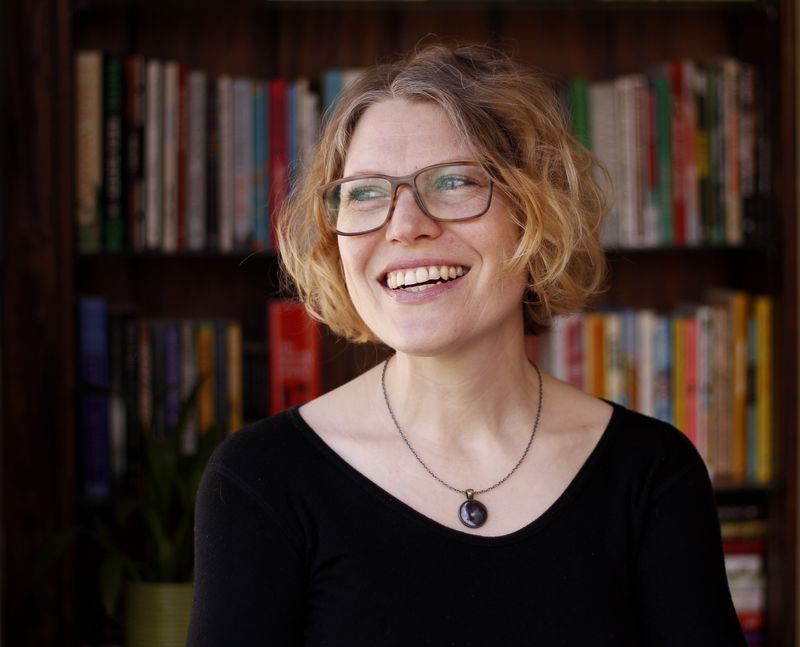
Rachel León is a writer, editor, and social worker based in Rockford. She’s the author of “How We See the Gray,” and the editor of “The Rockford Anthology.”
This article originally appeared on Rockford Register Star: ‘How We See the Gray’ is latest from Rockford’s Rachel Leon | Opinion
Reporting by Rachel León, Special to the Rockford Register Star / Rockford Register Star
USA TODAY Network via Reuters Connect