SPRINGFIELD, IL – It’ll be a historic weekend in the capital city when the world’s largest operating steam locomotive rides through town.
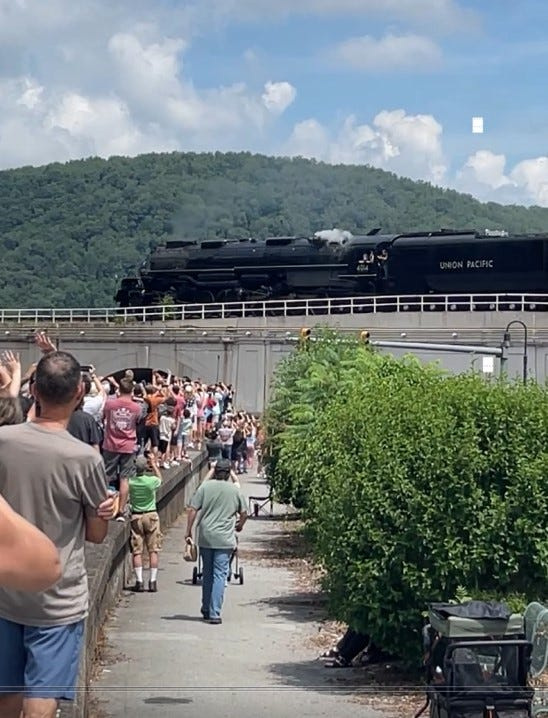
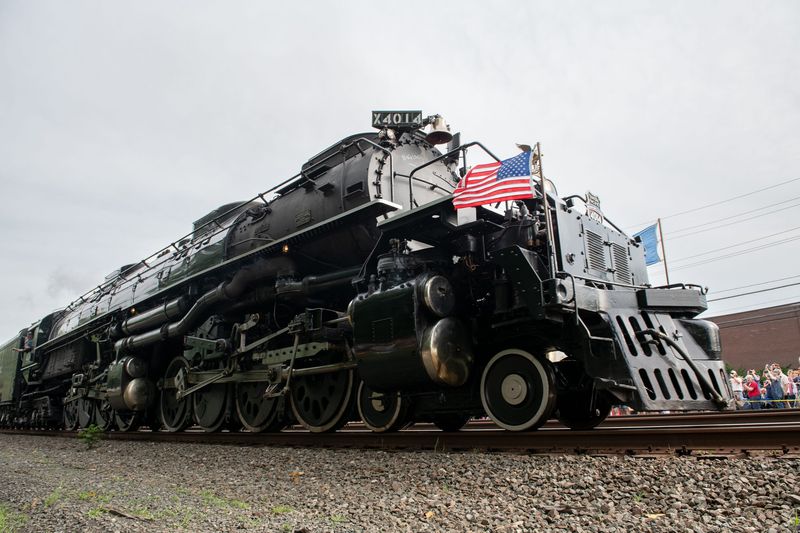
By now, you may have heard the “Big Boy” Union Pacific No. 4014 train is traveling from the Pacific to the Atlantic to celebrate America’s 250th, with a stop in Springfield included.

While many businesses will be open for the farmers market, locals will have a free chance and rare opportunity to look at the 1941 heavy hauling locomotive made entirely from high-strength boiler steel to carry the weight and power needed to haul equipment for World War II.
Springfield and steam power
George Roadcap is proud to say as president of the Monticello Railway Museum, Illinois wouldn’t look like it does today on the map without railways.
“There literally wasn’t a town that wasn’t on a railway because it was how everything moved,” Roadcap said. “It gave jobs to people in small towns … and was much more reliable than mud roads.”
The steam train has always been a symbol of the U.S. economy, connecting midwest farms to eastern port cities through the Illinois Central line playing a critical role in the civil war for the Union and the future of Springfield.
Through the Illinois Central railroad in the 1850s connecting southern Illinois up to Chicago and the Baltimore and Ohio Railroad, the “American Breadbasket” we know today is still using trains, even if they aren’t the same lines.
The Main Line of Mid-America operated from 1851 to 1998 and is now owned by the Canadian National Railway connecting Chicago down to New Orleans, with many parts no longer in service. Using abandonedrails.com, users can see firsthand all the different rail systems no longer in use around Springfield.
The “Big Boy” will be using the Union Pacific tracks, including the Harrisburg and Ohio River line.
So, what has happened to these abandoned train lines?
Roadcap continued to say parts of the Illinois Central are still in use even after their abandonment in 1986 thanks to the nonprofit museum’s effort.
The line from Decatur to Champaign was purchased by the museum and built on, so their four diesel-powered freight trains and one steam train can still operate.
“The railroads had to innovate a lot to get something that big on the tracks,” Roadcap said. “When you see the ‘Big Boy’ come through there will be at least a couple people in the cab feeding it water and fuel, it’s a big, amazing production.”
The Illinois Central line is actually represented by Abraham Lincoln. As an attorney, Lincoln represented the rails in a landmark legal case, helping establish his reputation as one of the nation’s leading railroad lawyers, according to the Association of American Railroads.
Lincoln’s final farewell to the city of Springfield was on a steam train Feb. 11, 1861, from the Great Western Depot at 930 E. Monroe St., now named the Lincoln Depot.
Old versus new
What’s different between the Big Boy and a steam train Lincoln would have seen in the 1850s?
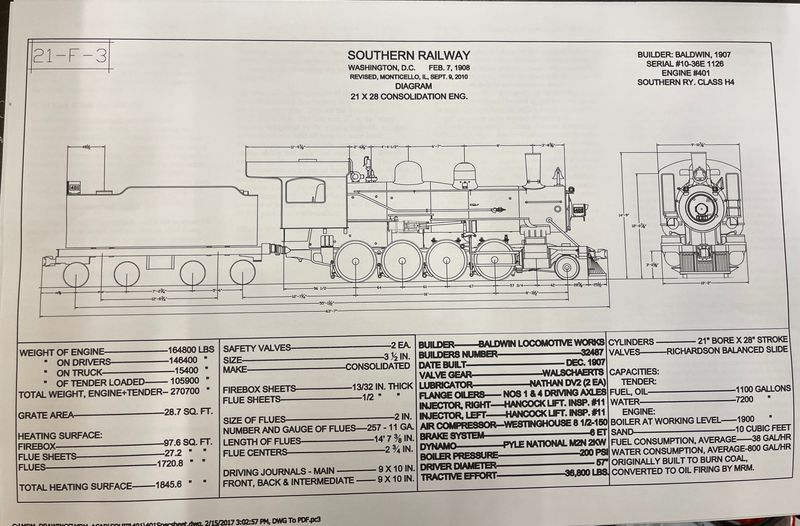
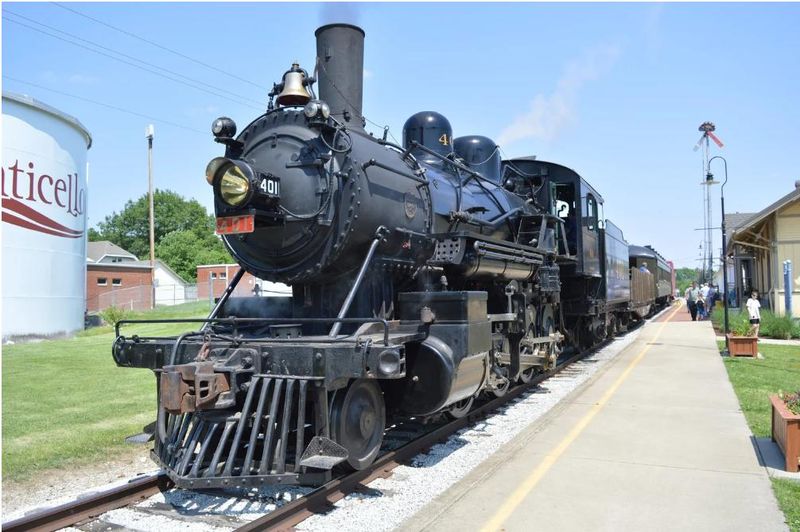
According to Roadcap, the Southern 401 steam train the Monticello Railway Museum uses was built in 1907 and is a smaller, much lighter locomotive.
The Big Boy, one of 25 commissioned for Union Pacific to haul heavy equipment in World War II, is 133 feet long and weighs 1.2 million pounds.
In comparison, the Southern 401 used in the southern railways at Memphis, Tennessee weighs 270,700 pounds and is 64 feet long.
The Southern 401 and Big Boy both use tender; or fuel and water to create steam. Fuel can either be coal or oil and would count for a considerable amount of weight.
“The beauty is it feels alive,” Roadcap said. “You can see everything move, make hissing sounds and you actually see what causes the sounds and movement.”
While running, the smaller of the two trains would use on average 38 gallons of oil and 800 gallons of water per hour. The Big Boy’s tender carries 25,000 gallons of water, enough to fill a pool.
Steam engines ultimately gave way to diesel engines by the 1960s.
To take a ride in a real steam engine, Roadcap said the museum is running their engine on July 18 and 19 at 992 Iron Horse Place, Monticello to get a close-up experience.
Claire Grant writes about business, growth and development and other news topics for The State Journal-Register. She can be reached at CLGrant@usatodayco.com; and on X (Formerly known as Twitter): @Claire_Granted
This article originally appeared on State Journal-Register: How the ‘Big Boy’ train reunites Springfield with railroad history
Reporting by Claire Grant, Springfield State Journal-Register / State Journal-Register
USA TODAY Network via Reuters Connect
By Claire Grant, Springfield State Journal-Register | USA TODAY Network