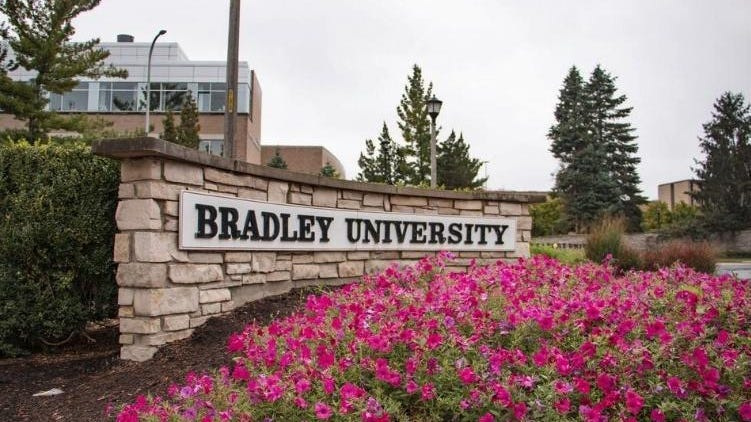
A group of laid-off Bradley University professors, along with the school’s chapter of the American Association of University Professors, has filed suit against the university, claiming that it breached their employment contracts when they were let go in December 2023.
The lawsuit was filed on June 4 in U.S. District Court for the Central District of Illinois, with 10 professors – Marian Azab, Julia Gonzalez Calderon, Thomas Carty, Mark Johlke, Carmen Keist, Samantha Kirk, David Olds, Tyler Smith, Mathew Timm and Daniel Yee – along with their AAUP chapter claiming that Bradley had breached their employment contracts when it made the decision to eliminate faculty and academic programs as part of an attempt to stem a long-running financial crisis.

According to the initial complaint filed with the court, Bradley acted unilaterally in firing 38 faculty members, even going as far as eliminating tenure with the firings of several professors. The university is accused of “violating its duty of good faith and fair dealing” by not taking faculty concerns seriously and making cuts to academic programs that they felt weren’t necessary.
Because of the cuts made to the academic programs, the professors claim that they have lost salary and benefits, with harm done to their careers. In addition, the professors say that they lost the protection of tenure, which results in a reduction of institutional knowledge at Bradley, as well as weakened due process rights for remaining faculty members.
They also claim that as a result of Bradley’s actions, their ability to participate in faculty government has been greatly hurt and that they have lost the ability to better offer “robust” educational programs to students.
At issue in the lawsuit is the language of the employee handbook as it relates to employee contracts, in particular those either on tenure or on track to be tenured. The lawsuit says that each professor at Bradley is provided an annual letter specifying their salary, key academic dates and the incorporation of the handbook into their contracts.
For those who are tenured, their letter also spells out when the tenure begins, which in the case of Carty, Johlke, Keist and Olds was the beginning of the 2023-24 school year. That tenure letter says that the university must renew their contracts each year, barring a significant circumstance such as incompetence, financial problems, discontinuation of their academic program or medical problems.
For non-tenured employees, their letter spells out that their probationary period lasts for six years, with the university given leeway to fire them if they do not meet performance standards.
The lawsuit also goes into detail on how the handbook states that faculty and administration should have equal participation in the governing process of the university, with faculty given significant deference on decisions that “impact the academic integrity of the institution.”
Department faculty are asked to make recommendations on full-time employment, with the department dean being the one making the recommendation to the provost, who makes the final decision.
The handbook also states that the university will make every attempt to place faculty members in other positions before trying to fire them or lay them off, with the decision to eliminate programs being solely based on academic concerns, not financial.
However, Bradley’s prior administration, led by former president Stephen Standifird did not take into account recommendations made by faculty groups to save $4.6 million in instructional costs and other academic concerns, the lawsuit says.
Instead, the university consulted with deans – not considered faculty but instead fellow administrative members – in order to make the kinds of cuts it felt would be necessary to trim down the budget. The lawsuit says that even though the school made the cuts in the name of financial solvency, administrators continued to receive large raises without commensurate measures for other faculty members.
For instance, while faculty and staff received a 2% raise in January 2023, Bradley athletics director Chris Reynolds received a nearly 15% increase in pay during the 2023 fiscal year.
Because of the cuts to both programs and staff, the lawsuit says that the university is hampering its ability to attract students to other academic programs, such as those relating to STEM with the cut of math education. In addition, they also accuse the university of cutting academic programs that could have been successful with more administrative support.
The suit also accuses Bradley of hiring professors despite having intentions of cutting academic programs and jobs. They also said that with so few tenure-track jobs available at other universities, finding jobs has been difficult for the laid-off professors.
Specifically, the lawsuit accuses Standifird and former provost Walter Zakahi of not providing the faculty groups with the full list of faculty who were laid off or those allowed to expire “through attrition.” In addition, the administrators and the Bradley University Board of Trustees are accused of not providing sufficient answers to why the recommendations of faculty were ignored when it came time to make the cuts, also noting that faculty were let go even though none of the conditions specified in the contracts were met.
Eventually, the faculty group filed a grievance in February 2024, challenging Standifird’s alleged disregard for their findings. AAUP also filed a grievance last April, accusing the university of denying faculty their right to determine their curriculum and employment status.
On the faculty group grievance, it was found that the university violated the terms of the employee handbook by not giving any consideration to faculty recommendations, also being accused of providing false enrollment statistics when they were working on those recommendations.
For AAUP, the lawsuit says the university didn’t even participate in the grievance, hindering due process rights. It was found that the university had improperly prevented faculty from making decisions on their curriculum and hiring, also improperly letting the professors go.
Eventually, it was found that Bradley had dismissed five employees improperly, but the lawsuit says that even after Standifird resigned last year, administration didn’t go along with the recommendations of university senate committees to bring them back on board.
In the case of one professor, David Olds, the lawsuit accuses recently appointed president James Shadid of rejecting the recommendation of the university’s Tenure, Promotion and Dismissal Committee to rehire him, accusing the university of not providing any kind of “compelling” reason as to the rejections.
The professors request that the university compensate them for lost pay, along with reinstating each faculty member who had been fired as a result of the cuts. They also ask that the court declare that the university was in violation of the contracts and the employee handbook, while also putting a stay on the elimination of both the programs and the jobs until faculty has been allowed to evaluate the situation.
In addition, Azab also accuses the university of discriminating against her as an Arab-American by retaining non-Arab employees and non-tenure line employees of similar stature, but letting her go months after she was hired. She asks that the university reinstate her and provide her with damages for emotional distress, compensation for the time lost and other compensatory damages.
No date has been set for an initial hearing in the case. According to a statement to the Journal Star, Bradley said it does not comment on pending litigation.
This article originally appeared on Journal Star: Bradley University sued by former faculty members over academic cuts
Reporting by Zach Roth, Peoria Journal Star / Journal Star
USA TODAY Network via Reuters Connect