
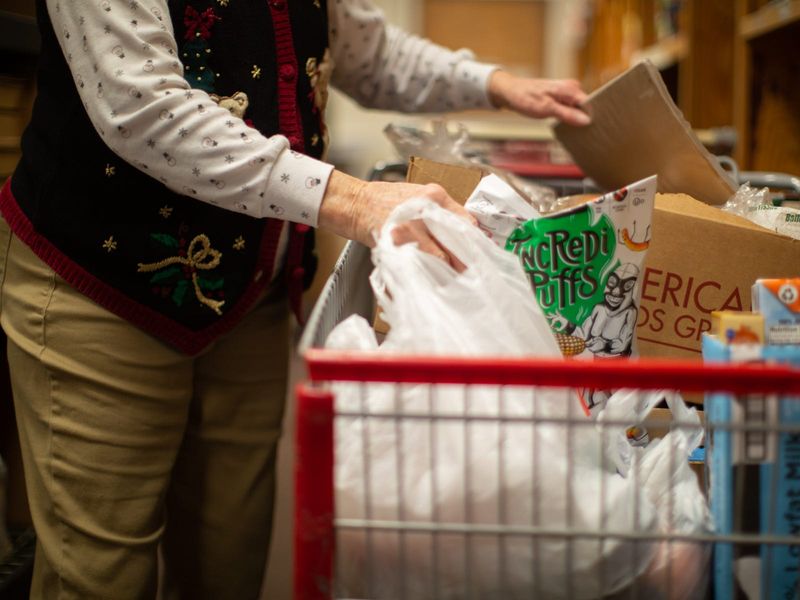
A shopping cart filled with groceries is shown at the St. Vincent de Paul food pantry.
Home » News » National News » Florida » Your money: Grocery store sticker shock. Florida's rank for spending
Florida

Your money: Grocery store sticker shock. Florida's rank for spending

What we spend on items at the grocery store has been dominating the headlines for the past year. Social media is filled with photos of half-full grocery carts that end up with big bills at the register and would have cost much less not long ago.

This grocery store sticker shock is not surprising when you consider grocery prices have surged in recent years, increasing by nearly 30% since 2019, according to the USDA.

Video Thumbnail

Income growth hasn’t kept pace with these rising costs, making groceries less affordable and forcing households, including here in SW Florida, to spend a larger share of their earnings on food.

But where in the United States is the most money spent on groceries every month? What about the least amount? And what about Florida?

To examine the impact, WalletHub analyzed the prices of 26 commonly purchased grocery items across all 50 states. WalletHub totaled these costs and compared them with each state’s median household income to identify where residents devote the largest percentage of their income to groceries.

Grocery shopping spending: Florida’s ranking

When analyzing the cost of groceries as a share of median monthly household income, Florida comes in at No. 11 according to the WalletHub report. Floridians spend 2.16% of their income at grocery stores like Publix, Aldi, Whole Foods, Fresh Market, Walmart, Costco, Trader Joe’s and Target.

At the very top of the list is Mississippi at 2.60% of monthly income spent on groceries. New Jersey and Massachusetts spend the least on groceries every month (1.51%), according to the analysis.

What they are saying: Grocery shopping spending

“While grocery prices have gone up tremendously in recent years, the states in which people spend the greatest percentage of their income on groceries actually aren’t those with the highest prices. Instead, the median incomes in these states are quite low, so even with reasonable grocery prices, residents end up shelling out a higher percentage of their earnings than people in states with more expensive products,” said Chip Lupo, WalletHub writer and analyst.

Grocery shopping spending in the U.S.

Here is the methodology WalletHub used for its report on grocery shopping spending:

This article originally appeared on Fort Myers News-Press: Your money: Grocery store sticker shock. Florida’s rank for spending

Reporting by Mark H. Bickel, Fort Myers News-Press & Naples Daily News / Fort Myers News-Press

USA TODAY Network via Reuters Connect
Image

Related posts

Leave a Comment

A shopping cart filled with groceries is shown at the St. Vincent de Paul food pantry.
Home » News » National News » Florida » Your money: Grocery store sticker shock. Florida's rank for spending
Florida

Your money: Grocery store sticker shock. Florida's rank for spending

What we spend on items at the grocery store has been dominating the headlines for the past year. Social media is filled with photos of half-full grocery carts that end up with big bills at the register and would have cost much less not long ago.

This grocery store sticker shock is not surprising when you consider grocery prices have surged in recent years, increasing by nearly 30% since 2019, according to the USDA.

Video Thumbnail

Income growth hasn’t kept pace with these rising costs, making groceries less affordable and forcing households, including here in SW Florida, to spend a larger share of their earnings on food.

But where in the United States is the most money spent on groceries every month? What about the least amount? And what about Florida?

To examine the impact, WalletHub analyzed the prices of 26 commonly purchased grocery items across all 50 states. WalletHub totaled these costs and compared them with each state’s median household income to identify where residents devote the largest percentage of their income to groceries.

Grocery shopping spending: Florida’s ranking

When analyzing the cost of groceries as a share of median monthly household income, Florida comes in at No. 11 according to the WalletHub report. Floridians spend 2.16% of their income at grocery stores like Publix, Aldi, Whole Foods, Fresh Market, Walmart, Costco, Trader Joe’s and Target.

At the very top of the list is Mississippi at 2.60% of monthly income spent on groceries. New Jersey and Massachusetts spend the least on groceries every month (1.51%), according to the analysis.

What they are saying: Grocery shopping spending

“While grocery prices have gone up tremendously in recent years, the states in which people spend the greatest percentage of their income on groceries actually aren’t those with the highest prices. Instead, the median incomes in these states are quite low, so even with reasonable grocery prices, residents end up shelling out a higher percentage of their earnings than people in states with more expensive products,” said Chip Lupo, WalletHub writer and analyst.

Grocery shopping spending in the U.S.

Here is the methodology WalletHub used for its report on grocery shopping spending:

This article originally appeared on Fort Myers News-Press: Your money: Grocery store sticker shock. Florida’s rank for spending

Reporting by Mark H. Bickel, Fort Myers News-Press & Naples Daily News / Fort Myers News-Press

USA TODAY Network via Reuters Connect

Image

Related posts

Leave a Comment