The internationally ubiquitous tech company Google wants to release 32 million bacteria infected mosquitoes in Florida, and experts say it’s not weird at all.
Google, through its decade-old, but lesser known, initiative Debug, has been working on reducing diseases spread by the buzzing bloodsuckers worldwide by combining the expertise of software engineers, biologists, specialized insect breeding robots, and artificial intelligence.

Last year, it filed an experimental use permit noted in the Federal Register to inject mosquitoes with a specific strain of the Wolbachia pipientis bacteria. When a male infected with the strain mates with a wild female, it prevents the offspring eggs from hatching, which helps reduce virus-spreading mosquito populations.
“But it’s never worked with mosquitoes at a large enough scale to stop diseases from being transmitted,” the Debug website says. “Mosquitoes are fragile and difficult to rear in the necessary numbers. With Debug, we’re developing new technologies to make it possible.”
The Federal Register notice says 16 million laboratory-bred and sterilized male mosquitoes would be released in Florida and California in the first year of the experiment, followed by another 16 million in the second year. It does not say what county or city would be the guinea pig, or when the test would occur.
Only female mosquitoes bite, so releasing males doesn’t increase the biting population.
University of Florida Assistant Professor Eric Caragata, who specializes in mosquito-microbe interactions, said he’s worked with the Wolbachia bacteria for 20 years and that using it for sterilization has been around for about 15 years.
Debug has so far focused on the Aedes aegypti mosquito, which transmits harmful viruses including dengue, Zika, yellow fever and chikungunya.
Caragata said what’s novel about the current Debug request is that it’s for the Culex quinquefasciatus variety of mosquito, which carries West Nile virus and St. Louis encephalitis.
“Obviously, West Nile is a problem,” Caragata said. “That’s a big reason for targeting it.”
Google launches program to prevent disease globally
West Nile virus is the leading cause of mosquito-borne disease in the contiguous U.S. with more than 1,300 people falling severely ill each year with impacts to their central nervous system, according to the Centers for Disease Control.
Culex and Aedes mosquitoes are two of the most common types of mosquitoes. Culex mosquitoes prefer to bite at dusk and after dark, while Aedes mosquitoes are daytime biters.
According to Debug’s website, Google began brainstorming ideas about how to solve the mosquito problem in 2014. Around the same time, Google Life Sciences, later called Verily, was founded with the objective of “solving hard problems in science and biology” to prevent disease on a global scale.
Sterilizing problem insects is not new and has been heralded for decades as an alternative to chemical treatment.
It’s been used to control the New World screwworm, a type of fly larvae that primarily attacks livestock, wildlife and pets by burrowing into an open wound “like a screw being driven into wood,” and often resulting in death, according to the United States Department of Agriculture. It has also been used successfully to control the Mediterranean fruit fly.
The Debug Project debuted in 2016. About a year later it announced a partnership with Kentucky-based MosquitoMate.
Bacteria-infected mosquitoes released in Florida Keys
Chad Huff, public information officer for the Florida Keys Mosquito Control District, said his group began using Wolbachia-treated Aedes aegypti mosquitoes from MosquitoMate last year with enough success that they are releasing more this year.
Unlike genetically modified mosquitoes, which have been a controversial control measure in the Keys, Huff said there were few concerns with the Wolbachia-infected insects.
“The genetically modified ones have a negative connotation and there were rumors about ‘Frankenmosquitoes,’” Huff said. “Wolbachia is a registered product that is found in some mosquitoes anyway, but when the males have it and mate with females who don’t have it, they don’t have any offspring.”
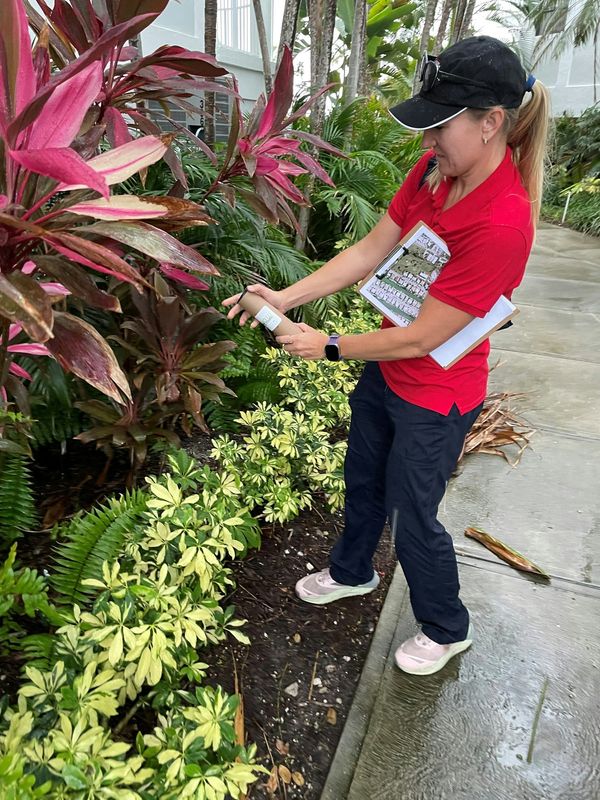
Huff said the male mosquitoes come in paper towel-like cardboard tubes that are opened and tapped to get the mosquitoes out.
He said using bacteria for sterilization is a particularly good solution as mosquitoes become immune to the traditional pesticides, but that it’s not a silver bullet to rid the Keys of all mosquitoes.
Although Aedes aegypti mosquitoes are viral carriers of disease, they make up only small percentage of the overall mosquito population in the Keys.
Still, “there is a market for novel control measures like Wolbachia,” Huff said.
AI will help separate males from females
Part of the challenge in mosquito control, according to Debug, is that the insects don’t hold up to traditional sterilization methods, such as radiation. Also, millions of mosquitoes must be raised, and the males separated from females, a “very labor intensive” endeavor Debug said.
On May 12, Debug announced an expansion of its research and development program in Singapore with a focus on using artificial intelligence and automation to breed, sort and release sterilized male mosquitoes.
Mosquitoes will be reared in an “end-to-end” robotic system with proprietary AI-powered computer vision used to separate adult male and female mosquitoes.
A study published in the March edition of The Lancet Regional Health—Western Pacific journal found that since infected mosquitoes began being released in Singapore in 2016, reports of dengue cases in 2025 were the lowest since 2018.
“The key thing is male mosquitoes don’t bite people,” said Caragata about the Google Debug proposal outlined in the Federal Register. “They are going to release millions of mosquitoes, but they won’t impact people in a negative way.”
A comment period on the proposal ends June 5. The U.S. Environmental Protection Agency will then make a decision on whether to approve the application.
Kimberly Miller is a journalist for the USA TODAY NETWORK FLORIDA. She covers weather, the environment and critters as the Embracing Florida reporter. If you have news tips, please send them to kmiller@pbpost.com. You can get all of Florida’s best content directly in your inbox each weekday by signing up for the free newsletter, Florida TODAY, at palmbeachpost.com/newsletters.
This article originally appeared on Palm Beach Post: Why Google wants to release 32 million weird mosquitoes in Florida
Reporting by Kimberly Miller, USA TODAY NETWORK – Florida / Palm Beach Post
USA TODAY Network via Reuters Connect